What to Air Fryer Chicken Breast At: A Complete Guide
Learn the best temperatures and timings to air fry chicken breast for juicy, safe results. This guide covers prep, cooking by thickness, rest times, and flavorful variations to suit health, convenience, and budget.


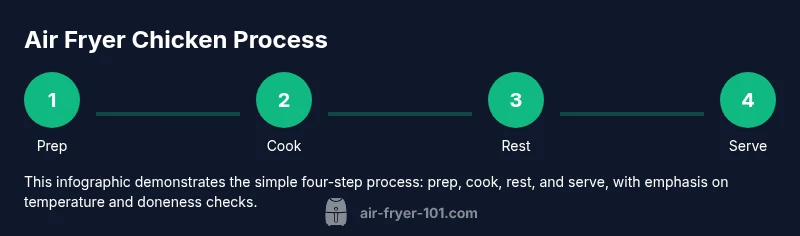
To air fry chicken breast, start by preheating to 360°F and cooking for 9–12 minutes, depending on thickness. Flip halfway, then check that the thickest part reaches 165°F. This approach yields juicy, safe chicken with minimal prep. Tailor seasonings, and rest briefly before serving for best texture.
What to air fryer chicken breast at: temperature fundamentals
If you're asking what to air fryer chicken breast at, this guide starts with the basics you can rely on. According to Air Fryer 101, boneless, skinless chicken breasts respond best to consistent heat and careful timing rather than guesswork. The Air Fryer 101 team found that a common starting point is preheating to 360°F (182°C) and cooking until the thickest part reaches 165°F (74°C). This approach balances browning and juiciness, reducing the risk of dry, overcooked centers. Depending on thickness, you may adjust by a few degrees or minutes, but always confirm doneness with a thermometer. For most standard fillets, this means 9–12 minutes total with a flip halfway through. If your air fryer runs hotter or requires shorter cycles, use the thermometer and adjust in small increments. The key is to monitor the interior while letting the exterior develop a light, even crust. By following a heat-first approach, you can achieve reliable results across different brands and models. Keep in mind that altitude, air fryer design, and even small batch sizes influence timing, so use times as a starting point rather than a fixed rule. This foundation helps you scale recipes, experiment with spices, and maintain consistent quality across weeknight dinners.
Choosing the right chicken breast and prep
Not all chicken breasts are equal, and the cut you choose affects juiciness, browning, and even cooking. Air fryer results depend heavily on thickness, whether you use boneless, skinless breasts or bone-in portions. For beginners, boneless, skinless breasts offer the most predictable cooking because they fit in a single layer and heat evenly. If you must use bone-in portions, expect a longer cook time and a different internal temp target appropriate to bone-in meat. The Air Fryer 101 team recommends trimming any large fat pockets and evenly flattening thicker areas with a gentle pound to achieve uniform thickness. Pat the surface dry with paper towels before seasoning; moisture on the surface can steam rather than brown, reducing crust formation. Apply a light coat of oil or cooking spray to help the seasonings adhere and promote browning. Choose your seasonings based on the dish you want to recreate: a simple salt-and-pepper base works for quick weeknights, while garlic, paprika, and dried herbs build deeper flavor. If marinating, keep the marinade light and allow the surface to dry before air frying to preserve crispness. In short: uniform thickness, proper pat-drying, and a purposeful seasoning plan set the stage for success.
The science behind air fryer cooking and temperature
Air fryers rely on hot, circulated air to induce the Maillard reaction and create a crust without deep frying. The convection action cooks from all sides, so surfaces brown evenly while the interior stays tender when timing is correct. Temperature controls browning rate and moisture loss; too high a heat can seal the exterior too quickly, trapping moisture inside that may release as steam later. Conversely, too low a temperature can lead to pale crusts and longer cook times, increasing moisture loss. The ideal strategy balances heat with time, using a thermometer to verify 165°F (74°C) inside the thickest part. As you gain experience, you’ll learn to tailor settings for your specific air fryer model and the size of your chicken pieces, ensuring consistent results without guesswork.
Preheating and air fryer setup for best browning
Preheating helps many models reach a stable hot environment quickly, which promotes even browning and reduces the risk of soggy edges. If your model supports preheating, set it to 360°F (182°C) for 2–3 minutes before adding the chicken. Even if your unit doesn’t require preheating, giving the basket a quick pre-warm can improve browning and reduce sticking. Lightly oiling the chicken or spraying the basket can help achieve a crisp crust. Avoid overcrowding: arrange pieces in a single layer with space between them so air can circulate freely. If you must cook in batches, keep the finished pieces warm in a low oven (about 200°F / 93°C) while the rest finish. A clean, dry basket promotes air flow and predictable results; clean the basket and remove any leftover marinade that might cause steam instead of browning.
Timing guidelines by thickness and doneness checks
Thickness determines cooking time in the air fryer. Very thin cutlets (about 1/2 inch) typically finish in roughly 7–9 minutes at 360°F, while standard boneless breasts around 3/4 to 1 inch thick usually take 9–12 minutes. For thicker portions, plan 12–15 minutes, always flipping halfway and testing with an instant-read thermometer. The aim is an internal temperature of 165°F (74°C) in the thickest part with a brief rest. If you notice pinkish juices or a pale crust, extend the time by 1–2 minutes and recheck. Adjust times for your specific model and altitude, and avoid the trap of chasing color at the expense of safety and juiciness.
Flavoring options: rubs, marinades, and sauces
Air frying is a great platform for bold flavors with minimal added fat. Try a simple dry rub of salt, black pepper, garlic powder, and smoked paprika for a classic finish. For brighter notes, mix lemon zest, oregano, and a light oil spray. If you prefer marinade, keep it light and quick-drying so the surface crisps; marinate for no more than 2–4 hours and pat dry before cooking. After cooking, add a splash of acid (lemon juice or a vinegar-based sauce) to contrast the crust and moisture. For heat lovers, a chili-lime rub or a touch of chipotle powder can transform a plain breast into a flavorful main.
Troubleshooting common issues and fixes
If the outside browns too quickly while the inside remains undercooked, reduce the temperature by 10–20°F and extend the cook time slightly, testing with a thermometer. If the crust is dry or leathery, reduce the total cook time or skip the marinade heavy with sugar, which can caramelize too quickly. Crowding leads to uneven cooking; always cook in a single layer with space around each piece. If you notice excess moisture on the surface, pat dry, and if needed, give a quick 1–2 minute sear at the end to re-crisp the crust. Resting for 3–5 minutes after cooking helps juices redistribute and improves texture. Finally, verify that your thermometer insert hits the thickest portion of the breast for a reliable reading.
Authority sources and further reading
For safety and best practices, consult reputable authorities and extension resources. The following sources provide general guidance on poultry safety, browning, and cooking temperatures, but apply them alongside your kitchen experience:
- https://www.fda.gov/food-safety
- https://www.fsis.usda.gov/food-safety
- https://extension.illinois.edu/foodsafety
Safety, storage, and reheating tips
Always refrigerate cooked chicken within two hours of cooking and use within 3–4 days, or freeze for longer storage. Reheat in the air fryer at a lower temperature (around 325°F/163°C) to avoid overcooking, checking that the internal temperature returns to 165°F (74°C) before serving. Slice or chop leftovers to help even reheating, and consider shredding for quick salads or wraps. When reheating, avoid covering the chicken tightly, which traps steam and softens the crust. If you are meal-prepping, portion into airtight containers to maintain moisture balance.
Tools & Materials
- Air fryer(Ensure capacity to lay out chicken in a single layer with space between pieces.)
- Meat thermometer (instant-read)(Check internal temperature to reach 165°F (74°C).)
- Tongs or spatula(For placing and flipping without piercing the meat.)
- Paper towels(Pat dry chicken to promote browning.)
- Oil spray or light oil(Optional for extra browning.)
- Seasonings or rubs(Salt, pepper, paprika, garlic powder, etc.)
- Optional rack or divider(Helps with multiple breasts in some models.)
- Cutting board and knife(Trim fat and even thickness.)
Steps
Estimated time: 20-25 minutes
- 1
Prepare the chicken
Bring chicken to room temperature for even cooking, then pat dry and trim any excess fat. This reduces moisture on the surface and improves browning. If the breast is unusually thick on one end, consider a light trim to even it out.
Tip: Letting the meat rest 10–15 minutes before cooking helps uniform heat distribution. - 2
Preheat the air fryer
Preheat to 360°F (182°C) if your model requires it. A preheated basket leads to quicker browning and more consistent texture across pieces.
Tip: If your air fryer has a preheat mode, use it; otherwise run a 2–3 minute empty cycle. - 3
Season and lightly oil
Pat the chicken dry again, then apply a light coating of oil and your desired seasonings. Keep oil light to avoid soggy crust; dry surfaces help achieve crispiness.
Tip: Simple salt-and-pepper orders are reliable; add paprika or garlic powder for color and aroma. - 4
Arrange in a single layer
Place breasts in a single layer with space between pieces to ensure even air flow. Avoid stacking; crowding stalls browning and increases cook time.
Tip: If you have multiple breasts, cook in batches or use a rack that allows air to circulate. - 5
Cook and flip halfway
Cook for 9–12 minutes total, flipping halfway through to promote even browning on both sides. Use tongs to avoid piercing and losing juices.
Tip: For very thin pieces, monitor closely in the last 2 minutes to prevent overcooking. - 6
Check internal temperature
Check the thickest part; it should reach 165°F (74°C). If not, continue cooking in 1–2 minute increments and recheck.
Tip: Insert thermometer into the center of the thickest portion, not near fat pockets. - 7
Rest before serving
Let the chicken rest for 3–5 minutes to redistribute juices. This makes slices juicier and more tender.
Tip: Rest on a warm plate to keep carryover cooking gentle. - 8
Store and reheat leftovers
Cool quickly, store in airtight containers, and reheat in the air fryer to maintain crisp edges. Recheck temperature after reheating.
Tip: Portion into meal-sized chunks for faster reheating.
Got Questions?
What temperature should I air fry chicken breast?
A common starting point is 360°F with an internal target of 165°F. Adjust slightly by thickness and model, then verify doneness with a thermometer.
Start at 360 degrees and check for 165 degrees inside with a thermometer.
How thick should chicken breasts be for air frying?
Aim for uniform thickness, about 1/2 inch to 1 inch. Thinner pieces cook faster and browns more easily, while thicker ones require a longer cook time and careful temperature control.
Keep pieces roughly half an inch to an inch thick for even cooking.
Should I preheat the air fryer for chicken breast?
Preheating helps with quick browning and even heat, but some models cook well without it. If you’re unsure, preheat for 2–3 minutes at 360°F.
Preheat for 2–3 minutes at 360 degrees if your model supports it.
Can I marinate chicken before air frying?
Yes, light marinades add flavor, but keep them relatively dry on the surface to avoid soggy crust. Marinate for up to 2–4 hours and pat dry before cooking.
Yes, a light marinade is fine, but pat dry before cooking.
How can I tell when the chicken is done?
Check the thickest part; it should read 165°F (74°C) on an instant-read thermometer. Let it rest for 3–5 minutes before slicing.
Make sure it hits 165 degrees, then rest a few minutes.
Can I reheat leftovers in the air fryer?
Yes. Reheat at 325°F until heated through, usually 3–5 minutes, then rest briefly. Check to ensure it’s hot all the way through.
Reheat at 325 degrees until hot all the way through.
Is bone-in chicken breast suitable for air frying?
Bone-in pieces require longer cooking and careful timing. If you use them, expect slightly different internal temps and plan accordingly.
Bone-in works, but it takes longer and cooks differently.
Watch Video
Quick Summary
- Start at 360°F for predictable browning.
- 165°F internal temp ensures safety.
- Uniform thickness yields consistent results.
- Don't overcrowd the basket.
- Rest before slicing for best texture.