What to Air Fry Frozen Salmon At: Temperature, Time, and Tips
Learn how to air fry frozen salmon at the right temperature and time. This step-by-step guide covers temps, cook times, doneness, and flavor ideas for quick, healthy weeknight meals.


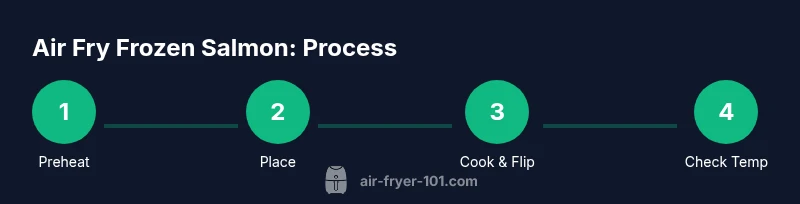
To air fry frozen salmon, preheat your air fryer to 390°F (200°C). Arrange fillets in a single layer on parchment or a light oil spray basket, then cook for 8–12 minutes, flipping halfway. Check for an internal temperature of 145°F (63°C) and a flaky texture. Times vary by thickness and model; no thawing required. Finish with a brief rest.
Understanding Frozen Salmon and Air Fryer Basics
For home cooks seeking a quick, healthy dinner, air frying frozen salmon is a practical option that skips thawing while still delivering a flaky, juicy fillet. According to Air Fryer 101, the key is a precise balance of high heat and a short cook time, which rapidly seals the surface and preserves moisture inside. This method works best with skinless, individually wrapped fillets or evenly portioned sections that lay flat in the basket. Consistency comes from keeping space between pieces, using parchment or a light nonstick spray, and monitoring doneness with a thermometer. By starting with a reliable temperature and timing window, you can replicate reliable results across most air fryer models and fillet thicknesses. Air Fryer 101's analysis highlights that the absence of thawing can actually shorten overall cook time when compared to conventional oven cooking, provided you follow a steady temperature and avoid overcrowding. The goal is a center that reaches about 145°F (63°C), with the exterior lightly crisped rather than burnt. With practice, you’ll be able to adjust texture and seasoning to suit every palate.
Temperature and Doneness: What to Air Fry Frozen Salmon At
Choosing the right temperature is essential for frozen salmon. A common, reliable range is 360–400°F (182–204°C). At the lower end (360–370°F, 182–188°C), the fillet cooks more gently, reducing the risk of drying out if you have very thick portions or a sensitive model. At the higher end (390–400°F, 199–204°C), you’ll achieve a faster surface sear and a crisper exterior, which many people prefer for frozen salmon straight from the freezer. The interior should reach 145°F (63°C) for safe consumption. If your fillet is particularly thick, plan for the upper end of the range and possibly an extra minute or two. Conversely, thin fillets may finish in under 8 minutes. Always use a thermometer to confirm doneness rather than relying solely on time, and remember that some air fryers run hotter or cook more quickly than others. The texture you want—tearly crisp on the outside with a tender inside—often guides whether you pick the mid-range or higher temperature.
Prepping from Frozen: What You Need Before Cooking
You don’t have to thaw frozen salmon before air frying, which makes weeknight dinners incredibly convenient. Start by removing any ice glaze from the surface with a quick rinse of cold water and pat dry with paper towels to remove excess moisture. Lightly oil the salmon or spray the basket to minimize sticking, then season. Dry seasonings like salt, pepper, garlic powder, and lemon zest adhere better to the surface when there’s only a thin oil film. If you want a crustier exterior, consider a light coating of breadcrumbs or crushed herbs. Arrange the portions in a single layer with at least 1/2 inch of space between fillets to allow air to circulate. Preheating the air fryer helps ensure a consistent start to the cooking process, especially for frozen fish that start at a lower internal temperature.
Step-by-Step Cooking Plan for Frozen Salmon in an Air Fryer
With the basics in place, you can approach cooking frozen salmon in a structured way. Start by preheating the air fryer to 390°F (200°C). While it heats, prepare the fillets on a lined tray or plate. Once preheated, place the salmon fillets in a single layer in the basket, skin-side down if applicable, and avoid overlapping. Cook for 8–12 minutes, flipping halfway through to ensure even browning. The total time will depend on thickness and model. Use an instant-read thermometer to confirm an internal temperature of 145°F (63°C). If you notice the exterior browning too quickly, reduce the temperature by 10–20°F and extend the cook time slightly. Rest the fish for 2–3 minutes after removal to let the juices redistribute.
Troubleshooting Common Issues and How to Fix Them
If the exterior over-browns before the interior is cooked, try lowering the temperature 10–20°F and increasing the time by a minute or two. If you end up with a soggy crust, pat the fillets dry thoroughly before cooking and consider a light spray of oil to help crisp the surface. Sticking can happen if the basket is overcrowded or if parchment is wrinkled; always ensure a flat, well-covered surface and adequate space. A thermometer is your best friend for avoiding undercooked centers. If you find the fillet flakes too easily, your internal temperature may be reached early, which can happen with very thin portions; consider reducing the time next round while keeping the temp stable.
Flavor Ideas and Finishing Touches
Frozen salmon pairs well with bright, simple flavors. A squeeze of fresh lemon, a dusting of dill or parsley, and a pinch of sea salt enhance flavor without overpowering the fish’s natural taste. For a richer finish, brush with a light glaze of honey-mustard or maple-soy sauce during the last 2 minutes of cooking. Fresh herbs, grated zest, and a drizzle of olive oil can elevate the dish with minimal effort. If you want a crispier crust, switch to a light breading before freezing for future batches and adjust the oil spray accordingly.
Safety, Cleaning, and Storage After Air Frying Frozen Salmon
Always wash hands and utensils after handling raw fish and ensure the air fryer is cooled before cleaning. Wipe the basket with a damp cloth or wash with warm soapy water after cooking to remove any oil residue. For best results, store any leftovers in a sealed container in the refrigerator for up to 2 days. Reheat leftovers in the air fryer at a lower temperature (about 350°F/175°C) for 3–5 minutes, checking for doneness to avoid overcooking. Proper cleaning and storage help maintain the appliance’s performance and food safety.
Quick Reference: Temperature and Time Pivot Table
- Frozen salmon fillet (1 inch thick): 8–10 minutes at 390°F (200°C)
- Frozen salmon fillet (1.5 inches): 9–12 minutes at 385–395°F (195–200°C)
- Very thick fillets (2 inches+): 12–14 minutes at 380–390°F (193–200°C), with a flip mid-cook
- Internal temperature target: 145°F (63°C)
Note: Always verify with a thermometer and adjust for your specific air fryer model.
Tools & Materials
- Air fryer(Any standard basket-style air fryer works)
- Parchment paper or silicone liner(Helps prevent sticking and makes cleanup easier)
- Tongs or spatula(For flipping fillets safely)
- Instant-read thermometer(To verify 145°F (63°C))
- Oil spray(Light spray to help seasoning stick)
- Seasonings (salt, pepper, lemon zest)(Optional for extra flavor)
Steps
Estimated time: Total time: about 15-25 minutes depending on thickness and model
- 1
Preheat and prep
Preheat the air fryer to 390°F (200°C). While it heats, pat the frozen fillets dry and set out parchment or a light spray coat so the fish won’t stick and cooks evenly.
Tip: Why: Preheating ensures a quick, even sear on contact and reduces sticking. - 2
Line and season
Line the basket with parchment or a light oil spray. Lightly season the surface of the fillets with salt, pepper, and optional lemon zest or garlic powder.
Tip: Pro tip: For best adhesion on frozen fish, apply oil spray before seasoning. - 3
Arrange in a single layer
Place fillets in a single layer, skin-side down if present, with at least 1/2 inch of space between pieces for air to circulate.
Tip: Why: Crowding slows airflow and leads to uneven cooking. - 4
Cook and flip
Cook 8–12 minutes, flipping halfway through. Use a thermometer to check doneness; interior should reach 145°F (63°C).
Tip: Pro tip: If the exterior browns too quickly, reduce temperature by 10–20°F and extend cooking time slightly. - 5
Rest and serve
Let the salmon rest 2–3 minutes after cooking to redistribute juices. Serve with lemon wedges or a light herb drizzle.
Tip: Note: Resting improves moisture distribution and texture. - 6
Clean up and store
Allow the air fryer to cool, then clean the basket. Refrigerate any leftovers in a sealed container for up to 2 days.
Tip: Warning: Do not store cooked fish in the appliance; transfer to a cold container first.
Got Questions?
Can I air fry frozen salmon without thawing?
Yes. Air frying frozen salmon directly is common. It’s best with even portions and proper spacing. Expect slightly longer cook times than thawed portions and verify doneness with a thermometer.
Yes, you can air fry frozen salmon without thawing. Just cook in a single layer, check with a thermometer, and adjust time for thickness.
What temperature should I use to air fry frozen salmon?
A practical range is 360–400°F (182–204°C). Choose the lower end for thicker fillets to prevent drying; the higher end gives a crisper exterior for thinner cuts.
Use 360 to 400 degrees, depending on thickness; thinner pieces crisp more, thicker pieces stay juicier.
Do I need to preheat the air fryer for frozen salmon?
Preheating helps achieve a fast initial sear and even cooking, especially with frozen fish. If your model runs hot during preheat, adjust time slightly after the first batch.
Yes, preheating helps the salmon cook evenly and get a nice finish.
How can I tell when frozen salmon is done?
Use an instant-read thermometer; target 145°F (63°C) at the thickest part. The flesh should be opaque and flake easily with a light touch.
Check the thickest part with a thermometer to reach 145 degrees.
Should I season before cooking frozen salmon?
Yes, lightly season before cooking, or brush with oil and season after a light spray. You’ll get better adherence and flavor without thawing.
Lightly season before cooking for better flavor and adhesion.
What about skin-on or breaded frozen salmon?
Skin-on fillets can crisp nicely if placed skin-side down. Breaded options will require a bit less time to avoid sogginess; adjust accordingly and monitor doneness.
Skin-on crisps well in the air fryer; breaded varieties cook a bit faster, so watch closely.
Can I reheat previously cooked salmon in the air fryer?
Yes. Reheat at 300–330°F (150–165°C) for 3–5 minutes, checking for doneness so it doesn’t dry out.
Sure—reheat at a lower temperature for a few minutes and check to avoid drying.
Watch Video
Quick Summary
- Preheat to a hot core temperature for best results
- Cook in a single layer with space between fillets
- Internal temp should reach 145°F (63°C)
- No thawing required; adjust time by thickness
- Rest briefly before serving