How Long to Cook Salmon in an Air Fryer: Timelines & Tips
Learn exact times for air fryer salmon by thickness and doneness. Includes frozen vs thawed, skin-on vs skinless, preheating, testing with a thermometer, and finishing ideas for moist, perfectly cooked fillets.


Typically salmon fillets cook in 7-12 minutes at 400°F (204°C) in an air fryer, depending on thickness and whether the skin is on. Start with a 2-3 minute preheat, brush lightly with oil, season, and flip halfway. Check for an internal temperature around 145°F before serving. For thicker cuts, add 2 minutes; for very thin fillets, remove 1-2 minutes. Always rest 2 minutes after cooking.
Why Timing Matters for Salmon in the Air Fryer
Timing is the biggest lever you have to ensure salmon stays moist, tender, and flavorful when cooked with air circulation. Unlike pan-searing, the circulating hot air in an air fryer cooks from multiple angles, which can lead to a faster, more even finish but also a higher risk of overcooking if you don’t monitor closely. The Air Fryer 101 team finds that small changes in time or temperature can push a fillet from perfectly flaky to dry. Understanding the relationship between thickness, cut, and preheating helps you dial in consistent results, especially when you are cooking salmon for guests or meal-prepping for the week.
In real-world kitchen tests, the impact of a few minutes and a light oil spray is noticeable but manageable. A good rule of thumb is to start at a conservative time and temperature, then test doneness with a thermometer or a quick fork test. This approach minimizes waste and keeps your salmon juicy, whether you’re preparing salmon fillets, portions, or larger cuts. According to Air Fryer 101, consistency comes from a reliable baseline you can adjust by thickness and cut.
Core Variables That Affect Cook Time
Several factors influence how long salmon takes in an air fryer. First is thickness: a thinner fillet will reach doneness faster than a thick steak-sized portion. Second is whether the skin is on: skin-on fillets often require slightly longer to crisp the skin, while skinless fillets may cook a touch quicker. Temperature stability matters too; preheating helps maintain even heat and reduces the risk of pale, underdone centers. Whether you’re using a frozen fillet or thawed piece also shifts timing. Finally, the fish’s initial temperature and whether you’re seasoning with a dry rub or wet marinade can affect surface browning and overall time.
Air Fryer 101 analysis shows that sticking to a clear baseline and adjusting by thickness yields the most predictable results, especially for beginners trying salmon in a new model.
Default Guide: Quick Start for Fresh Salmon
A practical starting point for most 1-inch thick fresh salmon fillets is 7-9 minutes at 400°F (204°C). If you’re cooking 1.25–1.5 inches thick, plan for 9-12 minutes, then test. A light oil spray or brushing reduces sticking and helps create a crisp exterior without drying out the flesh. Preheating for 2-3 minutes is worth the small extra time, as it helps achieve a more even browning across the surface. If you’re unsure of thickness, measure at the thickest part to estimate slightly longer or shorter times.
Flesh color should shift from translucent to opaque, and the center should flake easily with a fork. If there is a strong, opaque white ring around the fillet, the fish is likely overcooked. Always rely on internal temperature for precision.
Tools & Materials
- air fryer(Choose a model with a basket or tray that allows air to circulate 360°)
- salmon fillet(s)(Bone-in or fillet, 1–1.5 inches thick recommended for even results)
- oil spray or brush(Light oil helps prevent sticking and improves browning)
- salt and pepper(Basic seasoning enhances flavor without adding moisture)
- lemon wedges (optional)(Brighten flavor after cooking)
- instant-read thermometer(Target 145°F for doneness)
- tongs or spatula(Gently lift fillets to avoid breaking)
- parchment liners (optional)(Makes cleanup easier and reduces sticking)
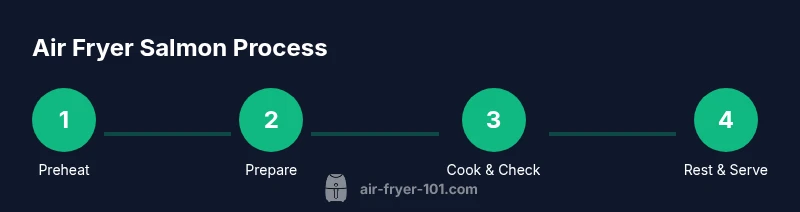
Steps
Estimated time: Total time: 12-20 minutes (prep + cook + rest)
- 1
Preheat the air fryer
Set the air fryer to 400°F (204°C) and allow it to preheat for 2–3 minutes. Preheating creates a stable cooking environment and more even browning. Tip: If your model doesn’t have a preheat setting, run a short bake cycle empty for a few minutes before adding fish.
Tip: Preheating reduces sticking and yields more uniform texture. - 2
Pat and season the salmon
Pat the fillet dry with a paper towel to remove surface moisture that can steam the fish. Season with salt and pepper, and apply a light coating of oil or spray. If you like, add a light lemon zest or paprika for extra aroma.
Tip: Dry skin or flesh helps sear and crisp. - 3
Arrange in a single layer
Place the salmon skin-side down (if skin-on) in a single layer in the air fryer basket or tray. Leave space between pieces so air can circulate; crowded pieces will steam instead of crisping.
Tip: Avoid overlapping to ensure even cook. - 4
Cook and check halfway
Air fry at 400°F for 7–9 minutes for 1-inch fillets; 9–12 minutes for thicker pieces. Flip halfway through if you’re aiming for even browning on both sides.
Tip: Flipping helps achieve uniform texture and prevents one side from overcooking. - 5
Test for doneness
Check the internal temperature with an instant-read thermometer. Target 145°F in the thickest part. If you’re near 140°F, you can tent with foil and rest to finish through residual heat.
Tip: Temperature is the best signal; texture alone can be misleading. - 6
Rest and serve
Let the salmon rest for 2 minutes after cooking. Resting allows juices to redistribute, resulting in a moister bite. Serve with a squeeze of lemon or a simple herb drizzle.
Tip: Rest shortens the time for juices to settle, improving mouthfeel.
Got Questions?
Can I cook frozen salmon in an air fryer?
Yes. Frozen fillets will take longer—plan 12–15 minutes or more depending on thickness. It’s best to thaw for more even cooking, but you can cook from frozen with a longer time and careful temperature control.
Yes, you can cook from frozen; just expect longer cooking and check doneness with a thermometer.
What internal temperature should salmon reach?
The safe internal temperature for cooked salmon is 145°F. Use an instant-read thermometer to check at the thickest part of the fillet for accuracy.
Cook salmon to 145 degrees Fahrenheit for safety and flavor.
Skin-on vs skinless: does it change cook time?
Skin-on fillets may require a minute or two longer for crisp skin, but overall times are similar. If you want extra crispiness, cook skin-side down a little longer and finish without flipping.
Skin-on can take a bit longer to crisp; otherwise, times are close.
Is preheating necessary for salmon in the air fryer?
Preheating helps achieve consistent browning and reduces time to reach doneness. If your model runs hot or you’re short on time, you can skip preheat but monitor closely.
Preheating makes for more reliable browning and quicker cooking.
Can I cook salmon with seasonings like lemon or dill in the air fryer?
Seasonings are fine and add flavor without adding much time. Add citrus zest, garlic, or herbs before cooking for aroma and taste.
Seasonings are great; they enhance flavor without delaying cooking.
What’s the best way to tell if salmon is overcooked?
Overcooked salmon becomes dry and opaque throughout, with little flake. If you see a chalky texture, reduce time next batch and remove at 140°F to finish with carryover heat.
Dry, chalky texture and loss of moisture mean overcooking.
Watch Video
Quick Summary
- Start with 400°F and a 2–3 minute preheat.
- Test thickness to adjust time; aim for 145°F internal temp.
- Maintain space between fillets for even cooking.
- Rest salmon 2 minutes after cooking for juicier results.