How Long to Cook Salmon in an Air Fryer: A Complete Timing Guide
Learn precise air fryer salmon times, temps, and troubleshooting for moist, flaky results. Includes thickness-based timing, safe temps, and practical recipes.


Air fryer salmon typically cooks in about 7–12 minutes, depending on thickness and desired doneness. For a 1-inch fillet, target 8–10 minutes at 400°F, flipping halfway. Check that the internal temperature reaches 145°F for fully cooked, then rest briefly before serving.
Why timing matters for salmon in the air fryer
Salmon is inherently forgiving, but timing determines whether you end up with a moist, tender center and a lightly crisp exterior or a dry, overcooked fillet. According to Air Fryer 101, getting the timing right is the fastest path to consistent results across different models and kitchen setups. The goal is to hit a safe internal temperature while preserving moisture and allowing the natural oils to lift the surface into a golden, flaky finish. Variables like thickness, whether the skin is on, preheating, and how you space fillets in the basket all influence the exact time. Understanding these factors lets home cooks adjust on the fly rather than guessing.
How thickness and pieces affect cook time
Thickness is the primary driver of cook time for air fryer salmon. A 1-inch filet will cook noticeably faster than a 1.5-inch piece, and bite-size portions or medallions will finish even quicker. Air Fryer 101 analysis shows that even small variations in thickness or surface area can shift the timing by several minutes, so use time as a starting point and verify with an instant-read thermometer. If you’re cooking multiple pieces, arrange them in a single layer with space between each piece to ensure uniform heat circulation. Do not stack or crowd the basket, as that will extend cooking time and produce uneven results.
Best temps and preheating considerations
Most air fryers perform best around 375–400°F for salmon, delivering a crisp exterior while preserving moisture inside. Preheating is optional on many models, but if your unit benefits from a brief warm-up, a 2–3 minute preheat helps create a quick sear and more consistent browning. Temperature accuracy varies by model, so it’s wise to confirm the actual temperature with a kitchen thermometer if you’re uncertain. If you’re cooking skin-on fillets, the skin helps protect the flesh and can slightly affect heat transfer; consider placing skin-side down for even browning. Always ensure good airflow by avoiding overcrowding the basket.
Skin-on vs skinless: does it change time?
Skin-on fillets tend to stay juicier because the skin acts as a barrier, helping trap moisture and offering a buffer against direct heat. Skinless fillets often brown a bit faster and can appear drier if overcooked. In practice, the difference in time is usually within a minute or two, so use the same timing as a baseline and monitor internal temperature closely. If you want extra crispiness on skin-on fillets, you can increase the top rack heat for the last minute of cooking or apply a light brush of oil before cooking.
Practical timing by cut sizes
Here are practical targets for common sizes, using a 400°F setting and a single layer in the basket. These are approximate times; always verify doneness with an instant-read thermometer:
- 0.5 inch (12 mm): 4–6 minutes. Expect lighter browning; check for an opaque center.
- 1 inch (25 mm): 8–10 minutes. Most home fillets fall in this range; flip halfway for even color.
- 1.25–1.5 inch (32–38 mm): 10–12 minutes. The center will take longer, so scan with a thermometer.
- 2 inches (50 mm) or thicker: 12–15 minutes. You may need to finish in a conventional oven for thorough doneness.
If you’re unsure, start with the lower end and add 1–2 minutes, checking frequently near the end of cooking.
Prepping for even browning: seasoning and oil
Pat the fillet dry with paper towels before seasoning; moisture on the surface can impede browning. Lightly oil the fish or spray the air fryer basket to reduce sticking, then season with salt, pepper, and any desired aromatics like garlic powder or paprika. A thin coat of oil enhances browning and flavor without making the fish greasy. Arrange pieces in a single layer and avoid overlapping; air should flow freely around each piece for uniform crust development.
Common mistakes and how to fix them
Mistakes to avoid include overcrowding the basket, cooking from frozen without adjusting time, and starting with a cold air fryer. Overcooked salmon becomes dry and crumbly; undercooked centers feel translucent and soft. To fix, reduce cooking time slightly if you’re consistently overcooking, or add 1–2 minutes if the center remains undercooked after the initial cook. Using an instant-read thermometer to confirm 145°F ensures safety and quality. If your model runs hot or runs cool, adjust times by +/- 1–2 minutes and document your results for future meals.
Timing for different air fryer models and tips
Different models can heat at slightly different rates, so treat the listed times as baseline figures. If your air fryer has a precise timer and temperature control, use those settings first, then fine-tune with small increments. For compact units, thinner fillets cook very quickly; for large units, the same fillet may need a minute or two more. If your air fryer has a smoked or burnt aroma during cooking, reduce the temperature by 25°F and extend the time slightly to avoid over-crisping.
Resting and safety notes
Let the salmon rest for 1–2 minutes after removing from the air fryer. Resting helps redistribute juices, improving both texture and flavor. Always wash hands and surfaces after handling raw fish, and store leftovers in the refrigerator within two hours. When reheating, use a lower temperature setting to avoid overcooking ambient portions while heating the interior gently. Following these practices helps maintain quality and reduces the risk of foodborne illness.
Quick reference chart: at a glance
To assist busy cooks, here is compact guidance you can reference while cooking:
- 0.5 inch: 4–6 minutes at 400°F
- 1 inch: 8–10 minutes at 400°F, flip once
- 1.25–1.5 inch: 10–12 minutes at 400°F
- 2 inches or thicker: 12–15 minutes at 400°F
Always aim for an internal temperature of 145°F and adjust for your specific air fryer model. This quick guide pairs with the thermometer for best results.
Putting it all together: a sample workflow for a 1-inch fillet
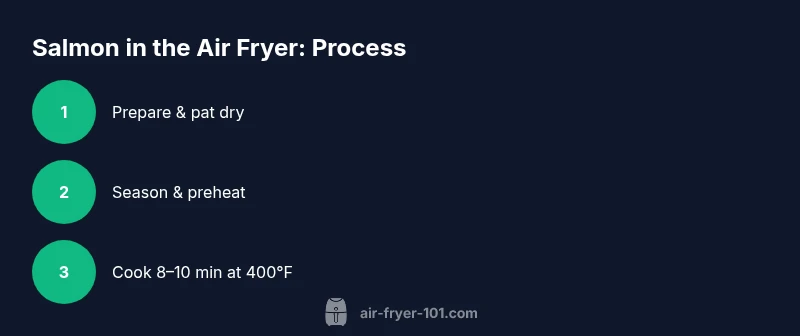
Preheat the air fryer to 400°F if your model benefits from it. Pat the fillet dry, brush lightly with oil, and season. Place skin-side down (if skin-on) in a single layer. Cook for 8–10 minutes, flipping halfway. Check the internal temperature; if needed, finish with 1–2 more minutes. Let rest briefly before serving to maximize juiciness and flavor.
Tools & Materials
- Air fryer(Any standard size; ensure basket is clean)
- Instant-read thermometer(Probe type; check at thickest part)
- Paper towels(Pat dry salmon thoroughly)
- Tongs or spatula(For flipping and removing)
- Oil spray or light oil(To help with browning)
- Seasonings (salt, pepper, paprika, etc.)(Customize to taste)
- Small bowl for seasoning mix(Optional for pre-mixing spices)
Steps
Estimated time: 15-25 minutes
- 1
Pat dry and season
Pat salmon dry with paper towels to remove surface moisture. Lightly oil, then season on all sides with salt, pepper, and your chosen spices. This helps browning and flavor adherence.
Tip: Dry surface = better sear; don’t over-oil—just a thin coat. - 2
Preheat the air fryer
If your model recommends preheating, run a short 2–3 minute preheat with the empty basket. This ensures a quicker sizzle when the fish hits the heat.
Tip: Preheating is especially helpful with older or high-wattage units. - 3
Place fillets in a single layer
Gently lay fillets skin-side down (if skin-on) in a single layer. Do not overlap pieces; proper spacing is essential for even browning.
Tip: If needed, trim to create uniform thickness for consistent timing. - 4
Cook and flip halfway
Cook at 400°F for 8–10 minutes for 1-inch fillets. Flip halfway to ensure even browning and crust formation.
Tip: Use a spatula to avoid breaking delicate flesh. - 5
Check temperature and rest
Insert thermometer into the thickest part; aim for 145°F. Remove and let rest 1–2 minutes before serving to lock in juices.
Tip: Thermometer accuracy matters—calibrate if needed.
Got Questions?
Can I cook frozen salmon in the air fryer, and how does the time change?
Yes, you can cook frozen salmon, but it will require additional time—start with a longer window and check doneness with a thermometer. It’s best to thaw for the most even result.
You can cook frozen salmon in the air fryer, but expect extra time and check doneness with a thermometer.
Should I preheat the air fryer for salmon?
Preheating creates a hotter initial surface, aiding browning and quicker cook onset. If your model heats quickly, you may skip preheating and watch the time closely.
Preheating helps browning; skip only if your model heats fast and you monitor closely.
What internal temperature should salmon reach for safety?
The USDA recommends cooking salmon to 145°F for safety. Using a thermometer ensures you reach this level without overcooking.
Aim for 145°F to be safe, using a thermometer to confirm.
Does skin-on vs skinless change cooking time?
Skin-on fillets tend to stay juicier and may brown a bit slower, but the difference is usually only about a minute or two. Adjust based on visuals and temperature.
Skin-on can stay moister and brown a bit differently; time adjustments are small.
What are common mistakes to avoid when air frying salmon?
Avoid overcrowding, skip from-frozen when possible, and don’t skip resting. Also verify doneness with a thermometer to prevent under- or overcooking.
Avoid overcrowding, thaw if possible, rest, and check temperature.
Quick Summary
- Cook salmon in a single layer for even heat exposure.
- Thickness dictates time; use a thermometer for safety.
- Preheat if your model benefits from it, then flip for even browning.
- Let the fish rest before serving for best texture.