Frozen Salmon in the Air Fryer: A Complete How-To
Learn how to cook frozen salmon in an air fryer with confidence. This step-by-step guide covers prep, cooking times, doneness checks, flavor ideas, and safety tips for flaky, healthy results.


You will learn to cook frozen salmon in an air fryer, from prep to doneness, including when to thaw, optimal temperatures, and seasoning ideas. This quick guide highlights essential steps and best practices to achieve flaky, healthy results with minimal fuss.
Why Frozen Salmon Air Fryer Is a Game-Changer
Cooking frozen salmon in an air fryer is a practical, time-saving approach for busy weeknights. The air fryer circulates hot air to create a crisp exterior while keeping the interior moist, often with little or no added oil. According to Air Fryer 101, this method works well across most salmon cuts, including skin-on fillets and skinless portions, making it a versatile option for households of every size. The Air Fryer 101 Team found that starting from frozen can reduce prep time significantly while still delivering a flaky center when you tune the timing and temperature properly. For health-minded cooks, the ability to cook from frozen without batter or heavy oils helps keep meals leaner without sacrificing flavor. In practice, the biggest difference between frozen and thawed salmon is speed and texture: frozen fillets may need a touch longer, but the result can be just as juicy if you monitor doneness. This section sets the stage with practical tips to maximize flavor and consistency across different air fryer models.
Top Considerations for Frozen Salmon in an Air Fryer
Selecting the right salmon and understanding your air fryer’s quirks are key. Look for fresh-frozen fillets that are well-trimmed and free from freezer burn. Thickness matters: 1-inch fillets cook differently from thicker portions, and skin-on pieces crisp up differently than skinless ones. Preheating is optional but helps achieve a more even crust. A light oil spray or a whisper of olive oil can improve browning without adding excess fat. Seasonings should be simple at first—salt, pepper, and lemon zest work beautifully—then you can experiment with garlic, paprika, or herbs. Temperature guidance, based on common practice, ranges around 380–400°F (193–204°C). Always rely on a safe internal temperature: 145°F (63°C) is the USDA recommended target. Air fryer models vary in heat distribution, so start with smaller batches, monitor closely, and adjust time by a minute or two per model.
Prep: Handling Frozen Salmon Before Cooking
Begin with proper thawing options: you can cook directly from frozen or thaw in cold water for 15–30 minutes if you prefer a faster cook in the air fryer. For direct-from-frozen cooking, pat the fillets dry to remove ice crystals, which helps achieve better browning. A quick light coating of oil helps protection against drying on the surface. If you thaw, gently pat dry again to remove excess moisture and enhance texture. Seasonings should be applied evenly on all surfaces, including edges. Place the fillets in the air fryer basket with space between pieces to ensure even circulation. If cooking skin-on, place skin-side down first to help render fat and create a crisp texture.
From Frozen vs Thawed: Cooking Timelines
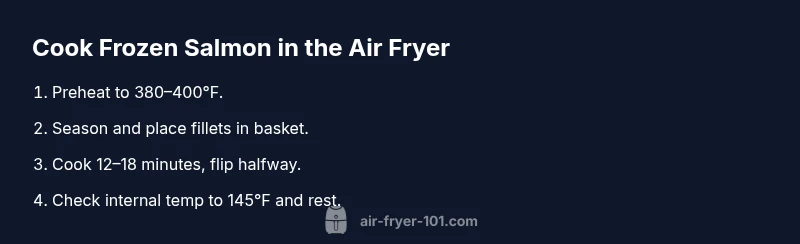
From frozen, expect slightly longer cook times and a chance of juicier centers if the fillets are evenly thick. Thawed fillets can cook more quickly and evenly, but the air fryer’s hot air can still brown the exterior nicely when the timing is right. A typical starting point is 12–18 minutes total for 1-inch fillets from frozen, turning halfway. For thicker pieces (1.5 inches or more), add a few minutes and monitor using a thermometer. If you notice curling or uneven browning, rearrange pieces or flip to ensure contact with the hottest surface. Always check for doneness before serving.
Flavor Boosters: Seasonings and Sauces
Seasoning blends should enhance salmon’s natural flavor without overpowering it. A simple mix of salt, pepper, lemon zest, and a drizzle of olive oil can be transformative. For variety, try paprika, garlic powder, dill, or a light maple glaze added during the last few minutes of cooking. Consider finishing with fresh lemon juice or herbs like parsley for brightness. If you prefer a crust, a light dusting of breadcrumbs or crushed almonds can add texture, but be mindful of crowding the basket which can impede browning.
Troubleshooting Common Issues
If the surface looks pale, increase the heat slightly or extend the cook time by 1–2 minutes, especially for thicker fillets. Dryness usually signals overcooking; check earlier and reduce time next batch. If salmon sticks to the basket, lightly oil the basket or use a perforated parchment liner. Uneven doneness can occur with irregular fillets; sort pieces by thickness and rotate mid-cook. Always use a meat thermometer to confirm the interior reaches at least 145°F (63°C).
Safety, Cleaning, and Maintenance
Work with clean, dry hands and utensils to prevent contamination. Always preheat when the recipe calls for it, and avoid placing greasy foods directly on the air fryer’s surface. After cooking, wash the basket and tray with warm, soapy water; some baskets are dishwasher-safe. Regularly check seals and vents to ensure optimal airflow. For health and safety, never reuse oil that has been overheated for cooking fish, and discard any leftovers within 2 days.
Quick Menu Ideas to Pair With Frozen Salmon Air Fryer
Pair your salmon with quick sides like roasted vegetables, quinoa, or a fresh salad for a balanced meal. A light yogurt-dill sauce or lemon-garlic yogurt dip complements the fish well. Leftover salmon can be flaked into salads, wraps, or grain bowls. For meal-prep, portion into single-serving containers with a side and refrigerate for up to 3 days.
Putting It All Together: A Simple Plan
With the above guidance, you can confidently cook frozen salmon in your air fryer for weeknights or entertaining. Start by choosing fillets with even thickness, decide whether to thaw, preheat if your model benefits from it, and apply a light seasoning. Monitor the process, flip as needed, and rest briefly before serving. This approach yields a juicy center and a crisply browned exterior every time.
Tools & Materials
- Air fryer with basket(4-6 quart size recommended; nonstick coating helps with cleanup)
- Paper towels(Pat fillets dry to remove ice crystals and moisture)
- Meat thermometer(Monitor internal temperature to 145°F (63°C))
- Tongs(Gentle flipping without breaking fillets)
- Oil spray or light oil(Optional: helps browning; use sparingly (1–2 sprays))
- Frozen salmon fillets(Choose fillets of similar thickness)
- Lemon wedges or herbs(For finishing touch)
Steps
Estimated time: 12-18 minutes
- 1
Preheat and prep
Preheat the air fryer to 380–400°F (193–204°C) if your model benefits from it. While it heats, remove fillets from packaging, pat dry with paper towels, and set up seasonings. This ensures better browning and helps prevent sticking.
Tip: Starting with dry fillets improves surface texture and browning. - 2
Season lightly
Lightly coat the fillets with oil or spray and apply a simple seasoning blend on all surfaces, including edges. For best results, keep seasoning minimal (salt, pepper, lemon zest) to let the fish shine.
Tip: Even coating prevents dry spots and helps flavors stick. - 3
Arrange in basket
Place fillets in a single layer in the air fryer basket, skin-side down if present, and ensure space between pieces for even air flow. Do not overcrowd; air needs to circulate.
Tip: If pieces are uneven, place thicker ends toward the heat source for balanced cooking. - 4
Cook and flip
Cook 8–12 minutes from frozen for 1-inch fillets, flipping halfway through to promote even browning. For thawed fillets, reduce total time by 2–4 minutes. Use a thermometer to check doneness.
Tip: Flipping halfway is key to uniform crust development. - 5
Check doneness
Check internal temperature to reach 145°F (63°C). If not reached, continue cooking in 1–2 minute increments until done. Rest briefly before serving.
Tip: Thermometer accuracy matters; insert into the thickest part away from bone. - 6
Serve and rest
Remove from heat, let rest 1–2 minutes, then serve with lemon wedges or herbs. Resting helps juices redistribute for juicier fillets.
Tip: A short rest improves texture and flavor balance.
Got Questions?
Can I cook salmon from frozen in an air fryer?
Yes. Cooking from frozen is convenient and yields good results with proper timing and temperature. Start with 12–18 minutes for 1-inch fillets and adjust for thickness.
Yes—you can cook salmon from frozen in an air fryer. Start with 12 to 18 minutes for 1-inch fillets and adjust for thicker pieces.
Should I thaw salmon before air frying?
Thawing can shorten total cook time and promote even browning, but it’s not required. If thawing, pat dry, season, and cook as you would for thawed fillets.
Thawing isn’t required, but it can shorten cook time and help even browning. If you thaw, pat dry and season.
What thickness works best for air frying?
About 1 inch thick fillets balance cook time and texture well. Thicker pieces will need longer, thinner pieces less time.
Around one inch thick is ideal; adjust time for thicker or thinner pieces.
Do I need oil for air frying salmon?
A light spray or brushing of oil helps browning but isn’t required. Use sparingly to keep the dish healthy.
A light spray helps browning, but you can skip oil for a leaner result.
What if the salmon sticks to the basket?
Preheat if your model benefits from it and lightly oil the basket or use parchment liners to minimize sticking.
If it sticks, preheat and lightly oil the basket or use parchment liners.
How do I reheat leftovers safely?
Reheat at 350°F for 3–5 minutes until warmed through, checking doneness to avoid overcooking.
Reheat at 350°F for a few minutes until hot, then check to avoid drying out.
Can I use sauces or glaze?
Yes, add glaze in the last 2–3 minutes to set without burning. Oil-based or vinegar-based glazes work best for quick finishing.
Yes—glazes work best in the last few minutes to prevent burning.
Watch Video
Quick Summary
- Cook frozen salmon in air fryer with even spacing
- Use a thermometer to hit 145°F
- Light seasoning maintains natural flavor
- Preheat if your model benefits from it
- Rest briefly before serving for juicier results