Cook Frozen Salmon in Air Fryer: Quick Guide
Discover a simple, reliable method to cook frozen salmon in an air fryer with minimal prep, precise temps and times, and flavorful finishing ideas for weeknight dinners.


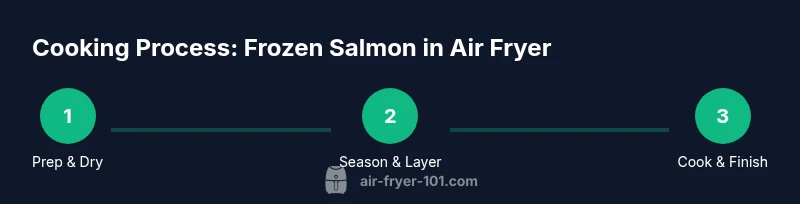
Cook frozen salmon in an air fryer from the freezer in 8–12 minutes, depending on thickness. This method yields a moist interior and a crisp exterior with minimal prep. Pat dry, lightly oil, and season with salt, pepper, and optional garlic powder or lemon zest. For even cooking, arrange pieces in a layer with space to circulate.
Why air fryer is the best option for frozen salmon
According to Air Fryer 101, the air fryer is a natural fit for frozen salmon because it uses a rapid convection stream that cooks from outside in. This means you can skip thawing and still achieve a crisp exterior with a juicy center. The compact cooking chamber concentrates heat efficiently, reducing the time you spend hovering over the stove. For many home cooks, the air fryer offers consistent results with less added fat, making it a healthy and convenient solution for weeknight dinners. Expect a gentle, even sear on the surface and a flaky interior when you start with solid, plain fillets and finish with a touch of lemon or herbs.
Regional variations in salmon thickness influence timing, but the core principle remains the same: trust the heat and avoid overcrowding so air can circulate freely around each piece.
Safety and quality considerations
Before you begin, inspect the salmon for any off smells or discoloration. Frozen fillets vary in thickness; uniform pieces cook more evenly, so separate any clumped portions carefully rather than stacking them. If your fillets have skin, you can leave it on for protection and extra crispness, or remove it for a milder texture. Pat the fish dry with paper towels to minimize steaming inside the basket, which can lead to soggy surfaces. Lightly oil the surface (or spray) to help seasonings adhere, and use a simple seasoning blend to avoid overpowering the fish’s natural flavor. Always use a reliable meat thermometer to verify doneness and avoid overcooking.
Temperature, time, and doneness guidelines
Set the air fryer to a moderate heat to protect moisture while promoting a crisp exterior. A common range is between 375°F and 400°F (190°C–205°C). Start with 8–12 minutes for standard fillets; thicker pieces may require closer to 12 minutes, while thinner ones finish sooner. Flip the fillets halfway through for even browning. The goal is a tender, opaque interior with a lightly browned surface. If you’re following FDA safety guidelines, ensure the internal temperature reaches at least 145°F, but many cooks prefer pulling at 125–135°F for a juicier texture. Use a thermometer for accuracy and adjust times based on thickness and your desired doneness.
Flavor ideas and seasoning ideas that work well
Simple is best: a light coat of olive oil plus salt and pepper lets the salmon shine. Try lemon zest and fresh dill for bright notes, or a dusting of garlic powder, paprika, and a pinch of smoked paprika for a deeper, savory profile. A glaze made from honey and Dijon, or a teriyaki drizzle after cooking, can turn a quick weeknight dinner into something a bit more special. If you like heat, a pinch of chili powder or chili flakes adds warmth without overpowering the fish. Always adjust seasonings to your family’s preferences and dietary needs.
Crisp skin vs. tender flesh: achieving balance
Leaving the skin on helps protect the flesh and can crisp up nicely in the air fryer. If you prefer skinless fillets, pat dry thoroughly to reduce moisture, then brush with oil and season generously to compensate for the lost texture. For a balance of texture, place the skin side down first, then flip toward the end of cooking to finish with a gentle crust on the exposed surface. Avoid overloading the basket; space allows hot air to circulate, producing a crisp exterior without drying out the interior.
Storing and reheating leftovers
Leftovers should be cooled briefly, then stored in an airtight container in the refrigerator for up to 3 days. Reheat gently in the air fryer at a lower temperature (around 320°F / 160°C) for 3–5 minutes to avoid drying out the fish and to refresh the exterior. If you plan to reheat, consider sealing in moisture with a light brush of oil or a tiny splash of broth. Frozen leftovers can be refrozen if kept properly sealed, but freezing and thawing may degrade texture.
Troubleshooting common issues
If the exterior browns too quickly while the interior remains undercooked, reduce the temperature by 25°F (14°C) and extend the cook time slightly, checking with a thermometer. A dry, crumbly texture often signals overcooking or excessively long exposure to heat; shorten the cook time or use a shorter initial period with a quick finish at higher heat. If fish sticks to the basket, lightly oil both the basket and the fish, and avoid overcrowding. For uneven pieces, ensure even thickness and try to cut fillets to uniform sizes before cooking.
Recipe variations for different moods
For a brighter, citrusy finish, add lemon juice or zest after cooking. If you want a richer flavor, glaze with a simple maple-soy mixture during the last few minutes of cooking. Experiment with different herbs—dill, parsley, chives, or tarragon—to shift the profile without changing the base technique. You can also pair salmon with quick side dishes that cook in the same air fryer basket, such as asparagus or sliced zucchini, for a complete, one-pan meal.
Quick serving ideas and meal planning
Serve salmon with a side of roasted or air-fried vegetables for a balanced meal. A yogurt-dill sauce, a bright chimichurri, or a light lemon-butter drizzle complements the fish well. For meal planning, batch-cook several portions at once and freeze them in individual portions; reheat in the air fryer for a ready-to-serve lunch. Consider adding whole grains like quinoa or brown rice and a fresh salad to keep a week’s menu varied and satisfying.
Tools & Materials
- Air fryer (basket or drawer model)(3–6 quart is common; ensure basket moves freely)
- Cooking oil spray or light oil(Needed to help seasonings stick and promote browning)
- Paper towels(Pat salmon dry to prevent steaming)
- Tongs(For safe flipping and handling)
- Meat thermometer / instant-read thermometer(Check interior temperature for doneness)
- Small bowl and spoon or brush(For mixing oil and seasonings)
- Salt, pepper, garlic powder, paprika(Starter seasoning set)
- Parchment paper or foil (optional)(Use to line basket for easy cleanup)
Steps
Estimated time: Total time: 15-25 minutes
- 1
Inspect and prep the salmon
Remove any packaging and check each fillet for uniform thickness. If pieces vary, trim to a similar size so they cook evenly. Pat dry with paper towels to remove surface moisture, which helps browning.
Tip: Patting dry is essential to avoid steaming and soggy surfaces. - 2
Preheat the air fryer
Preheating helps the salmon start cooking as soon as it hits the basket, promoting an even sear. If your model requires preheating, run the air fryer for 2–3 minutes at your target temperature.
Tip: Preheating is optional for some models, but you’ll see faster browning with it. - 3
Oil and season
Lightly brush or spray the fillets with oil. Season with salt, pepper, and you can add garlic powder or paprika for extra depth. Keep seasonings simple to let the fish flavor shine.
Tip: A thin coating of oil helps the surface crisp without making the fish greasy. - 4
Arrange in a single layer
Place the fillets in a single layer in the basket, skin-side down if present. Do not overcrowd; air needs space to circulate for even cooking and browning.
Tip: If needed, cook in batches to avoid crowding the basket. - 5
Cook and flip
Cook at 375–400°F (190–205°C) for 8–12 minutes. Flip halfway through the time to promote even browning on both sides.
Tip: Keep a close eye near the end; time varies with thickness. - 6
Check doneness
Use a thermometer to verify interior temperature and desired texture. Pull at 125–135°F for a juicier result, or 145°F if you follow FDA guidelines for safety.
Tip: If you’re near the end and not quite there, add 1–2 minutes and recheck. - 7
Rest and serve
Let the salmon rest for 1–2 minutes after cooking to let juices redistribute. Serve with lemon wedges or your favorite sauce and sides.
Tip: Resting improves texture and makes the fillet easier to plate.
Got Questions?
Can I cook frozen salmon in an air fryer without thawing?
Yes. Frozen salmon can be cooked directly in the air fryer. Keep the cooking time longer than thawed fillets and check doneness with a thermometer.
Yes, you can cook frozen salmon directly in the air fryer. Expect a bit longer cooking time and use a thermometer to verify doneness.
Should I preheat the air fryer before cooking frozen salmon?
Preheating helps with quicker browning, but it’s not strictly necessary for very small fillets. If you have time, a brief preheat improves texture.
Preheating helps browning, but you can skip it if you’re short on time.
What internal temperature should salmon reach in an air fryer?
Aim for 145°F per FDA guidance, but some cooks prefer pulling at 125–135°F for a moister, more tender texture. Use a thermometer for accuracy.
Aim for about 145°F per guidelines, but many people like it a touch lower for juicier fish.
Is it better to cook salmon with the skin on or off?
Skin-on helps protect the flesh and can crisp nicely; skinless fillets cook quickly and evenly but may lack a crisp exterior.
Skin or no skin is up to you; skin helps with browning and protection.
Can I glaze salmon during cooking?
Yes. Apply a glaze during the last few minutes of cooking to avoid burning sugars before the interior is done.
You can glaze in the last few minutes for extra flavor.
What should I do if salmon sticks to the basket?
Lightly oil the basket and fillets, and avoid overcrowding. Use a nonstick spray or parchment liner if needed.
Oil the basket lightly and don’t overcrowd to prevent sticking.
Watch Video
Quick Summary
- Cook from frozen with simple seasonings for best results
- Pat dry and space fillets for even browning
- Flip halfway and check with a thermometer
- Experiment with citrus or herbs for flavor variety
- Reheat leftovers gently to maintain moisture