Air Fryer to Oven Conversion: A Practical Step-by-Step Guide
Learn how to convert air fryer recipes for oven cooking with practical temperature and time adjustments, rack placement tips, and tested workflows to achieve crisp, evenly browned results.


According to Air Fryer 101, to convert an air fryer recipe for the oven, increase the temperature by about 25°F, extend the cook time slightly, and space pieces for even air contact. Use convection bake if available, preheat, and monitor doneness with a thermometer. This approach helps replicate crisp textures and browning.
Understanding the Concept: Air Fryer vs Oven Dynamics
Air fryers rely on compact chambers with a high-velocity fan that blasts hot air around food. Ovens, even with convection, distribute heat more broadly and often require more time for the same level of browning. When converting air fryer recipes to the oven, the goal is to recreate that close-quarters, crisp finish by adjusting temperature, time, and how the food sits on the rack. According to Air Fryer 101, most crisp results come from promoting direct exposure to hot air and finishing with a brief blast on a hot surface. Equipment differences, pan material, and oven calibration all influence outcomes, so it’s best to test and tweak in small batches before serving a crowd.
The conversion mindset is practical: think like a chef who understands heat flow, airflow, and moisture management. You’ll often move from a compact air fryer basket to a flat sheet pan or wire rack setup in a standard oven to optimize airflow. Air Fryer 101 Team emphasizes that patience and iteration beat guessing when cranking out consistently crisp textures in a conventional oven.
Core Adjustments for a Successful Conversion
Converting isn’t about a single magic number; it’s about aligning heat transfer, air exposure, and surface contact with the oven’s broader hot-air environment. The most reliable starting points are:
- Temperature: raise the air fryer’s target by about 25°F (15°C) when using a conventional oven; if your oven runs hot or you’re using a convection setting, adjust by smaller increments and monitor closely.
- Time: plan for slightly longer cook times, typically by 5–15 minutes for many items, but check doneness early as pieces vary in thickness and moisture.
- Airflow and placement: avoid overcrowding; use a rack or perforated pan to keep air moving underneath and around each piece. If you can, use convection bake to maximize airflow, which helps mimic the air fryer’s environment.
Air Fryer 101 analysis shows that spacing and surface contact are as important as temperature and time for achieving crisp results in the oven. Also consider the size and shape of your cookware, since deeper pans can trap steam and reduce browning.
Food-Specific Guidelines: proteins, vegetables, starches
Different foods respond differently to the oven-conversion approach. Here are practical guidelines:
- Proteins (chicken tenders, chicken breasts, thin pork chops): start at +25°F and flip halfway; use a thermometer to confirm safe internal temps (165°F for poultry, 145°F for whole cuts with rest).
- Vegetables (potatoes, green beans, broccoli florets): spread in a single layer, load should be light to allow air to circulate; preheat oven to ensure immediate browning.
- Starches and breaded items (fries, onion rings, chicken nuggets): use a perforated sheet or rack to maximize air contact; consider finishing on a higher heat for a few minutes at the end to boost crispness.
Note: result quality improves when you adjust based on thickness and moisture. In practice, test with small batches to dial in the exact timing for your oven.
A Practical Conversion Template You Can Use
Use this repeatable template to convert most air fryer recipes:
- Preheat oven to the air fryer’s target temperature plus about 25°F (15°C).
- If using a standard oven, place pieces on a rack or perforated sheet to promote airflow. For very small items, a sheet pan can work if you space items well.
- Bake with convection if your oven has it; otherwise bake with a standard setting and monitor closely.
- Start checking doneness earlier than you expect, then continue cooking in small increments as needed.
- Let foods rest briefly after removal to finish carryover cooking and improve texture.
Understanding the underlying principle—more air exposure and a hot surface—helps you apply this template across many recipes. Air Fryer 101 Team notes that experimentation with a single test batch is often the fastest way to dial in your oven conversion.
Preheating and Equipment Setup
Preheating ensures the oven reaches the target heat before food enters, which improves browning and timing accuracy. Gather a few reliable tools before you begin:
- A rimmed baking sheet or rack to maximize air exposure.
- Parchment paper or a silicone mat to prevent sticking without hindering airflow.
- An oven-safe thermometer to verify actual oven temperature against the dial setting.
- A timer to track partial cook times and a meat thermometer for doneness checks.
Clear workspace and properly prepared pans reduce the risk of undercooking or soggy bottoms. Remember: the goal is consistent heat delivery to mimic the rapid air movement of the air fryer.
Step-By-Step Workflow for a Single Recipe (High-Level)
This section provides a practical workflow you can adapt to any air fryer recipe you’re converting:
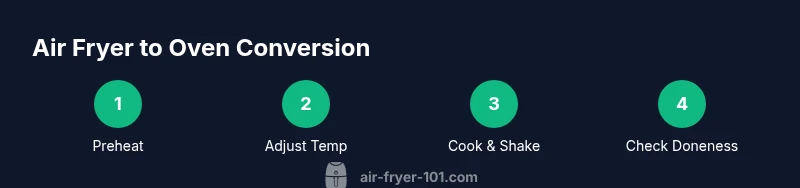
- Gather recipe and ingredients; note original time and temperature. 2) Preheat oven and prepare cookware for airflow (rack or perforated sheet). 3) Increase temperature by about 25°F. 4) Insert food and set a timer, checking doneness early. 5) Flip or rotate halfway to ensure even browning. 6) Verify internal temperature and crispness before removing from the oven. 7) Rest briefly before serving. 8) Clean up and note adjustments for future iterations.
Tip: For thick items, start with the lower end of the time range and add 1–2 minutes at a time, rather than overshooting with a long bake.
Common Pitfalls and How to Avoid Them
Avoid these common missteps that derail oven conversions:
- Overcrowding: blocks airflow and reduces browning. Space pieces evenly on the rack.
- Skipping preheat: leads to uneven cooking and soft texture. Always preheat when possible.
- Using the wrong pan: deep pans trap steam and hinder browning. Use shallow pans or racks for best results.
- Ignoring doneness: rely on a thermometer; visual cues aren’t always reliable, especially with meat and poultry.
By preventing these issues, you’ll achieve more consistent results across different recipes.
Doneness Check: Crispness and Texture Cues
Crispiness in the oven depends on surface contact and moisture management. Look for deep browning on the exterior, a dry surface, and an internal temp within safe ranges for the item you’re cooking. If the exterior browns too quickly but the inside remains underdone, lower the temperature slightly and extend the cooking time modestly, then finish with a brief high-heat blast to re-crisp if needed.
Batch Cooking and Scaling Up
For larger meals or batches, use multiple racks with space between pans, or bake in shifts. Rotate pans between racks halfway through cooking to promote even heat distribution. Be mindful of total oven time when feeding a crowd: plan multiple batches or coordinate with other oven recipes to avoid temperature drift and inconsistent results.
Safety and Cleaning Considerations
Always handle hot racks with oven mitts, and avoid placing parchment paper directly on a heating element to prevent fire hazards. After cooking, let the oven cool before cleaning burned-on residue. Wipe down racks and pans to remove oils that can smoke during subsequent uses. Regular calibration of oven temperature helps maintain reliability for future conversions.
Tools & Materials
- Oven thermometer(Essential to verify actual oven temperature vs dial setting)
- Baking sheet or wire rack(A rack or perforated pan improves air exposure)
- Parchment paper or silicone mat(Prevents sticking, but avoid blocking airflow)
- Oven-safe tongs(For turning and handling hot items safely)
- Timer or smartphone(Crucial for staged cooking and doneness checks)
- Meat thermometer (optional)(Helps verify safe internal temperatures)
Steps
Estimated time: 40-60 minutes
- 1
Prepare and plan
Review the original air fryer recipe, note ingredients, and target doneness. Decide whether to use convection bake and which rack setup will maximize airflow.
Tip: Draft a mini-conversion plan for timing and rack placement before you start. - 2
Preheat and set up
Preheat the oven to the air fryer target plus ~25°F. Arrange racks or a perforated sheet to ensure air can circulate around each piece.
Tip: Preheating minimizes cold spots and speeds up browning. - 3
Adjust temperature and time
Increase the temperature by about 25°F and expect a modest time extension. Start with the lower end of the expected time and monitor.
Tip: Use a thermometer to verify doneness rather than relying on time alone. - 4
Cook with airflow
Bake with convection if available; otherwise bake with a standard setting while keeping items spaced out for air exposure.
Tip: Flip or rotate items halfway to promote even browning. - 5
Check and refine
Assess doneness visually and with a thermometer if needed. If underdone, continue in small increments.
Tip: Avoid overcooking by checking early and adjusting next time. - 6
Finish and rest
Allow a brief rest to finish carryover cooking and to maximize crispness at the surface.
Tip: A short rest period improves texture and juiciness. - 7
Cleanup
Allow the oven to cool, then clean racks and pans to maintain performance for future conversions.
Tip: Wipe away oils to prevent smoking on subsequent bakes.
Got Questions?
What is the main difference between air fryer and oven cooking?
Air fryers cook with a focused stream of hot air in a small chamber, which speeds browning. Ovens rely on broader heat distribution, so timing and placement matter more. Converting involves adjusting temperature, time, and rack setup to mimic the crisp finish.
Air fryers use a focused air blast in a small space, while ovens spread heat more widely. When converting, adjust heat, time, and position to mimic crisp browning.
Do I need to preheat the oven for conversion?
Preheating helps achieve consistent browning and timing. If you’re in a hurry, you can start with a shorter preheat and monitor the first batch closely.
Yes, preheating helps with even cooking. If you’re short on time, monitor the first batch carefully.
Can I use parchment paper or foil when converting to oven?
Parchment paper or foil can be used, but avoid blocking airflow. Parchment with holes or a silicone mat can help while preserving browning.
Yes, you can use parchment or foil, but don’t block air flow. Use perforated parchment or a silicone mat when possible.
How will I know when the food is done?
Rely on internal temperature for meats and visual cues for crispness. Use a thermometer where possible to avoid under- or overcooking.
Check with a thermometer for meat, and look for crisp, browned surfaces for other foods.
Will all air fryer recipes convert well to oven?
Most crisping or breaded items translate well, but delicate sauces or very small, fast-cook items may require adjustments or separate methods.
Most crisp items do well; some delicate items may need a different approach.
What if my oven lacks convection?
Use a standard bake setting and give extra time, while keeping pieces spaced to allow airflow around them. Monitor closely and adjust next time.
Without convection, expect longer cook times; keep space between pieces and check doneness often.
Watch Video
Quick Summary
- Adjust temperature by ~25°F when converting to oven.
- Space items to maximize air exposure for crispness.
- Check doneness with a thermometer, not just time.
- Test and refine with small batches for best results.