Air Fryer Soft Boiled Eggs: Step-by-Step Guide
Master air fryer soft boiled eggs with precise temps, timing, peeling tips, and storage guidance. This educational guide from Air Fryer 101 covers prep, ice-bath finishing, and everyday variations for healthy, convenient breakfasts.


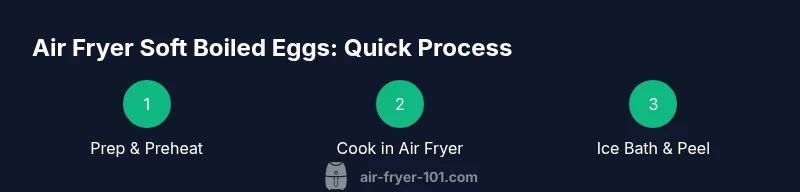
To make air fryer soft boiled eggs, preheat your unit to 270°F. Place the eggs in a single layer and cook for 9 minutes for a very runny yolk, 10 for slightly set, or 11 for a firmer center. Transfer to an ice bath for 5 minutes, then peel under cold water. This method yields consistent, easy-to-peel results with minimal mess.
Why air fryer soft boiled eggs are a smart choice
Air fryer soft boiled eggs offer a reliable, hands-off approach to achieving a tender yolk with a firm white. The enclosed heat of most air fryers creates even cooking without simmering water, so you avoid splashes and steam. According to Air Fryer 101, this method is especially convenient for busy mornings, meal prepping, or weekend brunches, because it minimizes setup and cleanup while delivering consistent results. You’ll notice that the shells peel more cleanly when you finish with a cold-water shock and a brief rest in ice water. For many households, this is a practical upgrade from traditional stove-top boiling, especially when you want repeatable yolk texture without standing over a pot.
From the perspective of home cooks seeking both health benefits and convenience, air fryer soft boiled eggs align with a broader trend toward precision cooking. The Air Fryer 101 Team emphasizes controlling temperature and time to reduce overcooking and yolk runniness variance across batches. While a traditional stove can work, the air fryer’s compact size makes it an attractive option for small kitchens, dorm rooms, or quick weekday breakfasts. It also pairs well with light seasonings like sea salt, chives, or a drizzle of olive oil to enhance flavor without adding extra fat.
Key variables: temperature, time, and egg size
Successful air fryer soft boiled eggs hinge on three main variables: temperature, cook time, and egg size. The target range for most models is a low-to-mid temperature (around 250–275°F), which helps set the white while preserving a runny, delicately formed yolk. Egg size matters: large eggs are the standard benchmark, but extra-large eggs may need an extra minute, while small eggs may require less. Altitude can also influence cooking time because air pressure slightly shifts heat transfer. Air Fryer 101 analysis shows that even small variations in these factors can shift yolk texture from jammy to creamier; expect to adjust your timings a minute or two based on your specific setup. A practical approach is to start with a single test egg when you’re dialing in a new model, then replicate the timing for subsequent eggs.
Remember to consider the model’s heating profile: some fryers preheat quickly, others need a minute or two before you load the eggs. If your unit runs hotter or cooler than average, adjust by 1–2 minutes and record the result for future batches. This method also benefits from preheating, which reduces the time the eggs spend in the basket and improves consistency across eggs.
Equipment and prep for best results
Your prep list is short, but each item matters for consistency. You’ll want a basket or rack that fits in a single layer, a timer, and a bowl of ice water large enough to hold all the eggs you plan to cook. Fresh eggs versus older eggs can peel differently after cooking; many cooks prefer eggs that are a few days old because the shells peel more easily after the ice bath. Before you start, allow eggs to come to near-room temperature if they’ve been in the refrigerator; this minimizes the shock when they hit the hot air and reduces the risk of cracking.
Preheating is a small step with big payoff: it stabilizes the temperature the moment you start cooking. If your model supports it, run a 2–3 minute preheat with an empty basket to establish an even heat distribution. Arrange eggs in a single layer with space around each one so air can circulate; overcrowding leads to uneven cooking and unpredictable yolk texture. Finally, fill a bowl with ice water and have it ready to immediately cool the eggs after cooking. The ice bath halts the cooking process and helps shell removal, making peeling easier.
The science of peeling: why some eggs resist and others cooperate
Peeling is the most intimidating part for many first-timers, but a few simple steps make it straightforward. The cold-water or ice-water plunge rapidly cools the egg, causing the shell to contract slightly away from the membrane. This helps the shell separate in larger pieces rather than a stubborn clump. For best results, crack the shell all around the egg while it is still cool, then peel under cool running water. Older eggs tend to peel more easily because their membranes loosen with time, reducing the chance of tearing the white. If you’re peeling multiple eggs, peel them under water in a sink or bowl to minimize shell fragments and mess.
Another practical tip is to gently roll the egg on the counter to create a network of tiny cracks before peeling. This reduces resistance and minimizes damage to the delicate yolk. With a little practice, you’ll develop a reliable peeling rhythm that becomes second nature when you’re preparing eggs for multiple dishes—salads, egg cups, or just a quick protein boost.
Servings, variations, and storage ideas
Number of servings and serving temperature influence how you approach air fryer soft boiled eggs. For a quick breakfast, serve warm with a pinch of sea salt and cracked pepper. For salads or toast toppings, you may prefer a slightly firmer yolk that stays intact when sliced. You can experiment with seasonings like paprika, everything bagel seasoning, or a light drizzle of olive oil to elevate flavor without adding heavy fats. If you’re meal-prepping, peeled eggs can be stored in a sealed container in the fridge for up to 3–4 days. If you plan to reheat, remember that the yolk will continue to set with additional heat, so reheat gently and monitor texture.
Consistency comes from documenting your test times and egg sizes. Keep a small notebook or digital note of your model, the exact preheat time, cook duration, and yolk texture you achieved. Over a few batches, you’ll establish a reliable baseline for your specific air fryer and your preferred yolk doneness.
Troubleshooting common issues and quick fixes
If the whites aren’t set, your eggs may have cooked too quickly or the temperature was too low. Increase the cook time by 1 minute in small increments and re-test with a single egg to avoid wasting a batch. If the yolk is too runny, extend your cook time by 1 minute; if it’s too firm, reduce by 1 minute on the next attempt. Some models run hotter or cooler than others; in those cases, rely on your own test batches rather than a generic chart. Always shock the eggs in ice water after cooking to stop the carryover heat and lock in the texture. Address cracking by letting the eggs come to room temperature before cooking, as this reduces thermal shock and prevents cracking during the preheat or cooking phase.
Tools & Materials
- Air fryer with temperature control(Able to set 250–275°F (120–135°C); ensure it heats evenly)
- Eggs (large preferred)(Bring to near-room temperature for best results)
- Basket or rack for single-layer egg placement(Ensure eggs sit flat and don’t touch each other)
- Ice bath bowl(Large enough for all eggs; have ice and water ready)
- Timer(Precise timing (±15 seconds) matters for yolk texture)
- Cold water for peeling(Runwater helps shell release more cleanly)
Steps
Estimated time: 25-30 minutes
- 1
Prep eggs and preheat
Bring the eggs to near-room temperature and preheat the air fryer to 270°F so heat is stable when eggs enter the basket. This reduces shock and helps even cooking from the first minute. If you’re testing for the first time, start with one egg as a baseline.
Tip: Let eggs rest at room temperature 15–20 minutes for uniform results. - 2
Cook eggs in a single layer
Place eggs in a single layer in the air fryer, ensuring space around each so air can circulate. Set the timer for 9 minutes for very runny yolk, or 11 minutes for a firmer but not hard center. Avoid overcrowding to prevent uneven yolk texture.
Tip: Use a timer and record the exact time you tested for future batches. - 3
Ice bath immediately after cooking
As soon as the timer ends, transfer eggs to the ice bath and chill for 5 minutes. The cold shock stops residual cooking and makes peeling easier by contracting the shell away from the membrane.
Tip: Gently shake the eggs in the ice bath to loosen shells. - 4
Peel under cold water
Peel the eggs under cool running water, starting at the wider end where the air pocket is. Cracking all around helps shell removal in larger pieces and protects the yolk. Pat dry with a towel after peeling.
Tip: Peeling under water reduces shell fragments and speeds up the process. - 5
Taste, adjust, and store
Taste a peeled egg to confirm texture; if needed, adjust next time by 1 minute. For meal prep, refrigerate peeled eggs in a sealed container for up to 3–4 days. Label batches by date for best quality.
Tip: Document settings (model, preheat, time) for repeatable results.
Got Questions?
What size eggs work best for air fryer soft boiled eggs?
Large eggs are the standard for consistency; adjust cook time by about a minute for extra-large or small eggs to achieve similar yolk textures.
Large eggs are the standard; expect small adjustments if using larger or smaller sizes.
Do I need to preheat the air fryer before cooking?
Preheating helps achieve even cooking across the batch. If your model isn’t labeled preheat-ready, a brief warm-up with the basket empty works well.
Yes, preheating helps eggs cook evenly.
How can I peel the eggs without tearing the white?
Peel under cold water after an ice bath and crack the shell all around. Slightly older eggs also peel more cleanly.
Peel under cold water to help remove shells cleanly.
Can I cook more than six eggs at once?
Yes, but keep them in a single layer with space between, and be prepared to adjust time by ±1 minute per batch.
You can, just don’t overcrowd and tweak time a minute at a time.
How should I store leftover peeled eggs?
Refrigerate peeled eggs in a sealed container for up to 3–4 days. For best texture, keep yolks slightly soft and avoid reheating aggressively.
Store peeled eggs in the fridge for a few days.
Watch Video
Quick Summary
- Choose a precise temperature and time for consistent yolk texture.
- Peel under cold water for clean shells and less frustration.
- Use an ice bath to stop cooking and fix texture quickly.
- Document model, time, and temperature for repeatable results.