Air Frying vs Baking: What’s the Difference for Home Cooks?
Explore the practical differences between air frying and baking, including how each method works, texture outcomes, and ideal food choices for quick meals and larger batches.


Air frying vs baking: what is air frying vs baking? These two methods answer different cooking needs. Air frying uses a compact, high-velocity fan and a small chamber to move hot air rapidly around the food, creating a crispy exterior with little oil. Baking relies on a larger oven chamber and ambient heat to cook food slowly and evenly, producing browning that covers a broader surface but often requiring more oil or fat to achieve crunch. According to Air Fryer 101, these methods are not interchangeable in every situation, but understanding their strengths helps you select the right approach for a given dish. This quick overview prepares you for a deeper comparison, focusing on speed, texture, and batch size, which matter most to home cooks who juggle meals, budgets, and cleanups. In 2026, many households leverage both methods depending on the recipe, ingredient, and time available. The goal is to use the right tool for the right outcome, not to force a single method onto every plate.
What is air frying vs baking? A concise distinction
In the kitchen, two popular ways to cook with dry heat are air frying and baking. The phrase 'what is air frying vs baking' captures the core choice many cooks face when they want crisp textures without deep frying. Air frying uses a compact, high-velocity fan and a small chamber to move hot air rapidly around the food, creating a crispy exterior with little oil. Baking relies on a larger oven chamber and ambient heat to cook food slowly and evenly, producing browning that covers a broader surface but often requiring more oil or fat to achieve crunch. According to Air Fryer 101, these methods are not interchangeable in every situation, but understanding their strengths helps you select the right approach for a given dish. This quick overview prepares you for a deeper comparison, highlighting when speed, texture, and batch size matter most for home cooks who juggle meals, budgets, and cleanups. In 2026, many households leverage both methods depending on the recipe, ingredient, and time available. The goal is to use the right tool for the right outcome, not to force a single method onto every plate.
How air fryers work compared to traditional ovens
Air fryers function as compact convection appliances: a heating element (usually at the top) works with a high-speed fan that blasts hot air around the food inside a perforated basket. The result is a quick, localized transfer of heat that encourages surface browning and crisping, similar to deep frying but with substantially less oil. A traditional oven, by contrast, uses radiative and conductive heat in a larger, static chamber. Heat circulates more slowly and travels farther to reach the food, which can promote even browning across bigger items but often requires longer preheating and cooking times. The advantage of the air fryer is speed and surface texture; the larger oven offers versatility, capacity, and more even interior cooking for larger roasts or sheet-pan meals. When you choose between them, consider the size of the batch, the food form (small pieces vs whole roasts), and whether you want a dainty crunch or a fully browned interior.
Texture and browning: when to choose air frying vs baking
Texture is a primary reason cooks pick one method over the other. Air frying tends to produce a crisp outer layer with a lower moisture loss, which is ideal for bite-size snacks, chicken nuggets, frozen fries, and vegetables like Brussels sprouts or zucchini slices. Baking gives a more even browning across larger surfaces, making it preferable for casseroles, roasts, bread, cookies, and sheet-pan meals where interior tenderness and uniform color matter. The Air Fryer 101 team notes that some foods benefit from a touch of preheating in both methods to encourage immediate browning, while others perform best with a steady, longer bake to ensure tenderness inside. In your kitchen, experiment with finishing times and temperatures, but recognize that crispness may come at the cost of interior moisture if you push the heat too hard for too long.
Use cases and foods best suited for each method
Air frying shines for quick snacks and small- to medium-sized batches: frozen appetizers, bite-sized vegetables, and lean proteins cook rapidly with a satisfying crust. It also excels for reheating leftovers where you want to reclaim texture. Baking, meanwhile, handles larger portions, breads, casseroles, and recipes that rely on even, slow heat to develop flavor through longer simmering or proofing. For instance, a sheet-pan dinner scales easily in a conventional oven, but if you are cooking for one or two and crave a crispy edge on fries, air frying remains the simpler option. The practical takeaway is to map the dish to the method: convenience and texture first, quantity and uniformity second.
Energy efficiency, time, and batch considerations
In many homes, energy use is a practical concern. Air fryers heat quickly and usually require shorter preheats, which can save time and energy for small meals. Baking benefits from the oven's larger capacity, reducing the need to run multiple cooking appliances when preparing several components of a meal. Batch size matters: a single tray in an air fryer may outperform a whole oven rack in terms of speed, but you cannot always scale the air fryer to fill a family dinner. Air Fryer 101 analysis shows that the choice between the two methods often comes down to portion size, desired texture, and available kitchen space. For shoppers, consider whether you need a compact secondary device or a full-size oven alternative; the right choice depends on your cooking habits and space.
Practical tips to optimize results in both methods
- Do not overcrowd the air fryer basket; give space for air to circulate and ensure even browning.
- Preheat when the recipe calls for it, particularly for larger items or when moving from refrigerator cold to hot.
- Use a light coating of oil on foods that benefit from browning, but avoid drenching; you want crisp edges, not soggy interiors.
- In baking, use convection mode if available to mimic air fryer airflow for smaller items.
- Use sheet pans of appropriate size in the oven and rotate trays to promote uniform color.
- Let foods rest briefly after cooking to reabsorb juices and improve texture.
Common mistakes and how to avoid them
- Assuming air frying is a one-size-fits-all replacement for baking. Not all recipes translate directly; adjust cooking times and temperatures.
- Overcrowding baskets or pans. This blocks airflow and undermines crispness.
- Using the wrong cookware. Some metal trays conduct heat differently, affecting browning and texture.
- Ignoring preheating when it's essential to achieve sear. Preheating can make the difference between a crust and a pale result.
- Not accounting for batch size. Larger batches require longer cook times or multiple runs; plan accordingly.
Cleaning, maintenance, and safety considerations
Post-cooking cleanup is typically easier with air fryers due to less oil residue, but you should still wash the basket and tray after every use. For ovens, wipe spills promptly to prevent baked-on messes and use racks that are simple to clean. Safety-wise, avoid overcrowding and always use oven mitts when handling hot trays. Regularly inspect seals, cords, and fans to maintain performance and reduce fire risk. Whether you choose air frying or baking, follow manufacturer guidelines to prevent overheating and ensure long-term reliability.
Decision framework: quick path to the right method
Start with batch size and texture: small, crisp pieces or reheating tasks lean toward air frying; larger, uniform roasts and scheduled meals may benefit from baking. Next, consider space and energy: if you have a full-size oven and need to feed a crowd, baking is likely the right choice; if you want a quick, tidy result for a single dish, air frying is convenient. Finally, match the recipe and your preferences: some recipes are tried-and-true in one method but not the other. Use this framework to guide your decision rather than forcing one approach on everything.
Comparison
| Feature | Air frying | Baking |
|---|---|---|
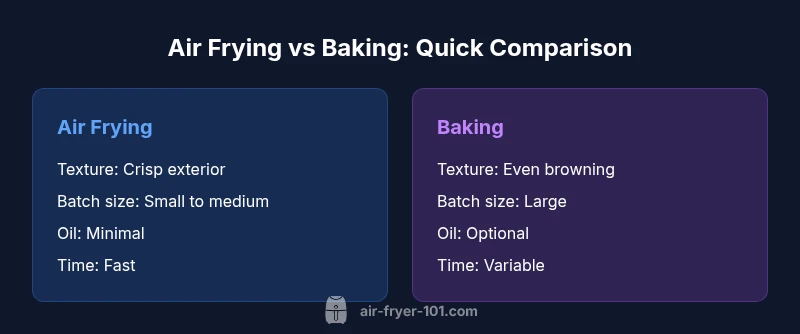
| Texture outcome | Crisp exterior with minimal oil | Even browning across larger surfaces |
| Best for | Small portions, snacks, quick reheats | Large batches, roasts, breads, cookies |
| Typical cook time (qualitative) | Faster for small items | Slower for larger items or batches |
| Oil usage | Low to none; relies on air circulation | Variable; depends on recipe and desired fat |
| Ease of cleanup | Usually simpler with less oil | More pans/trays to clean |
| Heat distribution | Compact, rapid convection inside basket | Large oven with even, wide heat distribution |
Pros
- Fast results for small portions
- Less oil and healthier frying options
- Compact footprint suits small kitchens
- Easy cleanup for many meals
Cons
- Limited batch size compared to a full oven
- Not ideal for very thick or large items
- Some recipes don’t translate well
- Requires separate appliance in many kitchens
Air frying is the faster, oil-sparing option for quick, crisp meals; baking remains the best for large batches and evenly browned, versatile dishes
Choose air frying when you want speed and texture with minimal oil. Choose baking when you cook for a crowd or need even browning across larger dishes.
Got Questions?
Which method cooks faster: air frying or baking?
Air frying often cooks faster for small items due to rapid air movement, while baking can be quicker for large, composed dishes when you consider overall meal timing.
Air frying is usually quicker for small items, but for big meals, baking may win overall time.
Can you achieve bakery-quality browning with air frying?
Air frying can produce a crisp crust on many snacks and proteins, but true bakery textures (like soft interiors with pronounced crumb) often require traditional baking or a combination approach.
You can get crispiness, but for bakery textures you may still prefer an oven.
Do I need to preheat air fryer or oven?
Preheating is commonly recommended for air fryers and ovens to ensure consistent browning, especially for larger pieces. Some quick recipes skip preheating but expect a longer cook time.
Preheating helps with even browning; skip it only if the recipe explicitly says so.
What foods are best avoided in air fryers?
Foods with heavy wet batters can splatter and stick; very large items may not fit or cook evenly; delicate pastries can dry out if not monitored carefully.
Wet batters and very large items can be tricky in air fryers.
Is air frying healthier than baking?
Air frying typically uses less oil, which can reduce calories and fat. Health outcomes depend on the ingredients and cooking method you choose in each case.
Air frying often means less oil, but overall health depends on ingredients too.
Quick Summary
- Choose air frying for speed and crisp texture with less oil
- Bake for large batches and even, tender interiors
- Match method to batch size and texture goal
- Preheat when appropriate to improve browning
- Plan for cleanup: fewer items, less to wash