Air Fryer vs Baking: A Comprehensive Side-by-Side Guide
Explore air fryer vs baking to understand speed, texture, capacity, and health implications. Learn when to use an air fryer for quick meals and when baking shines for large batches and even browning.


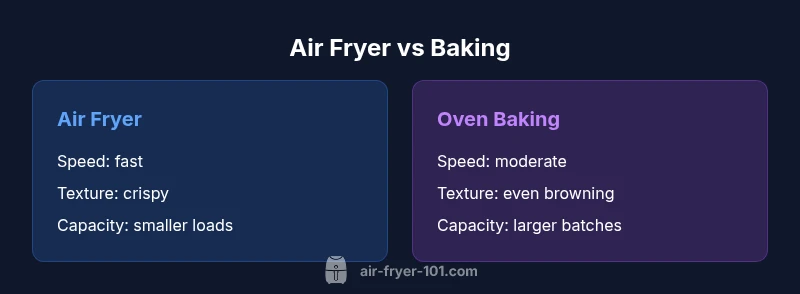
When you compare air fryer vs baking, the air fryer tends to cook faster and deliver crisp textures with less oil, while baking in a conventional oven handles larger batches and even browning for bigger roasts. For quick meals and small servings, the air fryer shines; for family-size cooks and more versatile baking, traditional oven methods win. See the full comparison for nuanced performance and best-use scenarios.
Defining the comparison: air fryer vs baking in home kitchens
Choosing between air fryer vs baking is more than picking a gadget; it's about the way you cook, the textures you want, and how much you’re preparing. The air fryer vs baking debate highlights two countertop approaches that deliver crispy, flavorful results with different trade‑offs in time, energy use, and batch size. At Air Fryer 101, we analyze how each method translates from countertop convenience to everyday meals, so you can decide which approach fits your kitchen, budget, and health goals. Throughout this guide, you’ll find balanced assessments of speed, texture, capacity, and practicality, with actionable tips you can apply tonight. By examining common foods, safety considerations, and setup steps, you’ll gain a clear framework for choosing the right method for the task at hand. The goal isn’t to declare a single winner, but to equip you with the knowledge to optimize air fryer use or baking outcomes based on real-world cooking needs. According to Air Fryer 101 analysis, the best choice often depends on the portion size and how much you value speed versus batch capacity.
How air fryers work vs conventional ovens
Air fryers derive their name from the rapid hot air circulation that surrounds food inside a compact chamber. They typically use a single high-powered heating element and a fan that blows hot air around the basket. This creates a crusty exterior with less oil than deep frying. Conventional ovens heat from elements on the top and bottom, and when you add a fan, you get convection ovens. The main difference is scale and airflow: air fryers confine the airflow to a small space, intensifying browning, while ovens spread heat over a larger cavity, which can promote even cooking for larger dishes. Both approaches rely on convection to move heat, but the air fryer’s design emphasizes speed and crispness in small portions, whereas baking in a standard oven emphasizes even browning and capacity for sheet pans. The practical takeaway is that air fryers excel for quick, snack‑size tasks, while ovens handle bigger meals without sacrificing flavor.
Speed, efficiency, and batch timing
Speed is the most obvious difference in the air fryer vs baking decision. Air fryers excel at short, focused tasks for small portions, delivering hot, crispy results in a fraction of the time it takes to heat a full oven. Even with similar temperatures, you tend to shave minutes off per batch, and you rarely need to poll your tray to flip items as often. Baking benefits from larger batch capacity and even heat distribution across a sheet pan, which means you can prepare multiple servings at once, particularly when cooking for a family or batch-freezer approach. Energy usage is context dependent: running a compact air fryer for a 10‑ to 15‑minute snack may use less energy than heating a full oven, but an oven may process more items per load when you have several trays. Across a week, the choice becomes about balancing time versus volume; Air Fryer 101’s analysis suggests evaluating your typical batch size and whether you prefer a quick single dish or larger cooking sessions.
Texture and browning outcomes across common foods
Texture is where air fryer vs baking decisions become tangible. Air fryers deliver a crisp exterior on foods like battered chicken tenders, potatoes, and vegetables, with a relatively dry interior when used correctly. They excel for small, breaded items where fast air circulation creates rapid moisture loss on the surface. Baking in the oven tends to produce more even browning on larger items, like sheet-pan vegetables or roasted meats, and it can provide depth of color on crusts, for example in cookies or pastries, as the heat surrounds the food more gradually. The choice often depends on food size, thickness, and whether you want a crust or a soft interior. Practical tips: for crispy results in the air fryer, use a light coating, avoid overcrowding, and shake or flip halfway; for cookie‑like baked goods, the oven may deliver more uniform spread and texture.
Capacity and layout: space and practicality
Size and layout play a critical role in air fryer vs baking choices. Air fryers come in compact footprints with removable baskets, which fit smaller kitchens or apartments and reduce countertop clutter. They are ideal when you’re cooking for one or two people, or you want to finish a side dish quickly while the main course is in the oven. Traditional ovens require more space and typically demand a dedicated kitchen setup with racks, baking sheets, and plenty of clearance for heat and airflow. If you regularly prepare large roasts, sheets of chicken wings, or meals for a crowd, the oven’s larger capacity is a significant advantage. Yet modern, larger‑capacity air fryers exist and can handle bigger batches; the practical approach is to match equipment to your household size, storage realities, and cooking style. A thoughtful layout reduces fatigue and makes it easier to alternate between methods as needed.
Food category performance: what works well where
Certain foods consistently perform well in air fryers, especially when you want a crispy crust: french fries, chicken nuggets, chicken wings, fish sticks, and roasted vegetables. Breaded items benefit from the hot, circulating air and quick evaporation of surface moisture. In baking mode, the oven shines with cookies, sheet-pan pastries, casseroles, casseroles, and bread with a more even rise. For proteins, an air fryer is convenient for small portions, while the oven suits large cuts or marinated meats that benefit from longer roasting. Frozen foods often do well in the air fryer due to rapid heat transfer and minimal oil. When you’re baking, you can spread out items evenly on sheets to maximize airflow, and you’ll likely achieve steadier results across multiple pans. The bottom line is to consider item size, coating, and desired texture when choosing between air fryer and baking.
Health considerations and oil use
Health considerations in the air fryer vs baking debate often center on fat usage and caloric density. Air frying aims to reduce oil and fat intake by producing crisp textures with little oil; many foods can achieve adequate crisp with no added oil if they’re not breaded. Baking is naturally low in oil for many dishes, but some recipes rely on fats for moisture and browning. The overall health impact depends on ingredients and portion size rather than the cooking method alone. Air Fryer 101 analysis shows that reducing oil can lower calorie density for fried‑like foods, though you should still choose lean proteins and vegetables and monitor sauces. Regardless of method, using high‑quality oils in moderation and avoiding excessive breading helps maintain a healthier dish while preserving flavor and texture.
Cleaning, maintenance, and safety
Cleaning and maintenance habits influence long‑term satisfaction with either method. An air fryer basket and tray typically wipe clean and may be dishwasher safe, simplifying cleanup after crispy meals. Oven cleanup depends on how you manage drips and splatters; sheet pans and grill plates require more frequent washing and can accumulate burnt‑on residues. Safety considerations include avoiding overheating, using oven‑safe liners, and ensuring proper ventilation. From a practical standpoint, a quick wipe‑down after each use reduces buildup and makes future batches easier. Air Fryer 101 emphasizes consistency in rack placement and avoiding overcrowding to maintain airflow and prevent soggy results. With sensible precautions, both methods can be part of a healthy, efficient kitchen workflow.
Costs, value, and long-term considerations
Cost considerations in the air fryer vs baking discussion depend on your space, budget, and cooking patterns. An entry‑level air fryer provides quick returns on convenience for daily meals, while larger ovens are a longer‑term investment with higher upfront costs but broad versatility for baking, roasting, and multitasking. Long‑term value should factor in energy use, repair costs, and the frequency of use. Air Fryer 101 recommends evaluating the typical volume you cook, the space you can dedicate to appliance storage, and whether you anticipate expanding your repertoire toward bigger sheet‑pan meals. If you frequently prepare single‑serve portions, the air fryer can be a practical, cost‑effective addition; if your household relies on bulk cooking, the oven remains indispensable.
Practical tips for getting started
To start using air fryer vs baking strategically, build a small decision framework. For quick weeknights, begin with the air fryer for proteins and vegetables, then finish with a quick bake in the oven if you need more volume. When you have guests or plan a larger meal, use the oven while using the air fryer for sides or apps. Keep your kitchen organized with a simple rotation: use baskets for air fryer meals, sheet pans for oven meals, and maintain clear labeling for leftovers. Remember to preheat when needed, avoid overcrowding, and test a few signature recipes to calibrate times and temperatures for your specific model. Over time, you will develop a routine that leverages the strengths of both methods while keeping cleanup manageable.
Authority sources and further reading
For readers seeking external validation, consult reputable sources on cooking methods and safety. Government and educational resources offer general guidance on food safety and heating practices, while major publications provide practical cooking tips and product reviews. Key sources include:
- https://www.fda.gov
- https://www.usda.gov
- https://www.consumerreports.org
Comparison
| Feature | air fryer | baking in a conventional oven |
|---|---|---|
| Cooking speed | fast | moderate |
| Texture outcomes | crispy exterior with limited oil | even browning across a sheet |
| Batch size / capacity | smaller portions per load | larger batches per load |
| Ease of cleanup | basket-based cleanup is straightforward | cleanup depends on pans and racks |
| Versatility for foods | great for small items, snacks, and quick sides | exceptional for baking cookies, casseroles, and sheet-pan meals |
| Recommended for | quick weeknight meals or single servings | family meals and bulk cooking |
Pros
- Faster results for small batches and snacks
- Less oil needed for crisp textures
- Compact footprint suits small kitchens
- Simple cleanup on many models
- Clear decision framework for choosing methods
Cons
- Limited capacity for large meals
- Certain recipes don’t crisp as well as oven baking
- Oven offers more versatility for large batches and elaborate bakes
Air fryer excels for speed and small-batch crisping; oven baking remains essential for large batches and traditional baking.
Choose the air fryer for quick, crispy results on small portions. Reserve the conventional oven for bulk cooking and complex bakes. Air Fryer 101's verdict is to leverage both tools to cover a wide range of weekly cooking needs.
Got Questions?
What is the key difference between air fryer and baking?
The air fryer relies on rapid hot air circulation in a compact chamber to crisp foods with minimal oil, while baking in a conventional oven uses larger space and even heat to create browning and structure on bigger dishes. The decision hinges on portion size, texture preference, and time constraints.
Air fryers crisp with little oil in a small space, while ovens bake in a larger area for big batches. The choice depends on portion size and texture you want.
Can I bake in an air fryer?
Yes, you can bake certain items in an air fryer, especially cookies, small pastries, and sheet-pan treats when you adapt temperatures and loading. Some models have dedicated baking settings that help with even rise and color.
Yes. Some air fryers have baking settings and you can bake cookies or small pastries with a few adjustments.
Is air fryer healthier than oven baking?
Air frying can reduce oil usage for crispy foods, which may lower calorie density compared with deep-frying. Oven baking also tends to use little or no oil for many recipes. The healthier choice depends on ingredients and portion sizes, not just the method.
Air fryers can cut oil, but healthiness also depends on what you cook and how much you eat.
What foods work best in an air fryer?
Air fryers perform exceptionally well with small, coated items like french fries, chicken nuggets, wings, vegetables, and other crispy snacks. They’re also convenient for reheating leftovers with a crisp finish.
Great for fries, nuggets, wings, and crispy veggies. Also handy for reheating leftovers.
How do I decide whether to use air fryer or oven?
Consider batch size, desired texture, and time: choose the air fryer for quick, small portions and crisp results; choose the oven for large meals, even browning, and complex baking. A practical approach is to use both as your cooking tasks require.
Think batch size and texture. Air fryer for small, quick crispy items; oven for big meals and even bakes.
Quick Summary
- Assess batch size before choosing method
- Use air fryer for crisp, quick snacks and small meals
- Rely on the oven for large families and sheet-pan meals
- Minimize added fats where possible to healthily optimize both methods
- Experiment with recipes to learn how your model performs