Reheating in Air Fryer vs Microwave: A Thorough Comparison
Explore reheating in air fryer vs microwave: texture, speed, and best foods. Practical tips, pros/cons, and a clear decision framework for home cooks.


Reheating in air fryer vs microwave: the air fryer typically delivers crisper exteriors and browning, while the microwave outpaces it on speed. If texture and browning matter, choose the air fryer; for rapid reheating of moisture-rich items, the microwave wins. According to Air Fryer 101, the best choice depends on the dish and your priorities.
Mechanisms that Drive Reheating Outcomes
Reheating in air fryer vs microwave hinges on how each appliance transfers heat. An air fryer uses convection, circulating hot air to evaporate moisture quickly and create browning on the surface. The microwave uses dielectric heating to excite water molecules, warming interior moisture rapidly but often leaving edges soft or soggy if not managed properly. According to Air Fryer 101, understanding these mechanisms helps set expectations: air fryers excel at restoring crisp textures, while microwaves win on speed and even warming for many soups and stews. For most households, recognizing whether you need surface texture or interior warmth will guide your choice before you start reheating.
Speed vs. Texture: Practical Trade-offs
Time-to-plate is a key driver in decision-making. Microwaves generally heat through faster, which is ideal when you’re in a hurry or reheating multiple portions that don’t rely on browning. Air fryers, on the other hand, require a few extra minutes but reward you with a crisp crust and more appealing texture for items like leftover fries, chicken nuggets, or pizza slices. The Air Fryer 101 team notes that the extra minutes spent in the air fryer can be worth it when texture is a priority, especially for foods that originally featured a fried or baked exterior.
Food Categories: Where Each Method Shines
Different foods respond differently to reheating methods. Starchy foods like pizza crusts benefit from air fryer browning, while pasta with sauce often reheats well in the microwave if moisture is controlled. Fried leftovers can dry out or become soggy in the microwave unless corrected with moisture or brief rest times; air fryers can re-crisp without deep-frying again. According to practical testing summarized by Air Fryer 101, the best results usually come from tailoring the method to the dish’s original texture and moisture level.
Texture vs. Moisture: What Gets Restored
Texture restoration dominates when using an air fryer. The hot, circulating air promotes browning and a crusty exterior, reviving that 'fresh-out-of-the-fryer' feel. Moisture-focused reheating—like steaming vegetables or moist casseroles—tends to fare better in a microwave, where heat penetrates quickly without excessive surface drying. If your goal is a crispy bite, prioritize air frying; if you’re chasing even warmth and moisture, start with the microwave and finish with a quick air-fry if needed.
Temperature Control: Keeping Food Evenly Hot
Even heat distribution matters more in air fryers because airflow creates hot and cooler zones, especially in larger capacities. Shake or flip food midway to promote even browning. In microwaves, standing time after reheating helps distribute heat evenly as residual energy finishes the warming process. Consistent stirring, occasional rest periods, and portioning out portions to match the appliance size all contribute to uniform reheating without overcooking edges or drying centers.
Preheating, Batch Size, and Workflow
Preheating a high-powered air fryer can cut cooking time and improve browning, particularly for small to medium portions. Microwave reheating scales well for larger batches in suitable containers, but the container size and packaging can influence heating uniformity. When planning, consider batch size and food shape: flat, spread-out pieces heat more evenly in an air fryer; stacked or piled items may require rearrangement for best results.
Safety and Food Quality Considerations
Both appliances can reheat safely if you maintain good practices: use microwave-safe containers, avoid plastic that isn’t labeled for high heat, and ensure foods reach an appetizing warmth before serving. The air fryer’s dry heat can cause dryness if overcooked, while microwaving for too long can lead to uneven heating. The key is monitoring visuals (color, steam) and using a probe or temperature indicator when possible, especially for proteins and rice dishes, to ensure safe reheating without compromising texture.
Practical Workflows for Common Leftovers
A practical approach: quick meals (leftover pasta, soups) often start in the microwave for speed; crisp leftovers (french fries, fried chicken) end in a brief air fry for surface texture. For mixed plates (protein + vegetables + sauce), consider reheating components separately: moisture-rich items in the microwave, crisp items in the air fryer, then combine on a plate. This hybrid workflow balances texture, moisture, and time, minimizing compromises on both fronts.
Cleaning, Maintenance, and Performance Over Time
Residue, oil buildup, or crumbs can interfere with airflow and heat distribution in air fryers, reducing browning efficiency and increasing cooking times. Regular cleaning of baskets, racks, and seals helps maintain consistent results. Microwaves benefit from occasional interior cleaning to prevent lingering odors from affecting reheating of leftovers. A well-maintained appliance helps ensure predictable outcomes across a range of foods and batch sizes.
A Simple Decision Framework for Everyday Cooking
When choosing between air fryer and microwave, ask: Is texture essential? Is time the dominant constraint? Will you reheat a single piece or an entire plate? If texture and browning take priority, start with the air fryer. If speed and volume govern your plan, begin with the microwave and finish in the air fryer if needed. This framework keeps your kitchen efficient without sacrificing quality.
Realistic Expectations and Your Kitchen Setup
Every kitchen is different: the size of your air fryer, the power of your microwave, and the types of containers you own all shape results. Build a small library of go-tos: a quick plan for fries (air fryer), pasta dishes (microwave with moisture control), and proteins (hybrid approach). Over time, you’ll develop intuition for when to use each method and how to tweak timing, airflow, and moisture to achieve reliable outcomes.
Comparison
| Feature | Air fryer | Microwave |
|---|---|---|
| Texture outcome | Crispier exteriors and browning | Moist interior with quick warmth; edges may be softer |
| Speed | Slower for small batches due to convection | Faster overall for most leftovers |
| Batch size flexibility | Best for single servings or thin layers | Handles larger plates and bowls but surface may heat unevenly |
| Moisture control | Surface moisture is driven off to crisp; moisture retention varies by item | Moisture heats quickly; risk of sogginess without venting |
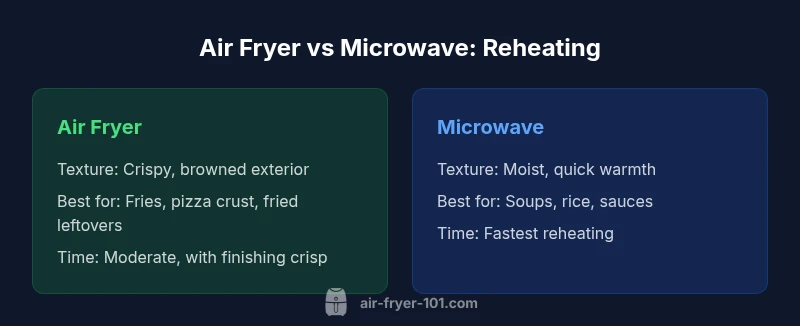
| Best uses | Crispier fries, pizza crusts, fried leftovers | Soups, stews, rice, and mixed dishes with sauce |
Pros
- Air fryer often delivers crisper textures and browning
- Microwave heats faster for most leftovers and liquids
- Hybrid workflows can optimize texture and speed
- Minimal added fats when re-crisping in an air fryer
Cons
- Air fryer can be slower and may require preheating
- Microwave may produce soggy crusts if not managed
- Air fryer capacity is limited by basket size
Air fryer wins on texture; microwave wins on speed
Choose air fryer when browning and crisp texture are priorities. Choose microwave when speed and volume matter; consider a quick finish in the air fryer for crisp results if needed.
Got Questions?
Is it better to reheat fried foods in an air fryer or microwave?
For fried foods, the air fryer typically yields crisper results with less sogginess. The microwave heats quickly but can leave a softer crust unless finished in a short crisping step.
Air fryer for crispiness; microwave for speed.
Can I reheat rice and pasta in an air fryer?
Yes, but moisture can evaporate quickly. To prevent drying, add a splash of water or broth and shake halfway through reheating.
Add moisture and shake halfway for even reheating.
Should I preheat the air fryer before reheating?
Preheating helps achieve even browning and reduces cooking time, especially for small portions. Not always required for very small batches.
Preheat when you want even browning.
Is reheating in the microwave safe for leftovers?
Yes, as long as foods reach steaming warmth and are allowed to rest briefly. Avoid overheating to prevent dryness.
Make sure food is steaming hot and rested.
Can I reheat liquids or soups in an air fryer?
Air fryers are not ideal for liquids; use microwave or stovetop to reheat soups or sauces safely.
Liquids heat poorly in air fryers.
What foods should be avoided in an air fryer for reheating?
Foods with heavy batter or items that release a lot of liquid can smoke or clump. Follow manufacturer guidelines and avoid overcrowding.
Avoid overly messy or heavily batty foods.
Quick Summary
- Prioritize texture: use air fryer for crispiness
- Use microwave to save time on moisture-heavy foods
- Preheat the air fryer for more even browning
- Batch size influences method choice
- Hybrid workflows can optimize both speed and texture