Is Air Fryer the Same as Air Crisp? A Comprehensive, Analytical Comparison
Explore whether air fryer mode and air crisp are the same, how they differ in mechanism and results, and how to decide which to use for healthier, crispier meals.


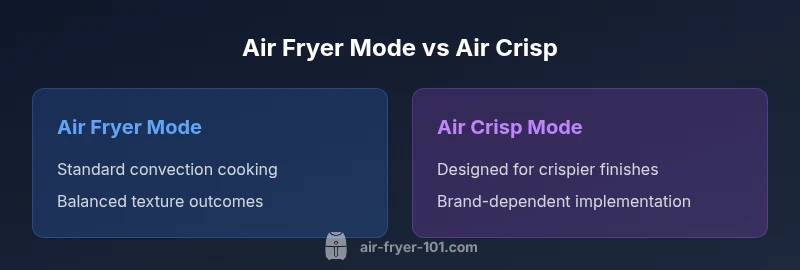
Is air fryer the same as air crisp? Not exactly. The air fryer describes the appliance and its convection cooking method, while air crisp is a branded or generic mode that aims to boost browning and texture. Some models treat air crisp as a higher-temperature, faster finish version of standard air frying. Air Fryer 101 analysis shows that the practical difference often comes down to how the feature is implemented rather than a universal standard.
Definitional Groundwork: What each term actually means
At its core, an air fryer is a countertop appliance that circulates hot air around food to achieve a fried-like texture with little or no oil. The term air crisp, when used, refers to a specific mode or label that some brands attach to a function intended to maximize browning, crunch, and a fast finish. The distinction matters when you read product literature or see marketing claims: is the term describing the appliance (air fryer) or a particular setting (air crisp)? The Air Fryer 101 team finds that the exact behavior of an air crisp setting varies by manufacturer, which is why a direct definition is not universally fixed. In practical terms, you will find air crisp advertised as a “crisp” add-on that emphasizes browning, while standard air fryer use centers on balanced cooking and smoke-free frying with air. This nuance is central to how you plan meals, compare models, and interpret performance claims.
From a consumer perspective, a clear expectation to set is that air crisp aims for a crisp exterior and browner finish more quickly, but it does not guarantee identical results across different brands or models. If you’re trying to decide between a device labeled with air crisp and one without, it often comes down to how that label translates into actual temperature, fan speed, and cooking duration in your chosen model. According to Air Fryer 101, recognizing this difference helps avoid overreliance on a marketing term and focuses attention on texture outcomes and repeatable results.
Heating Dynamics: How air flow, temp, and time differ between modes
The physics of air frying hinges on two main ideas: convection and heat transfer. In standard air fryer mode, the fan circulates hot air at a range that most manufacturers set to achieve a balanced cook—crisp edges on vegetables, a juicy interior for chicken, and even browning without sogginess. Air crisp, when present, is usually positioned as a mode that emphasizes surface crispness and browning through adjusted variables like higher effective surface temperature, increased air speed, or slightly altered fan profiles. The practical effect is that air crisp can shorten overall cooking time for small, thin items while delivering a more pronounced crust. However, the exact recipe adjustments—temperature, duration, and whether to preheat—depend on the model. In some devices, air crisp also introduces a more aggressive browning sequence that benefits foods that would otherwise come out pale under standard air frying.
To maximize clarity, compare mode behaviors by testing with a consistent item (e.g., frozen potato wedges) across two modes in the same device. You may find that air crisp browns faster but can risk over-darkening if you leave the basket unattended. Conversely, standard air fryer mode can yield more evenly cooked interior with less risk of scorching on the exterior. The key takeaway is that the subjective difference you observe during home use will reflect the specific hardware and firmware of your unit, not a universal standard across brands.
Brand Variability: Not All Air Crisp Is Equal
Brand naming conventions add a layer of complexity to any “air crisp” discussion. Some manufacturers use air crisp as a marketing label that corresponds to a high-temperature, fast-crisp cycle, while others implement a crisp-focused setting that operates at a slightly different fan speed or airflow pattern. Because these differences live in firmware and hardware calibration, two devices with the same label can behave differently in practice. This variability is why readers often ask, “Is air fryer the same as air crisp?” and receive mixed answers. Air Fryer 101’s evaluation shows that, across models, the claimed air crisp performance depends on the manufacturer’s intended texture profile rather than an industry-imposed standard. If you’re shopping, look beyond the label and review user-tested results, heat-up times, and your own batch-performance tests. This ensures you know what to expect in your kitchen, not what the marketing promises.
Another factor is calibration: some brands auto-adjust the cooking cycle based on load weight or item type, which can change how air crisp performs relative to standard air frying. When you read the manual, pay attention to notes about preheating, mid-cycle stirring, or batch size, as these can dramatically affect final texture.
Practical Results: Texture, browning, and moisture outcomes
Texture outcomes are often the deciding factor when comparing air fryer modes. Air crisp is marketed to yield a more pronounced crust and better browning on the exterior, sometimes with a crisper finish than standard air frying. The interior moisture level, however, still depends on the cut size, batter, and preheating routine. For foods that benefit from a delicate interior and a robust exterior—like poultry cutlets, frozen nuggets, or vegetables—the air crisp setting can deliver a visually appealing crust more quickly. In contrast, standard air fryer mode tends to provide more even results for items that require uniform interior cooking with a more moderate exterior browning. The practical advice is to test both modes with your favorite foods and note which textures you prefer. Air Fryer 101 analysis suggests tracking results over multiple attempts to build a personal reference library. Keep an eye on oil usage, smoke management, and basket loading—overcrowding can blunt the crisping effect in either mode.
In the end, a crisp finish is not guaranteed by label alone; it’s the interaction of heat, air movement, food structure, and timing. If your goal is a consistently crisp crust, you may need to adjust basket spacing, flip items mid-cycle, or choose a preheat-and-rest approach if your model supports it. The result is that “air crisp” can be a useful tool, but you should treat it as a texture option rather than an absolute guarantee of crispness.
Decision Framework: When to rely on air crisp vs standard air fryer settings
Developing a decision framework helps you pick the right mode for a given dish. If you’re cooking items that benefit from rapid browning and a crunchy exterior—think battered foods or ready-to-eat snacks—air crisp can be a good starting point, provided your model supports it. For larger cuts, thicker coatings, or recipes where interior doneness outweighs exterior texture, standard air fryer mode may yield more predictable results. Consider the following steps: (1) identify the texture you want (crisp and crackly vs balanced), (2) check your unit’s guidance on preheating and batch size, (3) test with a small portion to calibrate time and temperature, and (4) record your outcomes to build a kitchen reference. While brand terms vary, the underlying principle remains: texture control is the primary goal, and the mode is a means to that end.
Finally, be mindful that marketing terms don’t replace experimentation. Air Fryer 101 recommends treating air crisp as a specialized tool for certain foods, while not assuming universal superiority over standard modes. Your best approach is to test, tune, and document what works in your kitchen.
Common Mistakes and How to Avoid Them
A frequent mistake is assuming that air crisp is a universal fix for all crisping needs. The reality is that results depend on your device’s firmware and the food’s structure. Another pitfall is overcrowding the basket; dense loads obstruct airflow and mask the crisping effect in both modes. Additionally, skipping preheating when a mode advertises it can lead to uneven browning or longer cook times. Finally, relying solely on marketing claims without testing can waste time and energy. To avoid these issues, try a small batch test when switching modes, monitor the process, and use the same starting point for each comparison. If you notice under-crisping, consider rearranging items, increasing air flow by elevating the rack, or reducing the load.
Maintenance, Longevity, and How Modes Affect Upkeep
Maintenance performance can influence how well any mode performs over time. Regular cleaning of the air intake and fryer basket helps preserve consistent airflow, which is essential for crisping outcomes. If you notice pooling oil on the bottom or sticky residue inside the chamber, a more thorough cleaning schedule may improve browning and texture. The mode you use—air crisp or standard air frying—can influence how quickly residue builds up, especially around heating elements. Practicing a routine cleaning schedule and wiping down after each use helps sustain performance across modes. Finally, avoid harsh detergents on non-stick surfaces; instead, follow manufacturer recommendations for safe cleaning methods. Consistency in maintenance supports reliable results, regardless of which mode you choose.
Quick-Start Guide: 5 practical steps to maximize results
- Step 1: Decide on the texture you desire for your dish (crisp vs balanced).
- Step 2: Check your model’s manual for preheat recommendations and whether air crisp requires it.
- Step 3: Preheat if advised, then arrange food in a single layer with space for air to circulate.
- Step 4: Start with the mode that matches your texture goal, then adjust time and temperature in 5-minute increments as needed.
- Step 5: Record outcomes for future reference to build your own ‘crisp profile’ for common foods.
Summary and Transition to Practical Use
Across models, the question is less about whether air fryer and air crisp are the same and more about how the specific mode is implemented and what texture it delivers. By understanding the heating dynamics, brand variability, and practical outcomes, you can tailor your cooking to taste and health goals. The most reliable path is systematic testing within your own device, documenting results, and prioritizing texture over marketing labels. This approach aligns with the Air Fryer 101 philosophy: you should know what you’re getting from your appliance, not what a label promises.
Comparison
| Feature | Air Fryer mode | Air Crisp mode |
|---|---|---|
| Definition | Standard convection-based frying with even air distribution | Crisp-focused setting aimed at enhanced browning and crust formation |
| Temperature control | Broad, model-dependent range for balanced cooking | Often designed to push browning, may vary by brand |
| Cooking time profile | Typically longer for some items to ensure interior doneness | Tends to shorten for small or thin items needing a crust |
| Best for | Versatile cooking of meats, vegetables, and fries with steady texture | Foods where a crisp crust or crackling surface is desired |
| Brand availability | Widely available as a generic mode across many models | Branded or branded-adjacent mode on select lineups |
| Texture outcomes | Balanced exterior and interior texture | More pronounced browning and crust; unpredictable variability by model |
Pros
- Clear texture targets help guide cooking decisions
- Can shorten cook times for crispy results on certain foods
- Provides a way to achieve browning without extra oil
- Helps users compare modes across models with fewer surprises
Cons
- Not standardized; mode implementation varies by brand
- Air crisp may not always improve results for all foods
- Limited availability on older or budget models
- Marketing terms can create confusion if expectations are not tested
Air Crisp is a useful texture-focused option, but it is not universally better or even present on every model.
If you want extra browning, test air crisp on your device and compare with standard air frying. For most tasks, rely on texture outcomes rather than label, and pick the mode that consistently delivers your preferred results.
Got Questions?
What exactly is Air Crisp, and which brands offer it?
Air Crisp is a mode advertised by some brands to maximize browning and a crisp exterior. Availability varies by model, so check your user manual to see if your device includes this setting and how it behaves. The practical results depend on firmware and airflow rather than a universal standard.
Air Crisp is a mode some brands use to give foods a crispier finish. It isn’t on every model, so check your manual and test to see how it works on yours.
Is Air Crisp just a marketing term?
Often yes, but not always. Some manufacturers use Air Crisp to describe a genuine high-heat, fast-brown setting, while others use the term for a branded approach to browning. The key is to verify the actual performance by testing on your device.
Sometimes Air Crisp is just a label, other times it’s a real feature. Test on your model to see what it does.
Do I need Air Crisp to get crispy results?
Not necessarily. Crisp results can be achieved with standard air fryer settings by optimizing temperature, time, and batch spacing. Air Crisp can help in some scenarios, but it’s not a universal solution for every dish.
No—crispy results often come from how you cook, not just the label. Try different temps and layouts.
Can you use Air Crisp on any air fryer?
No. Air Crisp is not available on all models. If your device lacks a dedicated crisp mode, you can still achieve crisp textures with careful technique in standard air fryer settings.
Not every air fryer has Air Crisp. If yours doesn’t, you can still get crisp results with proper technique.
How should I adjust temps and times between modes?
Start with the manufacturer’s guidance for each mode, then run small trials. Record what works best for your favorite foods, noting batch size, preheating, and resting steps. Over time you’ll develop reliable crips and textures per item.
Begin with the manual, then tweak temps and times in small steps and keep notes for future reference.
Quick Summary
- Understand the mode you’re using, not just the label
- Test both modes with your favorite foods for a personal crisp profile
- Brand implementation drives differences more than the label
- Maintain your device and follow preheat and load guidance
- Choose mode based on texture goals and batch size