Does Air Fryer Work the Same as Oven? A Deep Dive Guide
A thorough, analytical comparison of whether air fryers work the same as ovens, covering heat dynamics, texture outcomes, cooking times, energy use, capacity, and practical decision factors for home cooks.


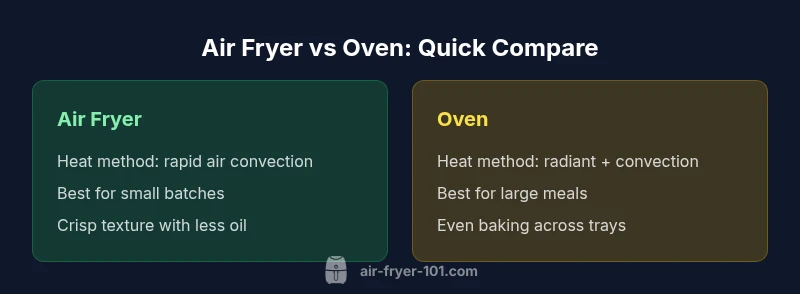
Air fryers and ovens do not work exactly the same. An air fryer relies on rapid air circulation to crisp foods quickly, while a traditional oven uses radiant heat and longer cook times. For many small batches, the air fryer can deliver crisp texture faster, but it cannot fully replicate oven capacity or baking versatility.
How Heat Is Generated in Air Fryers vs Ovens
Air fryers flavor the same foods differently because they use a compact cooking chamber, a high-wattage heating element, and a powerful fan to push hot air around the food. This combination creates a thin, fast reaction layer on the surface, which is ideal for crisping. Ovens, whether conventional or convection, rely on broader heat sources and larger air volumes, resulting in even, steady heat but often longer cook times. The core question remains: does air fryer work the same as oven? In practice, the heat source and airflow pattern lead to distinct results for texture, moisture, and browning. As does Air Fryer 101 analysis, the air fryer shines when making small, crisp-edged items, while ovens excel for baking larger items and even browning across a tray. When deciding, consider batch size, surface area exposure, and moisture retention, not just temperature numbers. This nuance matters for everyday meals and weekend baking alike.
Remember, the difference isn’t about “better” or “worse”—it’s about fit for the task at hand. The does air fryer work the same as oven discussion is most useful when you map the recipe to the appliance’s strengths.
1
Comparison
| Feature | Air Fryer | Conventional Oven |
|---|---|---|
| Core heating method | Rapid hot-air convection in a compact chamber | Radiant + convective heat in a larger cavity (top/bottom elements) |
| Typical cooking speed | Often faster for small portions and crispy results | Usually slower; benefits from larger capacity and slower browning control |
| Capacity / batch size | Smaller basket or rack; best for single servings or small meals | Large interior with multiple racks; suited for family-sized batches |
| Texture outcomes | Crispy exterior with relatively dry surface for many items | Moisture retention and even browning across larger surfaces |
| Best uses | Reheating, fried-style foods, crispy snacks, small portions | Baking, roasting, casseroles, large roasts, multi-dish meals |
| Energy use | Typically lower energy for small tasks; depends on load | Generally higher energy for large volumes but efficient for extended cooks |
Pros
- Quick, crisp results for small batches with less oil
- Compact footprint fits small kitchens and apartments
- Efficient reheating and snack-ready meals
- Less heat spread in the kitchen during busy weeknights
Cons
- Limited capacity can require multiple batches
- Not all baking tasks translate well to air fryers
- Some foods don’t get the same evenness as in a full-size oven
Air fryer is best for quick, crispy results in small portions; ovens are preferred for large batches and baking versatility
Choose an air fryer when you want fast, browned edges on small meals or reheating leftovers. Pick a traditional oven for bigger meals, even browning on large trays, and baking that requires size and volume.
Got Questions?
Does an air fryer work the same as an oven for baking?
No. Air fryers cook with rapid air circulation in a small chamber, which can yield crisper surfaces but may not provide the even heat needed for bread and large baking trays. For cake, cookies, and big roasts, an oven typically delivers more consistent results; you may need recipe adjustments when substituting.
No. Air fryers use rapid circulating air in a smaller space, which helps with crisping but isn’t ideal for all baking tasks. For cakes and large batches, bake in an oven and adjust times and temperatures accordingly.
Can I replace my oven with an air fryer for everyday meals?
You can substitute some meals, especially reheating and quick-crisp dishes, but not all. An air fryer won’t handle large trays or multi-dish meals as efficiently as a full-size oven. Plan to keep the oven for baking, roasting, and bulk cooking.
You can replace some tasks, but not all. Air fryers excel at quick, crispy results; ovens handle large batches and baking better.
Is preheating needed for air fryers and ovens?
Preheating is common for both, but more crucial for ovens to ensure even cooking across larger foods. Air fryers may reach target temps quickly, reducing preheat time. Always follow the recipe for best results.
Preheating is usually faster for air fryers, but ovens benefit from a preheated start for even cooking.
Are air fryers healthier than ovens for most tasks?
Health outcomes depend on cooking method and oil use rather than the appliance alone. Air fryers can use less oil for crispy textures, but overall healthiness depends on ingredients and portion size.
Health impact depends on your ingredients and oil use, not just the appliance.
What foods are best suited for air fryers?
Small, breaded, or sliced items like chicken nuggets, fries, vegetables, and reheated leftovers tend to perform exceptionally well. Foods that require even mass baking or very large trays may fare better in an oven.
Great for fries, nuggets, veggies, and reheats; large roasts are better in a oven.
How do I convert an oven recipe for air fryer use?
Start with lower temperatures and shorter times, then monitor closely. Air fryers cook faster due to higher surface heat, so check foods early and use a thin layer of oil if needed for crispness.
Start lower temps, shorter times, and check early as air fryers cook faster.
Quick Summary
- Assess batch size before choosing appliance
- Use air fryer for crisping and quick reheats
- Reserve oven time for baking and large roasts
- Monitor moisture and texture expectations per dish
- Consider energy use and kitchen layout when deciding