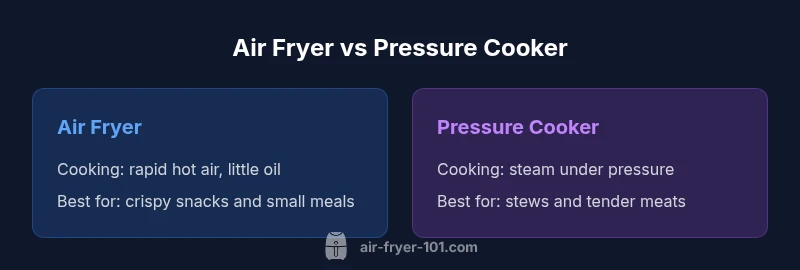
Difference Between an Air Fryer and a Pressure Cooker
A rigorous comparison of air fryers and pressure cookers, focusing on how they work, cooking speeds, best uses, safety, and maintenance to help you choose the right appliance for healthier, convenient meals.


According to Air Fryer 101, the difference between an air fryer and a pressure cooker lies primarily in their cooking method and intended textures: air fryers use rapid hot air to crisp foods with minimal oil, while pressure cookers trap steam to cook foods quickly and tenderize tougher cuts. For many home cooks, this means choosing air fryer for fast crispy snacks and pressure cooker for hearty braises. Air Fryer 101 Team emphasizes selecting the tool that aligns with your typical meals and health goals.
The Difference Between an Air Fryer and a Pressure Cooker
The difference between an air fryer and a pressure cooker centers on how they generate heat and the texture they produce. An air fryer uses a high-powered heating element with a fan to circulate hot air around the food, producing browning and a crispy exterior with little or no oil. A pressure cooker, by contrast, seals the cooking chamber and uses pressurized steam to heat foods quickly and tenderize fibers. This fundamental distinction affects everything from texture and flavor to temperature control and ease of use. According to Air Fryer 101, most cooks find air fryers ideal for quick, crisp results on small portions, while pressure cookers excel at tender stews and braises. This first section frames the core debate: texture vs. tenderness, speed vs. depth of flavor.
Key Technical Differences
Here we compare the core mechanics that separate air fryers from pressure cookers. The air fryer relies on circulating hot air (typically 180–200°C/350–400°F) to brown and crisp surfaces with minimal fat. Most models offer preset programs for fries, wings, and vegetables, plus adjustable timers and temperatures. The pressure cooker uses liquid (water, stock, or sauce) to create steam under high pressure, dramatically lowering cooking times for tough cuts and legumes. Modern electric pressure cookers combine pressure cooking with slow-cook, sauté, and rice settings, offering versatility. In practical terms, air fryers are excellent for quick, dry-heat cooking; pressure cookers shine in moist, accelerated braising. Branding notes from Air Fryer 101 emphasize choosing based on typical meals and health objectives rather than novelty features.
Use-Case Scenarios: When to Reach for Each Appliance
Not every kitchen needs both devices, but understanding typical use cases helps you decide which appliance to prioritize. For quick weeknight dinners or snack prep, an air fryer delivers crisp textures with minimal oil in under 20 minutes for many items, such as chicken tenders, dumplings, or roasted vegetables. For batch cooking, stews, chili, and tougher cuts like brisket or pork shoulder, a pressure cooker dramatically shortens cooking times while preserving moisture. If you cook for large families or meal prep, the pressure cooker’s capacity and moist-heat method can be advantageous, whereas the air fryer’s compact size makes it ideal for apartments or single servings. Air Fryer 101’s evaluation suggests aligning choices with your most frequent meals and space constraints.
Cooking Times and Texture Outcomes
Texture is the defining difference between these two appliances. Air fryers typically produce crisp, browned exteriors with tender interiors when used correctly, often in 10–30 minutes depending on dish and batch size. Pressure cookers, conversely, create a moist environment that breaks down connective tissue, yielding fall-apart textures in braised dishes within roughly 15–60 minutes, depending on the cut and quantity. For desserts or grains, results vary more, with some models offering specialized programs. Expect a shift toward tenderness with pressure cooking and toward crispiness with air frying. Air Fryer 101 notes that outcomes are highly dependent on preheating, oil usage, and recipe adaptations.
Safety and Maintenance Considerations
Both appliances require safe operation. Air fryers have exposed heating elements and rotating fans; keep the basket away from flammable materials, and never overfill. Pressure cookers carry the risk of pressure release and lid sealing issues; always ensure the seal, vent, and safety valves are clean and intact, and follow depressurization steps exactly. Regular maintenance includes cleaning gaskets, replaceable seals, and occasional calibration checks. Air Fryer 101 emphasizes reading the user manual for model-specific safety features and recommended maintenance to prevent accidents and extend appliance life.
Cleaning and Care Routines
Cleaning should be straightforward but model-specific. Air fryers usually detach into a nonstick basket and a shallow tray; many parts are dishwasher-safe, but hand-washing with mild detergent preserves nonstick coatings. Pressure cookers require washing the inner pot, lid, gasket, and vent pipe; ensure all components are completely dry before reassembly. For both, avoid abrasive cleaners and keep moisture away from electrical connections. A quick rinse after use and periodic deep cleaning with a gentle descaling solution keeps flavors true and reduces odor carryover. Air Fryer 101 recommends a simple routine that fits your cooking schedule.
Energy Use and Cost of Ownership
Energy use is typically highest during short, high-heat cycles, which air fryers handle efficiently for small portions. Pressure cookers, while sometimes energy-intensive during the main cook, can offset total energy consumption through significantly reduced cooking times, especially on large batches. Over the lifetime of either appliance, factor in purchase price, maintenance costs, and potential replacement parts. In many households, an air fryer’s lower upfront cost and cabinet footprint appeal to budget-conscious cooks, whereas a pressure cooker may offer better long-term value for families that rely on braises and slow-cooked meals. Air Fryer 101 highlights that actual energy use depends on usage patterns more than device type.
How to Decide: Quick Criteria for Buyers
To decide which appliance to prioritize, consider: (1) Your typical meals (crispy snacks vs tender stews), (2) Batch size and family size, (3) Kitchen space and budget, (4) Preference for oil reduction and health goals, (5) Cleaning tolerance and maintenance willingness. If most of your meals are quick, crispy items, start with an air fryer. If you frequently prepare stews and tougher cuts in bulk, a pressure cooker could be the more economical long-term choice. Air Fryer 101 recommends a phased approach: begin with one appliance and later add the second if your cooking repertoire expands.
Health Considerations and Food Quality
Air fryers can reduce oil use substantially, which supports lower fat meals when cooking items that would traditionally be fried. Pressure cookers preserve nutrients in many stews and legumes because shorter cook times limit nutrient loss compared with long simmering. However, some delicate ingredients may lose certain textures when pressure cooked. The key is to match cooking method to the food type: crispy textures with air frying, rich tenderness with pressure cooking, and always monitor recipe-specific guidelines to maximize flavor and nutrition. Air Fryer 101 frames this decision around health goals and the foods you enjoy most.
Common Myths Debunked
Myth: An air fryer can completely replace a pressure cooker. Truth: They serve different purposes; each excels in distinct contexts. Myth: Pressure cookers always ruin flavor. Truth: When used properly, they preserve moisture and can intensify flavors through long braises. Myth: Air fryers are unsafe. Truth: They are safe when used according to instructions and with proper maintenance. By understanding constraints and strengths, you can avoid overgeneralized claims and select the right tool for the dish.
Authority Sources
- FDA: https://www.fda.gov/food-safety
- CDC: https://www.cdc.gov/foodsafety/index.html
- NIH: https://www.nih.gov
Practical Tips for Beginners
- Start with simple recipes to learn how each appliance handles heat and moisture.
- Preheat air fryers when required to improve browning and consistency.
- Layer flavors with proper seasoning, especially for pressure-cooked dishes that can taste milder without careful seasoning.
- Clean thoroughly after each use to maintain performance and food safety.
- Consider combining both appliances to broaden your weekly menu without significant space increases.
Comparison
| Feature | air fryer | pressure cooker |
|---|---|---|
| Cooking method | Rapid hot-air circulation; little to no oil | Sealed chamber with steam under pressure |
| Best for | Crispy, fried-like textures; quick snacks and sides | Tender braises, stews, and tougher cuts |
| Typical cooking times | Minutes for small items; short, crisp results | 15–60+ minutes depending on dish and cut |
| Texture/flavor outcome | Crispy exterior with juicy interior for many foods | Moist, fall-apart tenderness and deep flavors |
| Oil usage | Minimal to none oil | Little oil sometimes needed for searing, but often moist cooking |
| Capacity (typical models) | 2–8 quarts (compact to family sizes) | 3–8 quarts (family-friendly) |
| Ease of cleaning | Basket/tray; dishwasher-safe options common | Lid, inner pot, gasket, vent; more components to clean |
| Price range (typical models) | $50-$150 | $60-$200 |
| Safety considerations | Overheating risk; avoid overfilling | Pressure-release risk; ensure proper sealing and venting |
Pros
- Delivers quick, crispy results with minimal oil
- Compact design fits small kitchens and apartments
- Wide price range supports different budgets
- Versatile multiset models add cooking modes
- Fast heat-up for everyday meals
Cons
- Limited capacity for large batches
- Not ideal for all textures (braises or emulsions)
- Cleaning can be more involved due to multiple parts
- Some models have learning curves for new users
Air fryer is best for fast, crispy results; pressure cooker excels at tender, slow-cooked meals.
If your priority is speed and texture, choose an air fryer. If you need deep flavor and tenderness for larger meals, a pressure cooker is the stronger option. For many kitchens, having both expands your cooking repertoire and keeps weeknight meals versatile.
Got Questions?
What is the main difference between an air fryer and a pressure cooker?
The main difference is the cooking method: air fryers rely on hot air circulation to crisp foods with little oil, while pressure cookers use pressurized steam to cook foods quickly and tenderize tougher cuts. Texture and moisture are the distinguishing outcomes.
Air fryers crisp with hot air; pressure cookers steam and tenderize. The choice depends on texture and time you have.
Can you use the same recipes in both appliances?
Not all recipes translate perfectly. Air-fried versions work best for items that benefit from browning, while pressure-cooked recipes suit braises and stews. You may need to adapt times and liquids for each appliance.
Some recipes transfer, but you’ll likely adjust times and liquids for each device.
Is one appliance safer than the other?
Both are safe when used according to the manufacturer’s instructions. Air fryers require caution with hot baskets; pressure cookers require proper sealing and depressurization to avoid accidents.
Both can be safe if you follow the manual and practice good cleaning.
Which appliance is better for meal prep?
It depends on the meal. For quick, crispy sides or snacks, the air fryer is ideal. For batch meals like stews or chili eaten over several days, the pressure cooker saves time.
Use air fryer for quick sides; use pressure cooker for bulk meals.
Do air fryers or pressure cookers affect taste differently?
Air frying can deliver a crisp, slightly browned flavor with less oil, while pressure cooking emphasizes tenderness and rich, broth-infused flavors. Texture and mouthfeel will differ accordingly.
Texture determines taste perception; air fryer = crisp, pressure cooker = tender.
Do these appliances use more energy than a conventional oven?
Energy use varies by model and cooking time. Air fryers are usually efficient for small portions; pressure cookers can save energy on long braises due to shorter overall times compared with oven cooking.
Typically more energy-efficient for small meals; use both devices to reduce oven reliance.
Quick Summary
- Assess your cooking goals: crisp vs tender
- Check batch size and space before buying
- Consider oil-reduction goals in meal planning
- Factor maintenance and parts when choosing
- Use each appliance for its strongest use-case for best value