Air Fryer or Pressure Cooker: A Comprehensive Comparison
A rigorous comparison of air fryer vs pressure cooker to help home cooks choose the right tool for crispy results, tender meals, and kitchen practicality.


For crisp, oil-light results and short weeknight meals, an air fryer edges ahead. A pressure cooker excels at tender, braised dishes and hands-off cooking, especially for stews and grains. In short, air fryer = quick, crispy convenience; pressure cooker = versatility and time savings on larger meals.
What an air fryer is and how it works
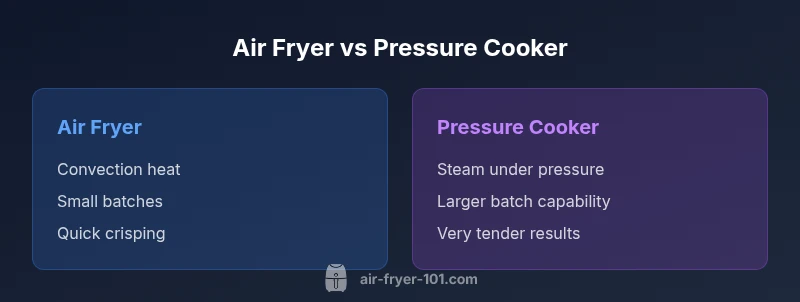
Air fryers are countertop appliances that circulate hot air with a high-powered fan to produce crisp textures similar to frying, using little or no oil. When you compare the air fryer or pressure cooker, the key difference is that air fryers focus on dry heat and surface browning, while pressure cookers use steam and pressure to break down fibers. For home cooks evaluating the question 'air fryer or pressure cooker', this distinction matters: air fryers excel at quick, crisp meals and snackable textures, whereas pressure cookers excel at tender braises, grains, and soups. The Air Fryer 101 Team notes that choosing between these two devices should align with your typical meals, kitchen space, and cleanup preferences. In the context of overall health, the air fryer reduces added fat by enabling air-based crisping with minimal oil, but it does not replace the tender, slow-cooked textures that a pressure cooker can achieve. According to Air Fryer 101, selecting the right tool depends on your cooking style, family size, and how you value convenience versus texture.
How a pressure cooker works and what it delivers
Pressure cookers create a sealed, high-pressure environment that traps steam produced by heating liquids. This mechanism dramatically reduces cooking times for tough cuts, legumes, grains, and sauces. Electric pressure cookers often include preset programs for rice, stews, and poultry, which take less hands-on time than traditional methods. The contrast with air fryers is clear: pressure cookers emphasize speed through pressure and steam, while air fryers emphasize dry heat and browning. For many households, the decision comes down to whether you crave braised, melt-in-your-mouth tenderness or a crisp, golden exterior on smaller items. The Air Fryer 101 Team highlights that versatility matters when you cook for a busy family, and a pressure cooker can replace several slow-cooking methods in one pot.
Common cooking tasks: how each appliance performs
Crispy snacks and small batch proteins: Air fryers excel at fries, chicken nuggets, crispy vegetables, and reheating leftovers with little to no oil. They shine for quick weeknight sides and small meals. Tender braises, soups, grains, and very large roasts: Pressure cookers dominate here, delivering tender textures in a fraction of the time a traditional simmer would require. In some cases, you can achieve both crispy exterior and tender interior by finishing ingredients briefly in an air fryer after pressure cooking. The Air Fryer 101 team notes that adjusting cook times and using resting intervals can improve results across both devices.
Energy use, cost, and maintenance: practical considerations
Operational costs depend on usage patterns, not just device price. Air fryers generally consume moderate electricity for short runs, while pressure cookers save time and energy on longer tasks, especially stews and legumes. Upfront price ranges vary by size and features, with both forms occupying a similar countertop footprint for mid-range models. Long-term maintenance includes checking seals, replacing gaskets, and ensuring non-stick surfaces remain intact. Air Fryer 101 Analysis, 2026, suggests evaluating department-level energy use for your household to estimate monthly impact. In this context, think about how often you’ll use each device for your typical meals and the value of faster, hands-off cooking.
Space, size, and capacity: fit for your kitchen
Capacity matters more for family meals. Air fryers come in compact to medium sizes and are ideal for 1-4 servings, with most baskets able to hold smaller proteins or sides. Pressure cookers range from compact 4-quart models to large 8-quart-plus units, suitable for batch cooking and meal prep. If you frequently host gatherings, the pressure cooker’s larger capacity can reduce batch cooking time, while an air fryer can handle crisp sides in parallel. Space planning and compatibility with your existing cookware should guide your purchase decision.
Safety and ease of use: features that matter
Modern air fryers emphasize intuitive controls, preset programs, and auto shut-off for user safety. Electric pressure cookers include pressure release mechanisms, lid locks, and safety valves to prevent accidental opening under pressure. Beginners may prefer models with guided menus, integrated timers, and clear indicators. Regardless of choice, reading the user manual, keeping seals clean, and performing regular maintenance are essential steps to prevent common issues.
How to choose: matching your needs to the toolset you already have
If you cook small, crispy items quickly and prefer minimal oil, an air fryer is a strong fit. If you routinely prepare stews, beans, and larger roasts or want to shorten multi-hour recipes, a pressure cooker offers greater versatility and time savings. Consider a hybrid approach: use a pressure cooker for tender entrées and a separate air fryer for finishing touches that require crispness. The decision should align with meal patterns, family size, kitchen layout, and cleanup priorities.
Getting started: practical tips and starter ideas
Begin with a few simple staples for each device: crisp up frozen or fresh potatoes, tofu, or chicken tenders in an air fryer; batch-cook a hearty chili or lentil stew in a pressure cooker. Keep a shared recipe notebook to track adjustments in cook times and temperatures. As you gain confidence, you can experiment with hybrid workflows, such as pressure cooking a braise and finishing with a flash-crisp in the air fryer. Air Fryer 101 Team suggests focusing on three to five core recipes for the first month to build familiarity and ensure consistent results.
Authoritative sources and additional reading
For further context on safety, efficiency, and best practices in home cooking, refer to well-established sources such as the FDA, USDA, and university extension programs. These institutions offer guidance on safe cooking temperatures, recipe adaptation, and appliance use in a home kitchen. While specific models vary, the underlying principles of heat, moisture, and timing apply across both devices and help you optimize your approach based on your goals.
Authoritative sources for further reading
- FDA: https://www.fda.gov
- USDA: https://www.usda.gov
- extension programs (e.g., university-based food libraries): https://extension.osu.edu
Comparison
| Feature | Air Fryer | Pressure Cooker |
|---|---|---|
| Cooking method | Convection heat with rapid air flow | Steam under pressure |
| Best for | Crisp, quick meals and small batches | Tender, braised dishes and batch cooking |
| Typical cook times (general) | Shorter for crispy items (minutes) | Very short for tenderizing tough ingredients (minutes to under an hour) |
| Energy use | Moderate for short runs | Can save time energy on long tasks |
| Capacity range | Small to medium capacity (1-4 servings common) | Medium to large capacity (4-8+ servings typical) |
| Upfront price range | $50-250 | $60-220 |
| Ease of use | Typically simple presets; quick setup | May require learning curve; some models deep-featured |
| Maintenance | Easier surface cleaning; basket liners help | Seals and lids require periodic checks; gasket maintenance |
| Best use case | Weeknight crisping; reheating leftovers with texture | Soups, stews, beans, and large roasts |
Pros
- Crispy results with little oil for healthier fried-like foods
- Compact footprint for many kitchens and apartments
- Presets and predictable results simplify weeknight cooking
- Low oil reduces splatter and cleanup compared to deep frying
- Great for reheating and preserving texture
Cons
- Limited capacity for large families or big batch meals in one go
- Pressure cooker models can have a learning curve
- Some foods don’t benefit from pressure cooking or air-frying finish
- Accessory clutter can add to storage needs
Choose based on your cooking priorities: air fryer for quick, crispy sides and snacks; pressure cooker for tender meals and overall versatility.
If you value speed and texture on small portions, air fryer wins. If you need tender roasts, beans, and one-pot meals, a pressure cooker is more versatile and time-saving.
Got Questions?
Which appliance is better for small kitchens?
For very tight spaces, a compact air fryer may fit more easily and still deliver crisp results. If you need to cook larger meals occasionally, a smaller pressure cooker can also work, but you may prefer a multi-purpose unit that combines functions. Assess your counter space, storage options, and typical meal sizes to decide.
Small kitchens favor a compact air fryer for quick crisp tasks; for bigger meals, check capacity before buying.
Can you achieve crispy textures with a pressure cooker?
Traditional pressure cooking yields tender results, not crisp. Some models offer a finishing function to brown foods, but achieving true crispiness is usually better with an air fryer or by finishing under a broiler. Consider a hybrid approach for best texture.
Pressure cookers don’t crisp on their own; finish with air frying or broiling for best texture.
Are there safety concerns with electric pressure cookers?
Modern electric pressure cookers include lid locks, pressure sensors, and safety valves. Follow the user manual, inspect gaskets regularly, and avoid overfilling. With proper use, they are generally safe for daily use.
Latest models include safety locks and automatic pressure release. Use as directed for safe cooking.
Can I replace a slow cooker or oven with either appliance?
Both appliances can replace some slow-cooking tasks, but neither is a perfect substitute for all oven-based cooking. A pressure cooker can emulate braises and stews quickly, while an air fryer cannot replicate long, moist cooking. Use each tool for its strengths.
They replace some tasks, but not everything your oven does—use them for what they’re best at.
What are good starter recipes to try first?
Begin with simple meals that showcase each device: air fryer for crispy potatoes or chicken tenders, and a basic pressure cooker chili or lentil soup. Once comfortable, expand to tougher cuts or multi-ingredient dishes. Document results to refine timings.
Start with fries or chicken in the air fryer, and a simple chili in the pressure cooker.
Is preheating necessary for an air fryer?
Many air fryer models benefit from a brief preheat, especially for larger batches. Check your manual; preheating helps stabilize temperature and improve crust formation. Not all recipes require it, but it can improve consistency.
Preheating helps with even browning, but follow the recipe and model guidance.
Quick Summary
- Prioritize task complexity: crispy quick meals vs. tender slow-cooked dishes
- Match capacity to family size and typical batch needs
- Evaluate the ease of cleanup and available counter space
- Consider a hybrid approach for maximum versatility
- Rely on trusted sources and safety guidelines when using either appliance