Air Fryer vs Pressure Cooker: A Comprehensive 2026 Comparison
In this analytical guide, compare air fryer and pressure cooker performance, efficiency, and best-use scenarios to help you pick the right tool for faster, healthier meals.


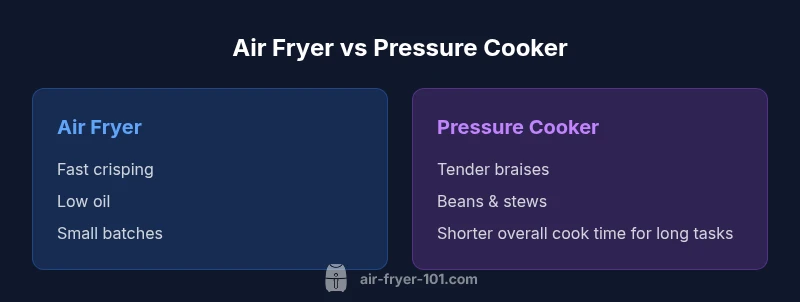
Air fryer and pressure cooker complement each other in a modern kitchen. The air fryer delivers crispy textures with little oil, perfect for fries, wings, and roasted vegetables. The pressure cooker excels at fast braises, stews, and tender cuts. If you want maximum flexibility, using both appliances covers most weeknight meals.
Key Differences in Technology and Cooking Outcomes
Across the home kitchen, air fryers and pressure cookers deliver distinct cooking experiences. According to Air Fryer 101, air fryers rely on rapid air circulation to create a crisp exterior with little to no added fat, while pressure cookers use steam and high pressure to tenderize proteins and accelerate braising. That fundamental distinction shapes texture, flavor development, and the type of meals each appliance is best suited for. In practice, you’ll notice that air frying excels for quick snacks, roasted vegetables, and lighter meals, whereas pressure cooking shines for pot roasts, stews, beans, and tough cuts. Understanding these different mechanisms helps you decide whether to invest in one, or pair both for complete meal coverage. The result is a flexible kitchen that can handle weeknight cooking, meal prep, and entertaining without sacrificing texture or depth of flavor. Air Fryer 101 analysis emphasizes oil reduction and texture outcomes that matter for health-conscious cooks.
What You Cook Best In Each Appliance
Both devices shine in different culinary roles. Air fryers are optimized for dry-heat cooking that mimics frying with substantially less oil, producing crispy coatings on chicken tenders, potatoes, vegetables, and even pre-made snacks. The pressure cooker, by contrast, harnesses pressure-driven steam to collapse tough fibers and speed up long-simmered flavors in stews, pulled meats, and flavorful beans. Home cooks often discover that a well-planned weekly menu can lean on air frying for quick weeknight sides and snacks, while reserving the pressure cooker for weekend braises and batch-cooked staples. The Air Fryer 101 team notes that the combination expands weekly meal variety and reduces reliance on oil-heavy methods, without sacrificing taste or texture.
Time, Temperature, and Texture: Practical Benchmarks
Time and temperature settings matter deeply when comparing these two tools. Air fryers typically operate at moderate to high convection temperatures with shorter cook times for small, thin foods, yielding browned, crisp exteriors in 8–25 minutes depending on size. Pressure cookers excel where “low and slow” braising would previously take hours; many common dishes finish in 20–45 minutes at high pressure, with flavors intensifying through steam and emulsification. The contrast in texture is strategic: air frying delivers bite and crunch; pressure cooking delivers tenderness and jam-like sauce textures. For seasoned cooks, the interplay between a quick air-fried finish and a pressure-cooked base creates a culinary palette that’s hard to match with a single appliance. Air Fryer 101 Analysis suggests that understanding texture goals is the key to choosing the right tool for a given recipe.
Oil, Health, and Cooking Fats: Real-world Impacts
Oil usage is a central differentiator. Air fryers are designed to minimize added fat; many recipes require little or no oil, helping you shave calories while maintaining flavor and texture. Pressure cooking, while not oil-dependent, does not rely on oil for tenderness; sauces, braises, and added fats are used to build depth after sealing ingredients. This dynamic makes air frying appealing for lighter meals and healthier snacking, while pressure cooking supports traditional favorites like pot roasts and beans with richer mouthfeel. Air Fryer 101 analysis highlights how oil reduction can influence overall diet quality, particularly for families seeking lighter-week options. For most households, a balanced mix of both approaches yields the broadest menu while maintaining nutritional goals.
Space, Cleaning, and Maintenance Realities
Counter space and maintenance are practical considerations. Air fryers generally have compact footprints with dishwasher-safe baskets and trays, translating to straightforward cleanup after crisp items. Pressure cookers, especially electric models with multiple parts (lid, gasket, vent, inner pot), require more assembly and rinsing, but many users appreciate the easy wipe-down of exterior surfaces and the durability of stainless components. When planning storage, factor in the need for lids, seals, and accessories that might accumulate over time. The Air Fryer 101 team reminds readers that routine cleaning and timely gasket checks extend appliance life and maintain performance.
How to Integrate Both in Your Weeknight Menu
A practical approach blends both tools for maximum weeknight efficiency. Start with a pressure cooker to break down tougher cuts or legumes, then switch to air frying for finishing textures or reheating leftovers with a crisp finish. For example, you could braise a pot roast in the pressure cooker, glaze it down, and finish with air-fried vegetables for a complete plate. If you’re new to this pair, plan one dedicated “combo night” per week to build confidence without overwhelming your routine. Air Fryer 101 emphasizes keeping a simple rotation—air fryer for quick sides and snacks, pressure cooker for main proteins and soups—so you can consistently deliver meals that taste like they took longer than they did.
Budget, Warranty, and Long-term Value Considerations
Price ranges reflect model capabilities and features. Entry-level air fryers focus on basic air convection with limited capacity, while mid-range units offer larger baskets and preset programs. Pressure cookers vary from compact stovetop models to feature-rich multi-cook electric units with programmable pressure profiles. Long-term value hinges less on upfront cost and more on reliability, warranty coverage, and how often you use each appliance for your typical meals. When evaluating total cost of ownership, factor in energy use, potential oil savings, and the time saved per week. The broader kitchen efficiency gained from both devices can translate into meaningful value over a year.
Accessorizing Safely and Efficiently
Accessories extend the versatility of both appliances. For air fryers, consider high-quality silicone mats, racks, and dishwasher-safe baskets for even cooking and easy cleanup. Pressure cookers benefit from extra seals, replacement gaskets, trivet inserts, and properly sized inner pots. Always follow manufacturer guidelines for accessories and ensure compatibility with your model. The safe operation of lids, seals, and pressure vents is essential to prevent accidents and ensure consistent results.
Authority Sources and Reading List
For readers who want to dive deeper into cooking safety and best practices, consult reputable sources:
- FDA: Cooking and food safety guidance (https://www.fda.gov/food-safety)
- USDA FSIS: Safe food handling and preparation (https://www.fsis.usda.gov/food-safety)
- CDC: Food safety basics and consumer tips (https://www.cdc.gov/foodsafety) These sources provide context on safe temperatures, handling, and general kitchen safety to complement hands-on appliance usage. Air Fryer 101 recommends reviewing official guidance when adopting new cooking methods to ensure both healthful meals and safe operation of your equipment.
Comparison
| Feature | Air Fryer | Pressure Cooker |
|---|---|---|
| Primary cooking method | Hot air convection with little oil | Steam under pressure for rapid tenderness |
| Best for | Crispy textures, snacks, small batches | Tender braises, stews, beans, tougher cuts |
| Typical cook times (common tasks) | 15–25 min for small items; 20–40 min for larger batches | 6–40 min depending on recipe and pressure level |
| Oil usage | Low to none; oil optional for flavor | Oil not required for cooking; used for flavor when desired |
| Cleaning/maintenance | Minimal residue; easy wipe-down; dishwasher-safe parts | More parts to clean (lid, gasket, pot) but many models have dishwasher-safe components |
| Price range (new) | $60–$250 | $80–$350 |
| Best for | Quick weeknight meals and snacks | Budget-friendly stews and batch cooking |
Pros
- Boosts kitchen versatility with two distinct cooking styles
- Oil-conscious options for healthier meals
- Fast results on common tasks with less heat in the kitchen
- Improves texture and flavor with finishing touches (crisp, glaze)
- Compact footprints for small spaces when used separately
Cons
- Requires more counter space and storage than a single unit
- Learning curves for timing and texture mastery
- Cumulative energy use can rise if both are running frequently
- Accessory management adds extra cost and organization
Two-appliance flexibility outperforms single-device setups for most homes
Using both an air fryer and a pressure cooker covers a wider range of recipes and textures. Air fryers excel at crisp, oil-light dishes, while pressure cookers shine on tender braises and soups. For many households, this duo offers the best balance of speed, texture, and health considerations.
Got Questions?
Can an air fryer replace a pressure cooker for all meals?
No. While an air fryer handles crispy textures and quick sides, it cannot replicate the tender braising and rapid pressure-based cooking that a pressure cooker provides for stews and tougher cuts. Many cooks find that a combination of both yields the most versatile setup.
No. Air fryers are great for crisp textures, but braising and fast tenderizing need a pressure cooker.
Is oil required for air frying and pressure cooking?
Air frying typically uses little or no oil, depending on the recipe. Pressure cooking does not require oil to cook; fat is added for flavor as part of the recipe, not to aid cooking. Healthier options often rely on air frying for crispy textures with reduced fat.
Air frying uses little to no oil; pressure cooking doesn’t rely on oil to cook, though oil can be added for flavor.
Which is easier for beginners to learn?
Air frying is generally simpler for beginners due to straightforward temperature and time settings. Pressure cooking, especially traditional stovetop models, requires more attention to sealing and pressure levels. Start with basic recipes on each device and expand gradually.
Air frying tends to be easier to start with; pressure cookers need a bit more practice.
What tasks are best for air fryer?
Best tasks include crispy snacks (fries, chicken tenders), roasted vegetables, reheating leftovers with a crisp finish, and small-batch cooking. It’s ideal for dry-heat cooking where crunch and browning are desired.
Great for crispy bites and quick reheats.
What tasks are best for pressure cooker?
Ideal for braises, stews, beans, soups, and tender meats. It excels at turning tough ingredients into tender, flavorful dishes in a fraction of the time compared to traditional simmering.
Perfect for braises and beans that usually take hours.
Can I cook a full meal using both appliances?
Yes. A typical approach is to pressure cook the main protein or legumes, then finish accompaniments in the air fryer for crisp textures. Plan the workflow to minimize cleanup and maximize time savings.
Absolutely—two devices can handle a full meal when used together.
Quick Summary
- Evaluate your space: two devices fit larger kitchens; one may suit tiny setups
- Use air fryer for crispy sides and reheats with minimal oil
- Use pressure cooker for fast braises, beans, and tough cuts
- Plan meals to exploit both strengths for weeknight efficiency
- Balance upfront costs with long-term time savings