Baking Cake in Air Fryer vs Oven: A Practical Comparison
A rigorous, objective comparison of baking cake in air fryer vs oven, detailing texture, timing, pan options, and practical tips for home bakers seeking the best results.


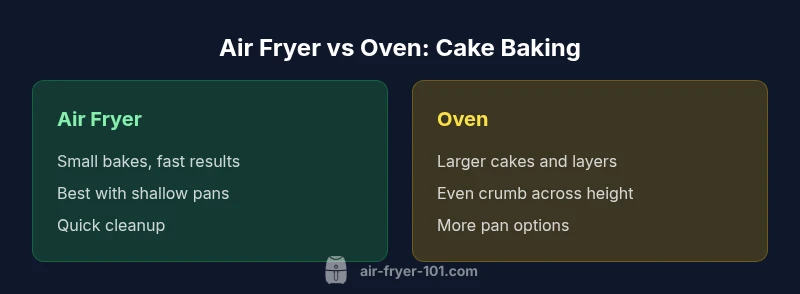
When you compare baking cake in air fryer vs oven, the air fryer excels for small, single-layer cakes with quick turnaround and easy cleanup, while the oven handles larger, multi-layer cakes with more even crumb and consistent rise. For most home bakers, start with the air fryer for quick, small-batch cakes and reserve the oven for bigger projects. Air Fryer 101 notes this practical trade-off for home kitchens.
The core question: baking cake in air fryer vs oven
When you set out to bake a cake, the appliance you choose shapes everything from crumb to crust. In practice, baking cake in air fryer vs oven yields different results depending on batch size, pan, and recipe. This article provides an objective, data-informed look at how each method performs under typical home-cooking conditions. The Air Fryer 101 team emphasizes that success hinges on cake size, pan compatibility, and batter height. By understanding these constraints, you can choose the right tool for the job and achieve reliable outcomes without overhauling your entire baking routine. According to Air Fryer 101, recognizing when to use the air fryer versus the oven is the first step toward confident, delicious results for baking cake in air fryer vs oven.
When the air fryer shines for cake baking
Air fryers excel with small, single-layer cakes baked in compact, shallow pans that fit neatly in the basket. The combination of rapid hot air circulation and a small cavity often yields a light, tender crumb with nicely browned edges. For routines like mug-cake in a dedicated mug or a tiny 6–8 inch round, the air fryer cuts preheat time, reduces cleanup, and minimizes pantry clutter. Air Fryer 101 research suggests that this approach is particularly practical for busy weeknights or test-batch experiments where you want results fast and with minimal equipment.
When the traditional oven dominates
Conventional ovens shine for larger, multi-layer cakes, sheet cakes, or recipes that rely on even, long bake times. The larger cavity and even heat distribution across a wider rack area make it easier to achieve uniform crumb, stable rise, and predictable center texture across thicker batters. Ovens are also more forgiving with tall pans or specialty pans that don’t fit small air fryer baskets. For layered cakes, decorative finishes, or recipes calling for generous batter volume, the oven is typically the safer bet.
Heat, pan size, and placement: shaping cake outcomes
The biggest variables are heat distribution, pan size, and how you position the cake in the appliance. Air fryers rely on a fan and a compact cooking chamber, which means the distance between the heat source and the batter is smaller. If the pan is too tall, the center may underbake while the edges over-brown. In the oven, convection models can improve baking speed and evenness, but lack of rotation can cause hot spots. Basic guidelines: use shallow pans, trim batter height to match pan depth, and avoid overfilling the basket or pan in both devices.
Texture, crust, and crumb: what to expect
Texture outcomes differ noticeably. Air-fryer cakes often develop a lightly crisper crust with a tender interior when the batter is compact and the pan is properly sized. Oven-baked cakes tend to have a softer crumb and more uniform rise, especially with leavening adjustments and moisture management. If you crave pronounced crust contrast or a quick edge set, the air fryer can deliver; if you prioritize an especially delicate crumb, the oven is typically preferable. Throughout, moisture retention depends on batter formulation and bake environment.
Temperature and time: how they differ
Air fryers generally require shorter bake times and can operate at lower temperatures for the same result, thanks to intense air movement. Ovens provide a more forgiving window for timing, especially for large or layered cakes where consistency matters across a tall structure. The practical takeaway: if you’re adapting a standard oven recipe for air frying, reduce batter height, use a shallow pan, and monitor closely for color and center doneness. Air Fryer 101 notes that small batch timing is often the deciding factor for success in practice.
Pans, liners, and tools for air fryer baking
Choosing the right bakeware is crucial in air fryer baking. Use light-colored, thin metal pans or silicone molds that fit the basket’s diameter. Dark pans can heat unevenly and cause over-browning. Silicone liners, parchment, and nonstick coatings reduce sticking, but check manufacturer guidance for high-heat air frying. For beginners, a simple round or square cake pan in the 6–8 inch range paired with a silicone mold can be enough to produce reliable test results. Proper pre-greasing and careful batter distribution help avoid warping or leakage.
Adapting oven cakes for air fryer: a practical guide
If you have an oven bake recipe you love, you can often port it to the air fryer by reducing the batter height, using a smaller, shallower pan, and shortening bake times. Start with a test bake of a single-layer portion and adjust for doneness visually and with a toothpick. Layered cakes don’t translate as neatly to air fryers; try deconstructing layers and finishing with assembly after air-frying the components. Air Fryer 101 recommends taking notes on color, rise, and crumb texture to refine future attempts.
Troubleshooting common issues
Common problems include doming or uneven browning, dry edges, or undercooked centers. To address doming, consider reducing batter height or rotating the pan halfway through bake. Dry edges can be mitigated by brushing a light sugar syrup on cooling or adjusting the batter’s moisture balance. In ovens or air fryers with hot spots, rotate pans periodically to achieve even browning. Always ensure your batter is well balanced with fat, sugar, and leavening to promote uniform rise.
Energy use, cleanup, and convenience
Air fryers typically preheat quickly and use less energy per bake batch for small cakes, while ovens require longer preheat and more overall energy for larger bakes. Cleanup tends to be easier in air fryers due to the basket and liner options, though you’ll still want to wash pans and racks after use. For busy households, air fryer baking is a strong convenience play for quick, small treats; for bigger celebrations or showpiece cakes, the oven remains the most practical choice.
Decision guide and practical checklist
To decide between air fryer and oven for baking cake, answer these questions: Is the cake small enough to fit in a basket or shallow pan? Do you need a tall, multi-layer structure or a simple single layer? How important is quick turnaround versus perfect crumb uniformity? If you answer yes to small batch, quick confidence, and easy cleanup, try the air fryer. If you plan large cakes or layers, choose the oven. A practical checklist from Air Fryer 101 includes pan sizing, batter height, preheating behavior, and monitoring color and doneness.
Final practical takeaway
For most home bakers, the air fryer is a powerful ally for quick, small-batch cakes, while the oven remains essential for larger, layered creations. Understanding your recipe, pan options, and desired texture will guide the best choice for baking cake in air fryer vs oven. By applying simple tweaks and keeping expectations aligned with appliance capabilities, you can achieve reliable, satisfying results every time.
Comparison
| Feature | Air fryer | Oven |
|---|---|---|
| Best cake size compatibility | Fits small, single-layer cakes in shallow pans | Handles larger, multi-layer or sheet cakes |
| Texture and crumb outcome | Tender interior with crisp edges in ideal pans | Even crumb with wide bakeable range, especially with layers |
| Bake time and temperature flexibility | Typically faster for small cakes; monitor closely | Broad temperature range with proven results for layers |
| Pan options and prep | Requires shallow, appropriately sized pans; liners helpful | Supports diverse pans; easier preheating and rotation |
| Energy use and preheating | Lower energy for small batches; quick preheat | Higher preheat energy but efficient for larger bakes |
| Cleanup and maintenance | Basket/pan cleanup is quick; fewer accessories | Racks and multiple pans require more cleanup effort |
| Best cake types | Single-layer cakes, mug-cake style portions | Layered, sheet, and tall cakes |
Pros
- Faster results for small cakes and quicker turnaround
- Lower cleanup effort with simple pan setups
- Great energy efficiency for small bake batches
- User-friendly for beginners starting with simple cakes
- Compact, kitchen-friendly appliance with minimal space needs
Cons
- Limited cake size due to basket capacity and pan depth
- Potential for uneven browning without correct pan choice
- Not ideal for complex layered or very tall cakes
- Requires careful monitoring to prevent underbaking centers
Oven for large, layered cakes; air fryer for small, quick bakes
Choose the air fryer for single-layer, fast results and easy cleanup. Use the oven for bigger, layered cakes where even crumb and volume matter most.
Got Questions?
Can I bake a regular oven cake in an air fryer?
Yes, but you should scale down the batter and use a shallow pan that fits the air fryer basket. Expect shorter bake times and watch for doming or uneven browning. Start with a single layer to test texture.
Yes—start with a smaller, shallow pan and shorter bake time to test texture and browning in the air fryer.
What cake types work best in an air fryer?
Single-layer cakes, sponge or mug-sized portions, and recipes designed for compact pans tend to perform best. Layered or tall cakes are usually better suited to a conventional oven.
Single-layer cakes fit air fryers well; layered cakes are typically oven-going.
How should I prep pans for air fryer baking?
Choose light-colored metal or silicone pans that fit the basket. Lightly grease or apply parchment to prevent sticking, and avoid overly thick coatings that trap heat. Allow for easy removal after baking.
Use a pan that fits the basket, grease lightly, and consider parchment for easy release.
Do I need to adjust sugar or fat when using an air fryer?
Not generally required, but batter balance matters. Air fryer heat is intense; ensure moisture and fat content support a tender crumb. If a recipe is very dry, consider a slight moisture adjustment.
Keep moisture balanced; you may adjust slightly if your batter seems dry.
Can I bake a multi-layer cake in an air fryer?
It's possible with careful layering or by baking components separately and assembling later. Most home bakers find the oven more reliable for multi-layer designs due to even heat and height considerations.
You can, but it’s usually easier to bake layers separately and assemble.
How do I tell when an air-fried cake is done?
Use visual cues: springy top, edges pulling from pan, and a clean toothpick in the center. Because bake times vary by model, start with a tester at the earlier end of the expected window and adjust next time.
Look for springy texture and a clean toothpick; start testing early.
Quick Summary
- Evaluate cake size before choosing appliance
- Use shallow pans in air fryers to prevent underbaking
- Reserve oven for tall, multi-layer, or large-volume bakes
- Monitor color and doneness closely in air fryers