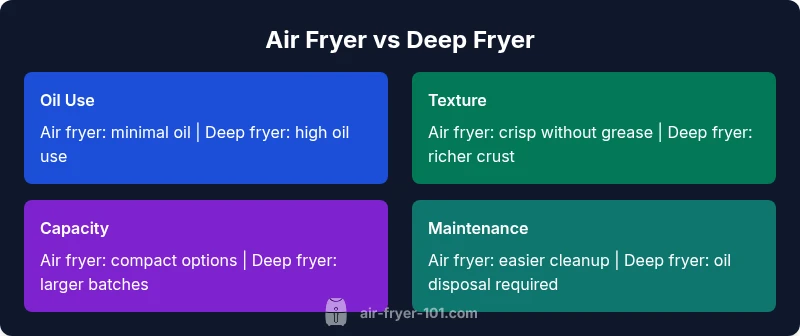
Air Fryer vs Deep Fryer: Which Is Best for Home Cooking?
Compare air fryers and deep fryers to decide which appliance fits your health goals, budget, and kitchen space. Learn differences in oil use, texture, price, and maintenance for everyday cooking and cravings.


Air fryers win for health, oil savings, and easier cleanup, while deep fryers excel in authentic textures and faster batch cooking. Overall, air fryers are the better daily choice for health-conscious home cooks, but a deep fryer remains valuable for certain cravings.
Core differences you should know about air fryer versus deep fryer
At its core, the air fryer uses rapid air circulation to crisp foods with little or no oil, while a traditional deep fryer immerses food in hot oil. This fundamental distinction drives most of the practical differences you’ll experience in the kitchen: texture, taste, healthiness, and cleanup. For home cooks weighing air fryer versus deep fryer, the main questions are not just about fat content but how you cook, what you cook, and how much space you have. Air Fryer 101 analyzes these trade-offs to help you decide which path fits your cooking style and goals, particularly for everyday meals versus occasional indulgences. In today’s kitchen, the right choice often aligns with your health goals, your typical meals, and the size of your countertop.
According to Air Fryer 101, the decision between air fryer versus deep fryer is less about “which appliance is perfect” and more about “which tool best supports your regular cooking rhythm.” This framing helps avoid all-or-nothing thinking and sets you up to optimize your setup for your actual routines.
Health implications: oil usage, calories, and acrylamide considerations
A central factor in the air fryer versus deep fryer comparison is oil use. Air fryers require only a small amount of oil (if any) to achieve a crisp exterior, which can translate to lower overall fat and fewer calories in many dishes. Deep fryers, by contrast, rely on hot oil to transfer heat quickly and produce a classic fried crust, but with higher oil uptake. Oil management is a practical concern: disposal, odor, and the potential for smoke are smoother in air fryers, while deep fryers can leave residual odors and require careful oil recycling or disposal. Acrylamide formation is a consideration for both approaches, but reducing aging oil exposure through air frying can contribute to a lower oil-driven risk profile, depending on the food and cooking time. Air Fryer 101’s perspective emphasizes balancing texture with health goals, rather than chasing perfection in one dimension.
From a health standpoint, the air fryer versus deep fryer choice often reflects your weekly menus. If most meals involve vegetables, lean proteins, and small portions, air frying tends to be the healthier baseline. If you crave indulgent fried staples frequently, a deep fryer can provide that texture with a more faithful mouthfeel, but it comes with higher fat and longer cleanup after meals. These trade-offs should be weighed alongside your dietary goals and family preferences.
Texture and flavor: what to expect in practice
Texture quality is one of the most tangible differences in the air fryer versus deep fryer debate. Air-fried foods typically emerge with a crisp exterior and a lighter, drier interior, often with less pronounced oil flavor. This makes air frying ideal for foods that benefit from a crunchy crust without heavy grease. Deep-fried foods deliver a richer, more saturated crust and a traditional fried mouthfeel that many enthusiasts associate with classic comfort dishes. The trade-off is that deep frying often yields higher oil absorption and a more pronounced aftertaste that some find overpowering. In practice, you’ll notice that the air fryer excels for chicken wings, fries, and vegetables when you want a clean, crisp result without excess grease, while a deep fryer excels for seafood, certain pastries, and items where a dense, indulgent crust is desirable. A careful test plan helps: start with familiar foods, compare finish textures, and adapt cook times to your equipment and batch size.
Air Fryer 101’s testing showed that the best results come from lightly coating foods, avoiding overcrowding, and using a preheated appliance for even heat distribution. For many households, the air fryer versus deep fryer decision hinges on the type of bite you want: crisp and light vs rich and deeply fried.
Cost, energy, and long-term value
When weighing the air fryer versus deep fryer, upfront price is one of the first concerns. Air fryers range from compact models to larger, more feature-rich units, often with modest upfront cost relative to premium fryers. Deep fryers span a wider price range depending on capacity and features such as temperature control and safety features. In many kitchens, energy usage is a practical concern: air fryers generally use less energy per item due to shorter cook times and smaller oil volumes, while professional-style deep fryers can require more electricity and generate more heat. Long-term value also depends on maintenance costs, including oil purchases and disposal, filter replacements, and cleaning frequency. Air Fryer 101’s analysis suggests that for most households, the annual operating cost of air frying is lower due to reduced oil purchases and easier cleanup, even if the initial investment is comparable.
Another consideration is odor and splatter. Air fryers produce fewer odors and less splatter than deep fryers, which contributes to a more comfortable cooking environment and easier kitchen cleanup over time. When you translate these factors into dollar terms, air fryers often offer superior value for daily cooking, while deep fryers may justify their cost if you fry heavily on weekends or for large gatherings where authentic texture matters more than oil cost.
Capacity, batch sizes, and kitchen footprint
Capacity is a major driver in choosing between air fryer versus deep fryer. Air fryers tend to be compact with basket capacities that are generous for their footprint, which makes them ideal for small kitchens or apartments. Deep fryers come in larger sizes, offering higher batch capacity, which benefits households that routinely feed many people at once or who crave large portions of fried foods. The choice often hinges on how many people you cook for and how often you prepare fried foods: if you regularly feed a crowd, a larger deep fryer may save time by reducing batches, but it will require more storage space and produce more cleanup effort. In smaller kitchens, a higher-capacity air fryer with smart airflow design can still deliver consistent results without dominating the counter.
A practical rule of thumb from Air Fryer 101 is to map your typical batch size to the appliance’s capacity and plan for overflow when cooking multiple items in a single session. The goal is to minimize batches while keeping food quality high, and to select a model that fits your counter depth, height, and power outlet availability.
Cleaning, maintenance, and odors
One of the most tangible differences in this comparison is cleaning. Air fryers generally offer easier cleanup: you remove the basket, wipe the interior lightly, and wash the basket components. Many parts are dishwasher-safe, which reduces maintenance time. Deep fryers, by contrast, require more involved cleaning due to oil residues, filter elements, and potential lingering odors. Oil disposal adds another step, especially if you reuse oil for multiple fry sessions. The oil can degrade, affect flavor, and become a source of smoky or rancid odors if not stored properly. Air Fryer 101 advises a routine cleaning schedule that includes regular oil disposal practices (for those fryers that use oil) and periodic deep cleanings to prevent buildup. A well-maintained air fryer typically stays cleaner with less chemical cleanup and less odor persistence than a deep fryer, contributing to a more pleasant kitchen environment.
Food categories: best fits for air fryer and deep fryer
Different foods respond differently to air frying versus deep frying. For vegetables and lean proteins, air frying often yields a satisfying crisp with less fat, making it ideal for snacks and light meals. Potatoes, chicken, fish, and vegetables all do well when properly seasoned and spaced in the air fryer, with excellent results when you’re aiming for a lighter, healthier plate. Deep fryers shine for items where a thick, hearty crust is desirable or where we want a very rich texture that’s hard to mimic with air circulation alone. This includes certain seafood, dough-based items, and heavier batters. The right approach is to map your favorite dishes to the cooking method that best preserves their texture and flavor while meeting your dietary goals. Air Fryer 101’s testing confirms that expectations should align with the tool’s strengths: crisp vs moist interior, light vs dense crust, and oil flavor presence.
How to choose: buying guide and key features
When choosing between an air fryer and a deep fryer, focus on capacity, power, temperature range, and ease of cleaning. For air fryers, look for a wide temperature range (roughly 180–400+ degrees Fahrenheit) and multiple preset modes to cover common foods. Models with dishwasher-safe baskets and nonstick coatings tend to simplify cleanup, while compact footprints suit smaller kitchens. For deep fryers, consider oil capacity, thermostat precision, built-in filtration, prompt heat recovery, and safety features to prevent oil splatters and overheating. Consider also the possibility of using oils with higher smoke points and the size of the foods you typically fry. A good strategy is to create a short list of core foods you prepare weekly and verify that the chosen appliance can perform those tasks with consistent results. Air Fryer 101’s guidance emphasizes testing with a few staple recipes to understand how your chosen device handles your preferred dishes.
Safety and best practices
Safety is paramount with any frying method. Air fryers generally pose fewer burn risks and produce less hot oil contact with surfaces. Deep fryers pose greater risk due to oil splatter and higher temperatures. Regardless of your choice, always follow manufacturer guidelines, use heat-resistant utensils, and ensure proper ventilation when frying. If you reuse oil, keep track of its quality and avoid overheating, which can create harmful compounds and risk of fire. Proper disposal and storage of used oil is essential for kitchen safety and environmental responsibility. Air Fryer 101 recommends using vented lids or range hoods for odor control and keeping a fire extinguisher nearby in both scenarios as a precautionary measure. Keeping a clean area around your appliance reduces the risk of accidents during cooking.
Real-world cooking plans: daily meals and crave-worthy dishes
To help translate theory into practice, consider a week-long plan that uses both devices in tandem. For daily, quick meals, an air fryer is excellent for crispy chicken tenders, veggie fries, or roasted broccoli. On weekends or special occasions, a deep fryer can produce perfect French fries, doughnuts, or tempura that benefit from a heavier crust and a rich flavor profile. You can optimize your plan by reserving the deep fryer for items that truly need a thick crust or a traditional fried texture, while using the air fryer for everyday favorites. Air Fryer 101 suggests starting with two or three go-to recipes for each device, then gradually expanding your repertoire as you become comfortable with cook times and batch sizes for your household.
Myths vs reality: common misconceptions
A common myth in the air fryer versus deep fryer discussion is that air fryers can perfectly replicate all deep-fried textures. In reality, while air fryers deliver crispness with less oil, some foods still benefit from the richness and mouthfeel of hot oil. Another misconception is that air fryers are limited to small portions; many models now accommodate family-sized batches, though capacity varies by model. Debunking these myths involves testing foods you enjoy, noting batch sizes, and adjusting cook times to your equipment. Air Fryer 101 encourages readers to set realistic expectations and to use both devices when appropriate to achieve the best results for different meals.
Pro tips: getting peak crisp and flavor
- Do not overcrowd the basket; give space for air to circulate.
- Lightly coat foods for an even crust without sogginess.
- Preheat when the recipe calls for it to reduce overall cook time.
- Shake or flip foods mid-cook for uniform browning.
- Finish with a brief higher-heat kick to maximize crisp exterior without drying the interior.
- Clean regularly to prevent odors and keep performance consistent. These tips apply to air fryer vs deep fryer setups, and adjusting them based on your specific model will yield the best results.
Comparison
| Feature | Air Fryer | Deep Fryer | ||||
|---|---|---|---|---|---|---|
| Oil usage | Very little or no oil in many recipes | High oil immersion during frying | ||||
| Texture results | Crisp exterior with lighter interior | Rich crust with deep golden color | ||||
| Cooking speed (typical batch) | Quick for small-to-medium batches | Fast batch frying for larger portions | ||||
| Upfront cost | Ranges from affordable to mid-range | Variable; premium units with features | habitual alignment | values | ||
| Maintenance & cleaning | Easier cleanup; less odor | Oil disposal required; odors and mess | ||||
| Capacity | Compact to medium capacities | Large-capacity options available | ||||
| Best For | Healthier daily frying, convenient meals | Crave-worthy texture for gatherings |
Pros
- Healthier meals with less oil
- Easier cleanup and apartment-friendly
- Shorter preheat and versatile cooking
- Lower odor and splatter than deep frying
Cons
- Limited capacity per batch for some models
- Texture may not fully match deep-fried perfection on certain foods
- Higher upfront cost than some deep fryers (entry models)
- Air fryer accessories vary by brand
Air fryer wins for daily health-conscious cooking; deep fryer excels for texture and large batches
Choose air fryer if you prioritize health and convenience. Choose deep fryer if you want traditional fried texture for gatherings; use both based on the dish and occasion.
Got Questions?
Is an air fryer healthier than a deep fryer?
In general, yes. Air fryers use little to no oil, which reduces fat and calories. Deep fryers require more oil, increasing fat content and cleanup. The healthiest choice depends on your cooking goals and the foods you prepare.
Air fryers typically offer healthier results due to minimal oil, but it depends on recipes. If you’re aiming to cut fat, air frying is usually the better starting point.
Can you cook everything in an air fryer like in a deep fryer?
Not every dish translates perfectly. Foods with batter or large, dense items may require a deep fryer or alternative methods to achieve the same texture. Start with familiar items and adjust expectations based on your model.
You can cook many things in an air fryer, but some dishes don’t mimic traditional deep frying exactly. Test and adapt.
Which is cheaper to operate over time?
Air fryers typically incur lower ongoing costs due to using less oil and easier maintenance. Deep fryers may have higher oil costs and disposal considerations, especially with frequent use.
Air fryers usually cost less to run over time because of oil savings and easier cleanup.
What foods are best in an air fryer?
Vegetables, potatoes, chicken wings, and small finger foods often perform exceptionally well. Foods that benefit from light, crisp textures tend to fare best in air fryers. For very large or breaded items, test in batches.
Great for veggies, fries, chicken wings, and snacks needing a crisp finish.
Do air fryers require special oil or ingredients?
Most air fryer recipes use minimal oil or oil spray. You don’t need special oil beyond standard cooking oils, though higher-smoke-point oils can reduce odor and improve browning in some recipes.
No special oil is required—just standard cooking oil and proper spray if needed.
Can you use air fryer accessories in a deep fryer?
Accessories are designed for each appliance type. While some baskets or racks could be compatible, verify manufacturer guidance to avoid safety risks.
Check your manufacturer’s guidance—don’t mix accessories across devices without verification.
Quick Summary
- Compare oil needs when evaluating efficiency and taste
- Choose air fryer for everyday meals and cleanup ease
- Reserve deep fryer for texture-forward dishes or crowds
- Match appliance size to your kitchen and batch sizes
- Test a few staple recipes on each device before committing