How to Clean Air Fryer Heating Element: A Step-by-Step Guide
A comprehensive, safe method for cleaning the air fryer heating element, covering prep, access, cleaning methods, drying, reassembly, and testing to maintain performance.


Goal: learn how to clean air fryer heating element safely and effectively. You’ll unplug the unit, allow it to cool, access the element with minimal disassembly, and use gentle cleaners to remove grease and char. This guide covers prep, access, cleaning, drying, and testing to protect performance and warranty.
Understanding How the Heating Element Works and Why Cleaning Matters
The heating element in most countertop air fryers is a compact coil or ceramic heater located under the cooking chamber. It converts electrical energy into radiant heat that cooks food from below and around the basket. Over time, grease, oil, and small food particles splash onto the element or into the fan housing. This buildup can create hot spots, reduce heating efficiency, and even impart off flavors. Regular cleaning helps maintain even temps and extend the life of the unit. According to Air Fryer 101, a well-maintained heating element resists corrosion, stays responsive to temperature control, and contributes to safer, more predictable cooking results. Before you start, understand that the element is delicate: aggressive scrubbing or soaking can damage insulation or protective coatings. The goal is to remove oily residue, char, and crumbs while preserving the element’s protective surfaces. With patience and the right approach, you can restore performance without voiding warranty.
Safety First: What to Check Before You Begin
Always unplug the air fryer and let it cool completely before touching any internal components. Do not pour water or cleaning solutions directly into the fan housing or around electrical connections. If your model has a removable outer shell, consult the user manual before attempting any disassembly—some manufacturers advise against internal access because it may compromise seals or void the warranty. Wear protective gloves to guard against sharp edges and hot surfaces, and work in a well-ventilated area. Use gentle cleaners and avoid bleach, ammonia, or abrasive scouring pads that can damage coatings. If you smell burnt plastics or see melted insulation, stop immediately and contact the manufacturer or a professional. Air Fryer 101 Analysis, 2026, emphasizes that following model-specific guidelines reduces risk and ensures safety during cleaning. Finally, keep small parts away from curious children or pets; the interior components can be delicate and easily misaligned during reassembly.
Tools and Materials You’ll Need
Essential items include: microfiber cloths, a soft-bristle brush, cotton swabs, a non-abrasive sponge, mild dish soap, and a spray bottle with warm water for light misting. An old toothbrush can reach tiny crevices, while isopropyl alcohol (at 70%) may help remove tough grease—but only on external metal surfaces and never on exposed electronics. A small container for rinsing, a dry towel, and a camera or notes to track screw placements (useful for reassembly). Optional but helpful: a heat-safe silicone brush head, replacement gasket if your model has one, and a machine-safe cleaner recommended by the manufacturer. Always consult your specific manual; some models require special cleaning wipes or prohibit any liquid ingress into the element housing. The goal is to minimize moisture exposure to electrical components while loosening grime.
Cleaning Plan: Choose a Gentle Approach That Won’t Damage Components
Avoid aggressive abrasive cleaners or metal scouring pads, which can scratch protective coatings and remove thermal insulation. Start with a dry brush to flip up loose crumbs, then wipe with a damp microfiber cloth using a mild dish soap solution. For stubborn grease, create a paste with baking soda and water and apply briefly, then wipe away with a clean cloth. Do not soak the housing or headers; moisture can travel into the element and wiring. If your model allows partial disassembly, remove only the outer shell and any accessible panels; never attempt to remove the heating coil if you’re unsure about the connections. Air Fryer 101 recommends testing a small inconspicuous area first to ensure the cleaner won’t discolor the finish. After cleaning, ensure all parts are completely dry before reassembly; dampness can cause short circuits or rust over time.
Step-by-Step: Access the Heating Element Safely
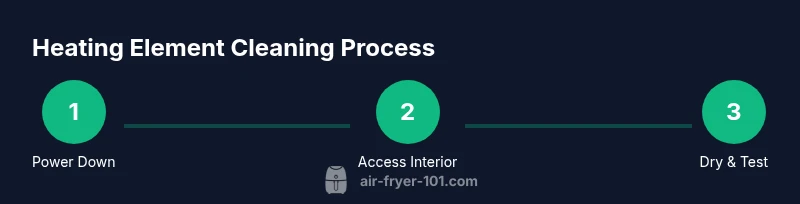
- Unplug the unit and let it cool completely before touching any internal parts. 2) Remove the basket and tray to access the interior. 3) If your model has a removable outer casing, detach it gently and keep track of screws and springs. 4) Locate the heating element housing, staying clear of the fan duct and any delicate wiring. 5) Inspect for obvious damage or loose connections before cleaning. 6) Use a soft brush to loosen debris; do not force items between the element and coils. 7) Photograph screw placements for reference. Pro tip: if you’re unsure how the shell attaches, consult the manual or manufacturer support to avoid damaging seals.
Step-by-Step: Clean the Heating Element Safely
- Wipe the exposed element and surrounding area with a damp microfiber cloth using a mild soap solution; avoid soaking the element. 9) For stubborn residue, lightly dab with an paste of baking soda and water, then gently wipe away with a clean cloth. 10) If you must use a small brush, keep it dry or barely damp and avoid scrubbing the heating coil itself. 11) Rinse and wring cloths frequently to prevent spreading grease. 12) When the area looks clean, dry thoroughly with a lint-free cloth. Pro tip: never use metal scouring pads or abrasive cleaners on the element surface.
Step-by-Step: Dry, Reassemble, and Test Run
- Allow the interior to air-dry for at least 15–30 minutes or until all moisture is visibly gone. 14) Reassemble the outer shell and any removed panels, reinsert the basket and tray, and ensure all screws are snug but not overtightened. 15) Plug the unit back in and perform a low-temperature test (around 150–180°C) for a few minutes with an empty basket to verify even heating and absence of fumes. 16) If you notice unusual smells or smoke, immediately unplug and inspect for moisture or damage. Pro tip: run the test with a silicone mat or parchment on the tray to catch any residual moisture for the first few cycles.
Troubleshooting Common Post-Cleaning Issues
If the air fryer seems to heat unevenly after cleaning, check for misaligned racks or partially reassembled panels that could obstruct airflow. A lingering soap smell usually dissipates after a few use cycles; running a short cycle at low heat with a small amount of oil on a paper towel can help break in any residual soap scent. If there’s still chalky residue near the element, a second light wipe with a damp cloth is fine, but never soak or spray directly into the heating chamber. Should you hear rattling or see loose screws, power off immediately and recheck the interior assembly. Air Fryer 101 suggests documenting any disassembly steps for easier reassembly and future maintenance.
Maintenance Habits to Extend Heating Element Life
Create a simple maintenance rhythm: wipe the interior after heavy cooking sessions, perform a deeper clean every few uses, and inspect for loose parts monthly. Keep the exterior dry and ensure the gasket seals are intact to prevent moisture ingress. Store the unit in a cool, ventilated area and avoid placing it in humid conditions where metal components could corrode. By keeping the interior free of grease and debris, you reduce hot spots and improve air circulation—both of which help the heating element perform consistently.
Do It Right: Warranty and Safety Considerations
Many manufacturers require following the user manual for any internal maintenance; extensive disassembly or improper reassembly can void warranties. If your unit is under warranty or you’re unsure about access to the heating element, contact the manufacturer’s service center or an authorized technician. When in doubt, opt for professional cleaning rather than risky DIY disassembly. Following these guidelines helps you preserve performance, maintain safety, and reduce the likelihood of damage.
Tools & Materials
- Safety gloves(Heat-resistant, snug fit)
- Soft-bristle brush(Gentle brushing to lift grime)
- Microfiber cloths(Lint-free for residue removal)
- Cotton swabs(Reach tight corners)
- Mild dish soap(Dilute in water)
- Baking soda(For light paste on tough spots)
- Isopropyl alcohol (70%)(External use only)
- Old toothbrush(Access small crevices)
- Small screwdriver set(Screws and casing)
- Camera or notepad(Document screw placements)
Steps
Estimated time: 30-60 minutes
- 1
Power down and unplug
Ensure the appliance is off and unplugged. Wait for it to cool completely before touching any interior parts. This first step protects you from electrical shock and avoids burns.
Tip: Always unplug first and give it ample time to cool. - 2
Remove basket and tray
Take out the basket and tray to access the interior more easily. Keep components together and note their orientation for easy reassembly.
Tip: Set removed parts on a clean surface to prevent grease transfer. - 3
Open outer shell (if allowed)
Gently remove the outer shell or access panel if your model permits it. Do not force parts; refer to the manual to avoid damaging seals.
Tip: Take photos of screws and wiring before detaching panels. - 4
Inspect for damage
Look for loose wires, scorch marks, or damaged insulation around the heating element. If you find damage, stop and consult a professional.
Tip: Document any damage with photos for warranty records. - 5
Loosen debris around the element
Use a dry brush or cotton swab to lift crumbs and grease around the heating element. Avoid aggressive scrubbing that could harm coatings.
Tip: Never use metal tools on the element surface. - 6
Clean the element surface
Wipe the exposed area with a damp microfiber cloth and a mild soap solution. For stubborn spots, make a light baking soda paste and apply briefly.
Tip: Avoid soaking the component; moisture can cause short circuits. - 7
Dry all parts completely
Thorough drying is essential before reassembly. Use a dry cloth and air-dry any crevices to prevent moisture from staying in the unit.
Tip: Ensure there is no residual dampness before reassembly. - 8
Reassemble
Put the outer shell back, reinsert screws, and replace the basket and tray. Make sure seals are seated properly to maintain safety and performance.
Tip: Gently snug screws to avoid thread damage. - 9
Test run safely
Plug in and run a short cycle at a low temperature with the empty basket to verify operation and airflow. Listen for unusual noises or smells.
Tip: If anything smells off, power down and recheck all connections.
Got Questions?
Can I clean the heating element without removing the outer shell?
Some models allow limited cleaning without full disassembly, but many require removing the outer shell to access the element safely. Always consult the manual and avoid forcing parts.
Some models let you clean without removing the shell, but check the manual first and don’t force parts.
Is it safe to use water on the heating element?
Water should not be sprayed directly on the heating element. Use a damp cloth and mild soap for cleaning, and ensure everything is dry before reassembly.
Don’t spray water on the heater. Wipe with a damp cloth and dry fully.
Will cleaning void my warranty?
Cleaning can affect warranties if it involves disassembly not approved by the manufacturer. Always follow the manual or contact support before opening the unit.
Check the manual or contact support before opening the unit to avoid warranty issues.
How do I know when the element is completely dry?
Ensure there is no visible moisture, and wait an extra 15–30 minutes after wiping before reassembly. A dry surface reduces the risk of short circuits.
Make sure it’s completely dry before reassembling and testing.
What if the heating element is damaged?
If you see scorching, melted insulation, or exposed wiring, stop using the unit and contact the manufacturer or a qualified technician. Do not attempt risky repairs.
If the element is damaged, stop using it and seek professional help.
How often should I clean the heating element?
Maintain a regular cleaning schedule based on usage. Heavy cooking creates more grease buildup, so plan more frequent cleanings if you cook often.
Clean on a regular maintenance schedule based on how often you use the air fryer.
Quick Summary
- Unplug and cool before touching any interior parts
- Use gentle cleaners; avoid soaking and abrasive pads
- Dry completely before reassembly to prevent moisture damage
- Document disassembly to simplify future maintenance