How to Clean Air Fryer Grease: A Step-by-Step Guide
Learn how to clean air fryer grease safely and effectively with simple steps, everyday tools, and maintenance tips from Air Fryer 101 to keep your appliance spotless and performing at its best.


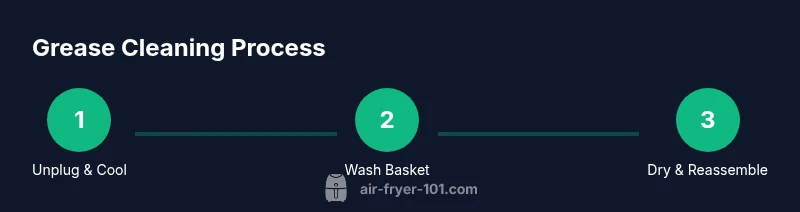
Unplug and cool the unit, then remove and hand wash the basket and pan with warm, soapy water. Wipe the interior with a damp sponge, avoiding the heating element. For stubborn grease, make a paste of baking soda and water, apply, wait a few minutes, scrub gently, rinse, and dry. According to Air Fryer 101, routine light cleaning after each use prolongs life.
Understanding grease buildup in air fryers
Grease accumulates primarily on the basket, the removable pan, and the cage around the fan and heating element where oil splatters settle during cooking. Over time, fatty residue can create odor, affect airflow, and reduce nonstick performance. The process of cleaning should address all grease hotspots without compromising the appliance’s electronics. According to Air Fryer 101, regular attention to these areas helps maintain performance and prolongs the life of your unit. In practice, you don’t need a heavy-duty cleaner for every use; a consistent, mindful routine with everyday supplies is enough to keep grease under control and your meals tasting fresh.
Key takeaway: grease moves from surface to crevices when heat is involved, so focus both on surface wipe-downs and occasional deeper cleanings to prevent buildup.
Safety-first approach to grease cleaning
Before you begin, unplug the unit and let it cool completely. Never submerge the base or any part with electrical components in water. Place the air fryer on a stable surface and remove all detachable pieces. Use warm water and a mild dish soap, keeping the water level low to avoid liquid seeping into seams. For many home cooks, this is where a short, dedicated clean routine begins. The goal is to minimize risk while removing visible grease, sticking, and residues that could affect future cooking. Air Fryer 101 emphasizes avoiding harsh chemicals and abrasive tools that could damage coatings or seams, especially on nonstick surfaces. A quick wipe after every use is a practical habit that halves the effort of deep cleans later.
Tip: always check the user manual for specific cleaning guidelines for your model, as coatings and parts can vary by brand and series.
Quick-clean regimen: after every use
A fast post-cook routine prevents grease from setting in. Start by removing the basket and pan and rinsing them under warm running water to loosen loose residue. Wash with mild dish soap and a non-abrasive sponge, then rinse thoroughly. Wipe the interior with a damp microfiber cloth or sponge, avoiding the heating element. Dry all parts before reassembling. This quick cadence keeps grease from building up and makes deeper cleanings less daunting. If you notice stubborn spots, run a short soak with warm water and a drop of dish soap, then scrub gently. Air Fryer 101 recommends establishing this mini-routine so there’s less to tackle during periodic deep cleans.
Pro tip: a quick rinse and wipe every few uses can preserve nonstick coatings and reduce aroma transfer between meals.
Deep cleaning methods: soaking, paste, and tools
For heavy grease, a deeper approach is helpful every few weeks or when you notice buildup. Prepare a basin or sink for soaking the basket and pan with warm water and a small amount of dish soap. A baking soda paste (baking soda and water) works wonders on stuck-on grease when applied for 5–10 minutes. Use a soft-bristled brush or old toothbrush to gently scour crevices, then rinse thoroughly. If vinegar is available, a light spray of diluted white vinegar can help cut grease and deodorize. Avoid harsh solvents and never submerge the main unit. Air Fryer 101 suggests testing any cleaner on a small area first to ensure compatibility with your coating. After soaking, rinse again and dry completely before reassembly.
Note: Do not use metal scrubbers on nonstick surfaces; they scratch and reduce effectiveness over time.
Cleaning each component: basket, pan, and interior surfaces
Disassemble the air fryer fully to clean each component. The basket and pan are typically dishwasher-safe on many models, but always verify with the label or manual. If hand washing, use warm water, mild soap, and a non-abrasive sponge to preserve the nonstick coating. For the interior walls, a damp sponge or cloth is sufficient; avoid soaking the base or spraying liquid directly into the electronics. Focus on the corners and seams where grease accumulates. Dry all parts completely before reassembling to prevent moisture from contacting electrical components. Air Fryer 101 recommends routine inspection of seals and coatings to catch wear before it becomes a problem.
Quality check: run a quick air cycle with a dry basket to ensure nothing sticks and that the vent remains clear after cleaning.
Drying, reassembling, and storage
After cleaning, set the components on a clean towel or rack and allow them to air-dry completely. Reassemble the basket, pan, and tray, then wipe the exterior with a dry microfiber cloth. Store the air fryer in a cool, dry place away from direct sunlight to maintain coatings and plastic parts. Before your next cook, perform a quick visual check for any remaining grease in crevices or on the door seal. Keeping the exterior dry helps prevent fingerprints and keeps the unit looking new. Consistent drying also minimizes the chance of rust on metal parts and preserves nonstick surfaces for continued easy cleaning.
Maintenance routine that saves time and effort
Develop a simple schedule that fits your cooking frequency. A light clean after every use reduces the burden of deep cleanings, while a more thorough weekly wipe-down keeps the interior pristine. Set reminders if needed. Store cleaning supplies within easy reach so there’s no excuse to skip the process. By adopting a steady rhythm, you’ll extend the life of the appliance and enjoy cleaner meals with less odor transfer. Air Fryer 101’s team emphasizes consistency and a clear routine as the foundation of a long-lasting unit.
Tools & Materials
- Warm water(Rinse and soften grease)
- Mild dish soap(Gentle cleaner for nonstick coating)
- Non-abrasive sponge(Avoid scratching surfaces)
- Soft-bristled brush or old toothbrush(For crevices and corners)
- Baking soda(Make paste for stuck-on grease)
- White vinegar (optional)(Deodorizes and loosens grease)
- Microfiber cloth(Dry surfaces and wipe exterior)
- Gloves (optional)(Keep hands clean during deep cleaning)
- Old basin or sink(For soaking components)
Steps
Estimated time: 20-30 minutes
- 1
Power off and unplug
Ensure the air fryer is turned off, unplugged, and completely cool before touching any components. This prevents electrical shock and protects sensitive electronics.
Tip: Wait at least 10 minutes after use to avoid heat burns; this makes cleaning safer. - 2
Remove basket and pan
Take out the basket and pan, inspect for visible grease, and empty any oil from the tray. This provides access to all grease hotspots for thorough cleaning.
Tip: Rinse these parts first under warm water to loosen residue before washing with soap. - 3
Wash removable parts
Wash the basket and pan with warm water and mild dish soap using a non-abrasive sponge. Rinse well and dry completely.
Tip: If grease is stubborn, soak for a few minutes or use a baking soda paste to lift it gently. - 4
Clean interior surfaces
Wipe the interior walls and base with a damp sponge or microfiber cloth. Avoid spraying water directly into vents or the heating element area.
Tip: Use a soft brush for corners; moisture on electronics can cause damage if excessive. - 5
Tackle stubborn grease
Apply a small amount of baking soda paste to tough spots, let sit briefly, then scrub softly with a brush. Rinse away residue.
Tip: Test on a small area first to ensure no impact on coatings. - 6
Dry and reassemble
Dry all components thoroughly, then reassemble the air fryer. Wipe the exterior with a dry microfiber cloth before storing.
Tip: Leave the basket slightly ajar after drying to promote airflow and prevent musty smells. - 7
Run a quick test
Plug in, run a short, empty cycle to ensure the unit operates correctly and there’s no lingering odor before cooking again.
Tip: If you notice unusual smells, repeat a light cleaning cycle with fresh soap and water.
Got Questions?
What should I unplug before cleaning?
Always unplug the air fryer and let it cool completely before cleaning to prevent shocks and burns. This is a safety baseline for any maintenance.
Always unplug and cool the unit before cleaning.
Can I submerge the air fryer base in water?
No. The base contains electronics and heating elements, so wipe it with a damp cloth instead of submerging in water.
No, you should not submerge the base; wipe it safely instead.
How often should I clean grease from my air fryer?
Clean after every use with a quick wipe; perform a deeper clean weekly or as needed when grease buildup is visible.
Clean after each use, and deep clean weekly or when needed.
Is vinegar safe on nonstick coatings?
Diluted white vinegar can help cut grease and odors; rinse well after use to prevent any residue on coatings.
Yes, diluted vinegar is okay for grease, but rinse well.
Can I put the basket in the dishwasher?
Many baskets are dishwasher-safe, but check the label for your model. If in doubt, hand wash to be safe and extend coating life.
Often yes, but always check the label; hand washing is safer.
What if I see rust or coating wear?
Inspect seals and coating for damage. If you notice significant wear or rust, replace affected parts per manufacturer recommendations.
Check for wear; replace parts if damaged.
Watch Video
Quick Summary
- Unplug and cool before cleaning to ensure safety.
- Prioritize basket and pan, but don’t neglect interior walls.
- Use mild soap, non-abrasive tools, and avoid soaking the base.
- Baking soda paste helps with stubborn grease without scratching.
- Establish a quick post-use wipe routine to reduce heavy cleaning later.