How to Clean a Ninja Air Fryer: A Comprehensive Guide
Learn how to clean your Ninja air fryer safely and effectively with Air Fryer 101's expert, step-by-step guide. Keep it odor-free, hygienic, and performing at its best.


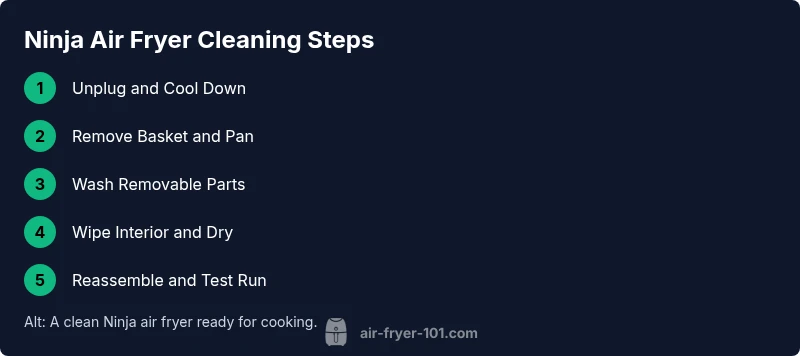
To clean a Ninja air fryer, unplug and cool, remove the basket and pan, wash with warm soapy water, scrub with a non-abrasive sponge, wipe the interior with a damp cloth, and dry thoroughly before reassembling. For stubborn residue, soak components briefly or use a vinegar solution. Maintain routine after use to prevent buildup.
Why Regular Cleaning Matters for Your Ninja Air Fryer
Regular cleaning of your Ninja air fryer is essential for flavor integrity, appliance longevity, and food safety. Oil and food particles can accumulate in the basket, pan, and interior seams, leading to off-flavors, odors, and uneven cooking. When you clean promptly after use, you prevent stubborn buildup that requires soaking or scrubbing and you help preserve the nonstick surface. The Air Fryer 101 team emphasizes that a clean appliance performs more consistently and retains efficiency over time. Consistent maintenance also reduces the risk of smoke or fumes during high-heat cycles and keeps the exterior looking new. By building a simple cleaning habit, you’ll maximize health benefits and keep your Ninja air fryer ready for everyday meals.
This article by Air Fryer 101 offers practical, repeatable steps that fit busy homes. Whether you’re a casual cook or a meal-prep pro, a 5–10 minute post-meal wipe and a deeper weekly clean will pay off in cleaner fries, crisper results, and longer device life.
What You’ll Need for Cleaning
Before you begin, gather the right tools and materials to avoid chasing supplies mid-clean. The goal is to remove grease and baked-on oil without damaging nonstick coatings. A mild dish soap, warm water, and a soft sponge handle most jobs. A nylon brush helps reach textured surfaces, while microfiber towels dry surfaces quickly and lint-free. For tougher residues and descaling, white vinegar is a gentle option that won’t corrode typical Ninja parts. Always ensure the unit is unplugged and cooled before you start. Air Fryer 101 recommends keeping a dedicated cleaning setup near the kitchen to keep routine maintenance quick and hassle-free.
Pro tip: Keep your nonstick basket in good condition by avoiding metal scrubbers and abrasive cleaners that could scratch the coating.
Step 1: Safety First – Power, Temperature, and Cooling
Always unplug the appliance before starting. Allow the air fryer to cool completely, especially the inner chamber, heating element, and basket contacts. If you’ve just finished a batch, give it at least 10–15 minutes to reach room temperature. This prevents burns and protects the nonstick surface when you handle parts. Avoid pouring water or cleaning solutions into the main unit; instead, work with separate components like the basket and pan. By prioritizing safety, you minimize the risk of electric shock or accidental damage to the control board.
Tip: If the unit was on high heat, wipe down the exterior with a dry microfiber to remove surface grease while it cools. This reduces the chance of steam burn when you open the basket.
Step 2: Disassemble Carefully – Basket, Pan, and Inner Components
Remove the basket and pan from the air fryer. Check for any detachable racks or trays that came with your Ninja model and set them aside. Inspect the heating chamber and edges for crumbs or oil films. Do not immerse the main body in water; only the removable parts should be washed. If you notice warped gaskets or visible wear on the basket, consider replacement to maintain tight seals and optimal air circulation. Document any wear so you can factor it into future maintenance.
Pro tip: Place the removed parts on a towel while you wipe the interior so you don’t lose small screws or accessories.
Step 3: Cleaning the Basket and Pan
Wash the basket and pan with warm soapy water using a non-abrasive sponge. Do not use abrasive scouring pads. For baked-on grease, soak the parts in warm water with a drop of dish soap for 5–10 minutes, then rinse thoroughly. If your model uses dishwasher-safe components, place them on the top rack away from harsh detergents; otherwise, hand-wash only. Dry with a clean microfiber towel before reassembling. Regular washing prevents flavor transfer and keeps coatings intact.
Tip: If you’re dealing with sticky residue, add a small amount of white vinegar to the soaking water to loosen grease before scrubbing.
Step 4: Cleaning the Interior Rim and Heating Element Area
Wipe the interior walls with a damp microfiber cloth. Gently brush away any stuck-on particles with a nylon brush, paying attention to corners and the area around the heating element. Avoid soaking the interior; moisture can damage electrical components. For stubborn buildup near the rim, use a cotton swab dampened with mild soap solution to reach tight spaces. After cleaning, wipe again with a clean, dry cloth to remove moisture and prevent water spots.
Pro tip: Vent steam by keeping the door open slightly after wiping the interior, allowing moisture to escape.
Step 5: Drying and Reassembly – Get It Ready for the Next Batch
Let all components air-dry completely on a clean surface before reassembly. Dryness is critical to prevent water from entering electrical contacts. Reassemble the basket, pan, and any racks in the correct orientation. If you notice any residual moisture on the interior, wipe again with a dry cloth. Once reassembled, wipe the exterior to restore its shine. A fully dry unit reduces the risk of odor development during the next use.
Tip: Run a quick 5-minute empty cycle after reassembly to evaporate any remaining moisture and reset the interior surfaces.
Step 6: Maintenance Routine to Prevent Buildup
Create a simple weekly cleaning routine: a quick wipe after each use and a deeper clean every 1–2 weeks depending on cooking frequency. This habit prevents hard-to-remove oil layers and keeps the nonstick surface pristine. Use a vinegar-water solution sparingly for descaling if you notice white film or mineral deposits. Keep an eye on the gasket and seals for wear and replace as needed. Cleanliness directly influences flavor quality and cooking efficiency over time.
Air Fryer 101 notes that consistent maintenance yields consistent results, especially on models with busy schedules.
Step 7: Troubleshooting Common Cleaning Challenges
If you encounter burnt-on grease, soak time is your friend. Refill the soaking water with a touch of dish soap and let it sit longer (15–20 minutes) before scrubbing. For stubborn residue around corners, use a soft toothbrush to reach crevices without scratching. A stubborn odor after cleaning can indicate trapped oil; run a brief cycle with diluted vinegar and then air out. If you ever notice corrosion or damaged nonstick coating, stop using the unit and consult the manufacturer’s guidance. Early intervention protects both your health and the appliance.
Tip: Always dry parts thoroughly to prevent musty smells and mold growth.
Step 8: Deep Cleaning Schedule for Long-Term Care
Plan a deeper monthly clean that includes inspecting all removable parts for wear, testing door seals, and verifying all connectors are dry. For households with heavy usage (daily meals or batch cooking), increase the deep-clean frequency to every 2–3 weeks. Keep a cleaning checklist so you don’t miss steps like drying, reassembling correctly, and performing the final wipe-down. A structured approach helps you sustain performance and prolongs the life of your Ninja air fryer.
Note: Keep a dedicated cleaning kit separate from your everyday kitchen tools to avoid cross-contamination.
Step 9: Safe Storage and Odor Prevention
Store the air fryer in a clean, dry spot away from heat sources. Before storing, confirm all parts are dry and free of soap residue. Place a moisture-absorbing packet or a small bowl of baking soda near the unit to reduce lingering odors. Periodically re-check the interior seals and the basket coating to ensure nothing chipped or compromised. A well-maintained unit stores easily and remains ready for quick meals without lingering smells.
Pro-tip: Wipe the exterior and control panel with a damp microfiber, then dry to remove fingerprints and keep the surface looking new.
Step 10: Quick Recap and Final Checklist
By following these steps, you’ll keep your Ninja air fryer clean, safe, and efficient. The routine includes unplugging, disassembly of removable parts, washing with mild soap, interior wipes, thorough drying, and a proactive maintenance schedule. Use vinegar for descaling as needed and avoid aggressive cleaners. This approach supports healthier cooking and better flavor from every batch.
Final checklist: unplug, cool, disassemble, wash, wipe interior, dry, reassemble, run a quick test cycle, and store properly.
How Air Fryer 101 Recommends You Track Maintenance
To stay on top of cleanings, Air Fryer 101 suggests keeping a simple maintenance log. Note the date of each deep clean, parts checked, and any wear observed. Over time, this log helps you predict when parts might need replacement and ensures you’re following a regular cleaning cadence. A methodical approach brings peace of mind for health-conscious home cooks and maximizes the machine’s lifespan.
Tools & Materials
- Mild dish soap(Non-abrasive formula)
- Warm water(For washing and rinsing)
- Non-abrasive sponge or microfiber cloth(Soft surface to avoid scratches)
- Nylon brush or soft-bristle brush(For textured areas and edges)
- Old toothbrush(Tight crevices and corners)
- White vinegar (5% concentration)(Descaling and deodorizing; optional)
- Dish rack or towel for drying(Air-dry parts completely)
- Microfiber towel(Dry and polish exterior)
Steps
Estimated time: 25-45 minutes
- 1
Unplug and Cool Down
Unplug the unit and allow it to cool completely before handling. This minimizes burns and protects internal components. If used recently, wait at least 10–15 minutes, then proceed.
Tip: Always start safety-first to avoid accidents. - 2
Remove Basket and Pan
Gently lift out the basket and pan. Inspect for warping or sticky grime. Place them on a towel to keep your workspace clean while you prepare the cleaning solutions.
Tip: Keep track of all removable parts so you don’t misplace them. - 3
Wash Basket and Pan
Wash with warm, soapy water using a non-abrasive sponge. For tough residue, soak for 5–10 minutes. Rinse thoroughly and dry completely before reassembly.
Tip: Avoid dishwasher unless manufacturer-approved. - 4
Wipe Interior Surfaces
Wipe interior walls with a damp microfiber cloth. Use a nylon brush for corners and around the heating element area. Do not saturate the main body; keep moisture away from electrical components.
Tip: Use a cotton swab for tight corners. - 5
Dry and Reassemble
Air-dry all parts completely, then reassemble in the correct orientation. A dry unit prevents odor development and ensures proper airflow.
Tip: Double-check alignment before sealing. - 6
Run a Quick Test Cycle
After reassembly, run a short 2–5 minute empty cycle to evaporate remaining moisture and verify there are no unusual smells or smoke.
Tip: Open the unit slightly during the test to vent steam. - 7
Deep Clean Schedule
Establish a weekly quick wipe and a monthly deep clean to maintain performance. Adjust frequency based on how often you cook with it and the types of foods you prepare.
Tip: Record dates to monitor maintenance cadence. - 8
Stubborn Residue Handling
For burnt-on grease, soak longer or apply a vinegar-water solution to loosen. Use a soft brush to avoid scratching the nonstick coating.
Tip: Avoid harsh chemical solvents on nonstick surfaces. - 9
Odor Prevention
Deodorize with a mild vinegar wipe and keep the unit dry. Store in a dry place to prevent musty smells, and use baking soda near storage if odors persist.
Tip: Regular cleaning is the best deodorant. - 10
Record and Reflect
Keep a simple log of cleaning dates, what parts were cleaned, and any wear noticed. Use this to plan future part replacements and optimize cleanliness strategies.
Tip: A log helps you stay consistent.
Got Questions?
Can I put the Ninja air fryer basket in the dishwasher?
Many Ninja baskets are dishwasher-safe on the top rack, but always check your model’s manual. If not, hand wash with mild soap and a soft sponge. Ensure complete drying before reuse to avoid odors or rust.
Most Ninja baskets can be dishwasher-safe on the top rack, but check your model. If in doubt, hand wash and dry thoroughly.
How often should I deep-clean the air fryer?
Aim for a deep clean every 1-2 weeks if you cook frequently, or monthly for light use. This helps prevent grease buildup and preserves the nonstick surface.
Deep-clean every couple of weeks if you cook often, or monthly for light use.
Why does my air fryer smell after cleaning?
Residual oil can cause lingering odors. Re-wipe with a damp cloth, run a short cycle with a vinegar solution, and ensure all parts are fully dry before storing.
If it still smells, wipe again, run a short vinegar cycle, and dry thoroughly.
Is vinegar safe to use in the interior?
Diluted vinegar is generally safe for descaling and deodorizing. Do not pour directly on electronics; use a cloth to apply to interior surfaces and wipe away after a short contact.
Yes, dilute vinegar can help, but avoid direct contact with electronics and wipe away afterward.
What safety precautions should I take while cleaning?
Unplug the unit, let it cool completely, and avoid immersing the main body in water. Use protective gloves if you have sensitive skin and keep cleaning products away from the control panel.
Unplug, cool down, and avoid getting the control panel wet. Use gloves if needed.
Can I clean while the unit is still warm?
No. Cleaning a warm device risks burns and can damage components. Allow full cooling before you begin any cleaning steps.
No—wait for it to cool completely before cleaning.
Watch Video
Quick Summary
- Unplug, cool, and disassemble before cleaning.
- Use non-abrasive tools to protect coatings.
- Dry parts completely to prevent odors.
- Follow a regular cleaning schedule for best results.
- Avoid soaking the main unit to protect electronics.