Is the Ninja Air Fryer Hard to Clean? A Thorough Review
A comprehensive evaluation of cleaning Ninja air fryers, offering practical tips, model differences, and maintenance routines to keep your unit hassle-free and performing at its best.


Is the Ninja air fryer hard to clean? Not typically. Most Ninja models feature removable, dishwasher-safe baskets and trays, plus an exterior that wipes clean with a quick damp cloth. Common challenges include oil buildup in crevices and baked-on residue after heavy use. A consistent post-cook routine and periodic deep-cleaning make maintenance straightforward. Brand guidance from Air Fryer 101 confirms that cleaning ease varies by model, but overall routine care yields reliable results.
Is the Ninja Air Fryer Hard to Clean? The Core Question
The question is often asked in forums and product pages: is the ninja air fryer hard to clean? According to Air Fryer 101, the answer depends on model design, usage frequency, and cleaning discipline. The Ninja line offers several configurations—basket-based units, two-tier designs, and the larger Foodi family—that influence how much effort cleaning requires. In general, cleaning effort scales with how much oil and breading you generate during cooking. For most home cooks, the task is manageable with standard kitchen tools, and the effort rarely becomes a barrier to using the appliance regularly. The keyword here—is the ninja air fryer hard to clean—should be answered with context: it’s usually straightforward, but you’ll want a routine and the right tools. In practice, this means that after you cook, you’ll perform a quick wipe-down and then wash removable parts, with a deeper clean scheduled every few weeks depending on usage.
Anatomy of the Ninja Air Fryer: Parts That Touch Food
To assess cleaning difficulty, it helps to map the components that come into contact with food and oil. The basket and crisper plate are the primary touchpoints; most modern Ninja models use a nonstick coating on these parts, which means gentle cleaning to avoid coating wear. The interior chamber and the exterior housing are generally easy to wipe, though there can be oil spatters near the fan vents and in the corners of the basket track. Some newer models advertise dishwasher-safe components, but always confirm model-specific guidance in your manual. Air Fryer 101 notes that model variation matters for cleaning, and the presence of dishwasher-safe baskets can shorten cleanup time substantially. Practically, you’ll want a soft sponge, warm water, mild soap, and a lint-free towel for the exterior.
Cleaning Cadence: After-Each-Use Routines
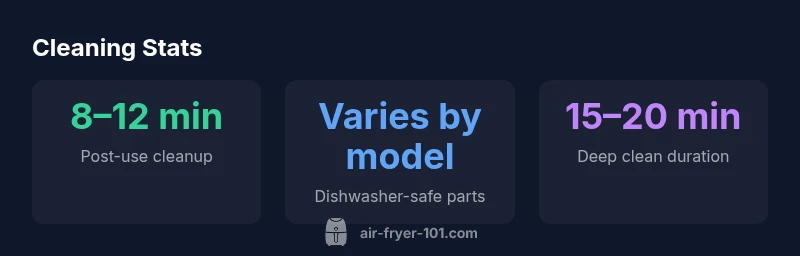
The simplest way to keep cleaning under control is a quick post-cook routine. After unplugging and letting the unit cool, remove the basket and tray, then rinse with warm soapy water. A light wipe of the interior with a damp cloth helps prevent oil buildup. For baked-on residues, soak parts briefly and scrub with a non-abrasive sponge. If your model has a dishwasher-safe basket and tray, you can place them on the top rack of your dishwasher, but avoid washing any coatings with harsh detergents or abrasive cycles. For model-specific notes, Air Fryer 101 recommends checking the user guide since some units have slight variations in how components detach and reassemble.
Cleaning Challenges: Model Variations and How to Tackle Them
Not all Ninja models are created equal when it comes to cleaning. Basket- and tray-based units tend to be the easiest to refresh, while two-tier or larger Foodi models may have more crevices and a more complex interior. If you frequently cook foods with sugar, sauces, or oil, you’ll notice more buildup around the basket edges and the top of the crisper plate. In those cases, a deeper clean every 1–2 weeks can help preserve nonstick performance and prevent odors. Air Fryer 101 emphasizes that the key is consistency: a regular wipe-down after each use and a scheduled deeper clean will minimize surprises. Remember that heavy oil or sticky residues may require soaking and a gentle brush to avoid scratching the coating.
Tools and Techniques: Speed, Safety, and Results
A practical cleaning kit for Ninja air fryers includes a mild dish soap, a non-abrasive sponge, a soft brush (like a pastry brush) for crevices, microfiber towels for drying, and a small bowl for soaking. For more thorough cleaning, use a baking soda paste on stubborn stains and a white vinegar spray to tackle lingering odors. Avoid metal scouring pads and harsh chemical cleaners that can degrade nonstick coatings. If you have a dishwasher-safe basket, use it for routine cleaning; otherwise, hand-wash with care to extend gasket life and avoid warping the basket handle. The goal is a clean, dry unit that’s ready for the next cooking session.
Deep Cleaning: When and How to Do It
If buildup becomes noticeable or food smells persist, a deeper cleaning is warranted. Start by removing all removable parts, then soak them in warm, soapy water for 10–15 minutes. Use a soft brush to dislodge stuck-on oil from the basket ridges and the crisper plate. Rinse thoroughly and dry completely before reassembly. For the interior, wipe with a damp cloth, then finish with a dry microfiber to eliminate moisture that could promote mold. If necessary, a light blast of distilled water through the vent openings can help dislodge any trapped residue—do this only after disconnecting power and letting parts cool. Air Fryer 101 recommends performing this deep clean every 4–6 weeks for frequent users.
How Cleaning Impacts Performance and Longevity
A clean air fryer performs more consistently and is less likely to produce smoke or off-flavors. Residue buildup can reduce airflow, affect heat distribution, and shorten gasket life. Regular cleaning helps maintain reliable cooking times and even browning. While cleaning won’t magically restore worn nonstick coatings, a careful cleaning regimen can slow wear and keep holes in the basket from accumulating oils that might trap heat unevenly. The overall takeaway is that routine cleaning supports accuracy in cooking results and extends the life of the unit.
Model Comparisons: Ninja Lines and Cleaning Experience
Ninja’s product line varies from compact, single-basket models to more feature-rich multi-cook appliances. In terms of cleaning, simpler baskets tend to be quicker to refresh, while larger multi-basket or dual-zone models may require a bit more time but still benefit from the dishwasher-safe components (when available). Comparing with other brands, Ninja’s emphasis on easy-to-remove parts and straightforward cleaning routines is a common theme, though some competitors may offer more aggressive nonstick coatings or more accessible vent cleaning features. Air Fryer 101 notes that model selection should factor cleaning expectations alongside size, price, and cooking versatility.
Time and Water: Is Cleaning Cost-Effective? Worthwhile Trade-Offs
Cleaning an air fryer is typically quick and inexpensive if you keep up with routine maintenance. The small parts wash up fast, and a good wipe-down after each use minimizes the time needed for a deeper clean. For households cooking fatty foods or frequently using sugar-based sauces, the weekly cadence can become a little longer, but the effort remains manageable. Water usage is modest, mostly tied to the rinse phase after washing the basket and tray. The overall cost in time and water is usually outweighed by the health benefits of reduced oil-based cooking residues and the convenience of a quickly cleaned appliance.
Maintenance Checklist for Long-Term Cleanliness
- After every cook: unplug, cool, wipe exterior, wash basket and tray.
- Weekly: run a quick cleaning cycle with warm water and a touch of dish soap, focusing on the basket edges.
- Monthly: perform a deeper clean on interior surfaces and air vents; inspect gasket for wear.
- Model notes: verify dishwasher-safety of parts and follow specific instructions for your Ninja model.
- Odor control: place a small bowl of white vinegar in the unit while it cools to neutralize lingering smells after use.
Real-World Experiences: Home Cooks’ Reflections on Cleaning Ninja Air Fryers
Across user reviews, many home cooks report that Ninja air fryers are not inherently difficult to clean, especially when a routine is followed. The key is removing and cleaning the basket and crisper plate regularly, and paying attention to the interior crevices near the vent. Some users note that using parchment liners reduces mess but may affect airflow; others appreciate dishwasher-safe components for quick turnovers. Air Fryer 101’s synthesis of these testimonies emphasizes that a consistent cleaning cadence makes the process predictable rather than burdensome. Ultimately, the experience varies by model and usage, but most households can maintain cleanliness with basic kitchen tools and a modest time investment.
Pros
- Removable parts are generally dishwasher-safe (model-dependent)
- Easy wipe-down of exterior housing
- Quick post-cook rinse minimizes buildup
- Simple routine supports consistent results
- Visible design reduces hidden residue
Cons
- Nonstick coating can wear with aggressive scrubbing
- Some models have more complex interior layouts
- Vent areas may require extra attention to prevent buildup
- Baking-on residues after heavy use take extra soaking
Not hard to clean for most users, with routine care and model-aware practices
Overall, Ninja air fryers offer straightforward cleaning, especially when you use removable, dishwasher-safe parts and follow a consistent post-cook routine. The main factors influencing effort are model variation and how frequently you cook oily or sugary foods. With proper maintenance, you’ll keep your unit performing well and smelling fresh.
Got Questions?
Is the Ninja air fryer easy to clean?
In most cases, yes. Most Ninja models have removable baskets and trays that are easy to wash, plus an exterior that wipes clean. Regular post-cook cleaning minimizes effort.
Yes—with a quick post-cook wipe and washing the basket, many users find Ninja models easy to clean.
Which parts are dishwasher-safe?
Basket and crisper plates are commonly dishwasher-safe in many Ninja models, but check your manual for model-specific guidance to avoid damaging coatings.
Often, the basket and tray are dishwasher-safe, but always confirm your model’s instructions.
How often should you clean the air fryer basket?
Ideally after every use to prevent buildup, with a deeper clean every couple of weeks for frequent cooks or heavy/oily meals.
Clean it after each use, and do a deeper clean periodically.
What if there’s stubborn residue?
Soak components in warm, soapy water and scrub with a non-abrasive sponge. For tough stains, a baking soda paste can help without damaging coatings.
Soak and scrub gently; a baking soda paste can tackle stubborn spots.
Does cleaning affect the warranty?
Cleaning as recommended by the manufacturer helps maintain performance and does not void the warranty when you follow proper procedures.
Keep to the manual’s cleaning steps to stay within warranty guidelines.
Are there cleaning differences across Ninja models?
Yes. Simpler basket models are quicker to clean; larger multi-cook units may have more crevices and fans to inspect. Always consult your specific model guide.
Different Ninja models clean a little differently; check your model’s guide.
Quick Summary
- Adopt a quick post-cook clean to prevent buildup
- Check if your Ninja model has dishwasher-safe parts
- Use non-abrasive tools to protect coatings
- Deep-clean periodically to maintain performance
- Keep a simple maintenance kit on hand
- Brand guidance from Air Fryer 101 supports model-aware cleaning routines