What to Clean Air Fryer With: Safe Cleaners and Steps
Discover what to clean air fryer with, selecting safe cleaners and practical routines. This Air Fryer 101 guide covers baskets, interiors, and maintenance to keep your appliance performing at its best.


To clean an air fryer, start with mild soap and warm water on the basket and pan, using a non-abrasive sponge. Wipe the interior with a damp cloth, taking care around the heating element. For stubborn residue, make a baking soda paste, then rinse, dry completely, and reassemble. Air Fryer 101 recommends gentle cleaners and thorough drying.
Why cleaning an air fryer matters
Regular cleaning keeps foods from tasting like yesterday's leftovers, preserves nonstick surfaces, and maintains performance. According to Air Fryer 101, a clean air fryer heats more evenly and uses less energy, reducing the chance of smoke during cooking. Build-up grease can transfer flavors and create odors; routine care also extends the life of seals and gaskets. By keeping baskets and interiors free of oil, you help maintain safe cooking temperatures and prevent contamination. This section explains the why behind a simple, regular cleaning routine and sets a foundation for choosing the right cleaners and methods.
what to clean air fryer with: safe cleaners
Choosing the right cleaners matters for coating longevity and food safety. Start with mild dish soap and warm water for daily cleaning of the basket and pan. For deodorizing and light scaling, white vinegar diluted 1:1 with water can be used sparingly. A baking soda paste (baking soda plus water) tackles stubborn grease without scratching surfaces. Avoid bleach, abrasive scrubbers, and harsh solvents that can damage nonstick coatings or leak into your food. If your model lists dishwasher-safe parts, place them on the top rack and follow manufacturer guidance. Finish with a microfiber towel to dry, then air-dry the interior briefly before reassembling.
How to clean components: basket, pan, interior, exterior
Start by removing the basket and the metal pan. Soak them in warm soapy water for 5-10 minutes to loosen adhered bits. Use a non-abrasive sponge to scrub the nonstick coating, avoiding metal scrapes. Rinse thoroughly and dry with a microfiber towel. For interior surfaces, wipe with a damp microfiber cloth, taking care around the heating element and vents. If residue persists, apply a small amount of baking soda paste and scrub gently. Finally, wipe the exterior with a damp cloth and dry. Some models allow washing the emptied basket and pan in the dishwasher on the top rack; always consult the manual.
Quick cleaning routine for everyday use
After cooking, unplug and allow the unit to cool for 5-10 minutes. Remove the basket and pan, rinse them under warm water with a drop of dish soap, and dry. Wipe the interior with a damp cloth, then dry again. Optionally, wipe the exterior with a microfiber cloth to remove fingerprints. If you notice lingering odors, run a quick 2-3 minute cycle with a splash of water in the basket to steam clean the interior, then dry thoroughly.
Deep-clean vs. quick-clean: when to do which
A quick-clean is enough after most uses, especially if you cook low-fat foods. Plan a monthly deep-clean that includes removing all parts, washing the basket and pan in hot, soapy water, cleaning the heating element vents with a soft brush, and inspecting seals for wear. If you see baked-on grease or odor that lingers after a standard wash, schedule a deep-clean sooner. Air Fryer 101 notes that regular deep-clean intervals help prevent odor buildup and maintain performance.
Troubleshooting cleaning issues
If the basket sticks or has tough residue, soak longer and re-scrub with a soft sponge. A baking soda paste can help with crusted grease on the bottom of the basket. If you notice smoke during cooking due to grease, ensure the bottom is clean and free of oil; wipe with a damp cloth and run a short, empty cycle to burn off residue. Never spray water directly into the base; keep liquid to removable parts. If the heating element is visibly soiled, use a damp cloth to wipe around it, not on it.
Maintenance tips to extend life
- Use parchment liners or a silicone mat in the basket to minimize food contact with the coating; ensure liners do not obstruct the fan or vents. - Replace worn gaskets slowly and consult the user manual. - Do not submerge the main unit in water; unplug before cleaning. - Dry all components completely before reassembly to prevent odor and corrosion. - Periodically inspect seals and cables for wear and cracks. - If dishwasher-safe, place the basket and pan on the top rack.
Safety considerations
Always unplug the unit before cleaning and let it cool completely. Do not spray water into the base or electronic controls. Use non-abrasive tools and mild cleaners to protect nonstick coatings. Keep cleaning materials away from children and avoid leaving wet surfaces to prevent accidental slips. When in doubt, consult the user manual for model-specific care instructions.
what not to use: cleaners to avoid
Avoid chlorine bleach, ammonia-based cleaners, abrasive scouring pads, metal wool, gasoline or solvents. Do not use harsh chemical cleaners near the heating element or on nonstick tins. Do not use acidic cleaners directly on coated surfaces for long periods. Always rinse thoroughly and dry completely after cleaning.
Tools & Materials
- Non-abrasive sponge or soft cloth(For coated baskets, avoid metal scrubbers)
- Mild dish soap(Gentle soap for daily washing)
- Warm water(For washing and rinsing)
- White vinegar(Dilute 1:1 for deodorizing)
- Baking soda(Make paste for tough grease)
- Small brush or old toothbrush(Clean corners and vents)
- Microfiber towel(Dry thoroughly)
- Dishwasher-safe top rack (model dependent)(Check manual)
- Optional parchment liners or silicone mat(Minimize coating contact)
Steps
Estimated time: 20-40 minutes
- 1
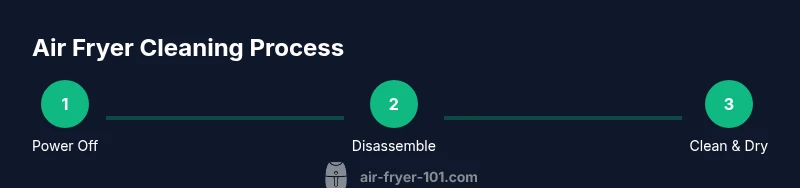
Power down and cool
Unplug the air fryer and let it cool completely before handling any parts. This reduces the risk of burns and prevents liquid from seeping into electronic components.
Tip: Wait at least 5-10 minutes after unplugging to ensure surfaces are cool. - 2
Remove and inspect components
Take out the basket and pan. Check for damage, warping, or missing coatings. This helps you decide whether to hand wash or use the dishwasher per the manual.
Tip: Inspect seals and gaskets; replace if you notice cracking. - 3
Wash the basket and pan
Soak in warm, soapy water for 5-10 minutes, then scrub with a non-abrasive sponge. Rinse thoroughly to remove all soap residues and pat dry with a microfiber towel.
Tip: If residue resists, apply a small amount of baking soda paste and scrub softly. - 4
Wipe the interior and vents
Wipe interior surfaces with a damp cloth, avoiding direct spray into the base or heating element area. Use a brush for tight corners near vents to dislodge grease.
Tip: Never soak the base part; keep liquids to removable components. - 5
Treat stubborn spots
Apply a baking soda paste to stubborn grease; let sit 5-10 minutes, then scrub gently and rinse.
Tip: For odors, add a splash of vinegar to the rinse water, then dry well. - 6
Rinse and dry completely
Rinse all parts thoroughly to remove any cleaner residue. Dry each piece completely with a microfiber towel; air-dry interior briefly before reassembly.
Tip: Ensure every crevice is dry to prevent odor or rust. - 7
Reassemble and test
Reinsert the basket and pan, plug in, and run a short test cycle with a small amount of water or oil-free food to verify proper function.
Tip: Avoid running the unit empty for long periods; use a short cycle to evaporate any remaining moisture.
Got Questions?
Can I put the air fryer basket in the dishwasher?
Many baskets are dishwasher-safe on the top rack, but always check your manual. Hand washing is safer for nonstick coatings if you’re unsure.
Yes, if your basket is dishwasher-safe; otherwise hand wash to protect the coating.
What cleaners should I avoid when cleaning an air fryer?
Avoid bleach, ammonia, abrasive pads, and solvents near the electronics. Stick to mild soap, warm water, and occasional baking soda for tough spots.
Avoid harsh chemicals near the electronics; use mild soap and warm water.
Is it safe to use vinegar in an air fryer?
Diluted vinegar can help deodorize; use sparingly and rinse well to prevent any residual taste.
Yes, diluted vinegar can help with odors, but rinse thoroughly.
How often should I deep-clean my air fryer?
Deep-clean every 1-2 weeks if you use it often; otherwise about once a month. Look for baked-on grease or lingering odors.
Do a deeper clean every couple of weeks or monthly as needed.
Can I use lemon juice for cleaning?
Lemon juice can be used with baking soda for a paste; avoid direct long-term contact with nonstick surfaces.
You can use lemon with baking soda paste, but don’t leave it on coatings for long.
What about cleaning the heating element?
Wipe around the exposed heating element with a damp cloth; never spray water into the base. Follow the manual for model-specific guidance.
Be careful around the heating element; wipe gently and avoid direct water contact.
Quick Summary
- Use gentle cleaners and avoid harsh chemicals.
- Clean after each use; deep-clean periodically.
- Dry thoroughly to prevent odor and corrosion.
- Check model-specific dishwasher safety for baskets and pans.