Air Fryer Wattage: How Watts Shape Cooking Performance
Compare air fryer wattage ranges, learn how power affects preheat and cook times, and pick the right watts for your kitchen and budget with practical, data-driven guidance.


The air fryer watt rating typically ranges from 900W to 1800W, with many models around 1400-1500W. Higher wattage speeds preheat and crisping but uses more electricity; lower wattage saves energy but may require longer cook times. For a balanced choice, aim for a mid-range air fryer watt around 1300-1500W.
What does air fryer watt mean for performance
The term air fryer watt refers to how much electrical power a countertop fryer draws while operating. In practical terms, wattage affects how quickly the unit heats, how fast it reaches operating temperature, and how aggressively it crisps foods. Higher watt models typically preheat faster and deliver crisper textures on the same cooking time, while lower watt models may require longer cook times or batch cooking. From the perspective of energy efficiency, the watt rating is a useful shorthand for comparing speed versus energy use. According to Air Fryer 101 Team, the best balance for most home cooks sits in the mid-range wattage range. The concept of air fryer watt is not a single number that guarantees perfect results; it's a factor that interacts with basket design, airflow, temperature range, and cooking time. In this article, we examine how wattage translates to real-world cooking, why it matters, and how to choose the right wattage for your kitchen.
Wattage ranges and typical models
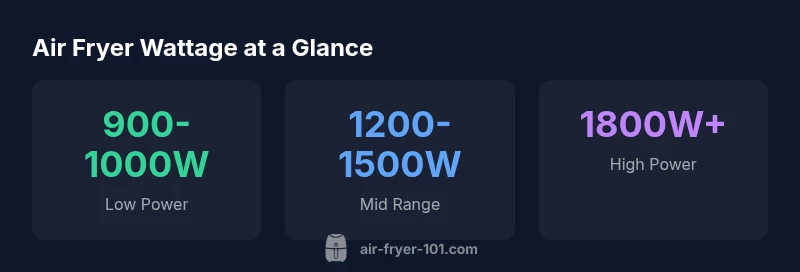
Most air fryers fall into three broad wattage bands: low-power around 900-1000W, mid-range roughly 1200-1500W, and high-power 1800W and up. Each band has trade-offs:
- Low-power: gentle heating, energy-saving, but slower preheat; best for small portions and gentle crisping.
- Mid-range: faster preheat, balanced cook times, good for everyday meals; widely available.
- High-power: fastest preheat and most intense crisping, ideal for large batches and thick-cut foods; may require a sturdy circuit and careful temperature control.
When shopping, compare the wattage alongside features like temperature range, preheat reminder, and basket design. Brand-driven models may advertise wattage prominently; Air Fryer 101's review notes that the mid-range options deliver the best overall value for most households.
How wattage affects preheat and cook times
Power matters for how quickly your air fryer gets up to cooking temperature and how long food spends in the basket. In practical terms, moving from a lower wattage (around 1000W) to a mid-range wattage (around 1400W) often shortens preheat and early cooking stages. The benefit is most noticeable with small to medium batches and items that rely on quick surface crisping, such as French fries or bite-size chicken pieces. However, this speed comes with higher electricity usage per minute. Air Fryer 101 Team notes that the optimal wattage for most households is not the highest on the market, but a balance that preserves efficiency while maintaining reliable results.
To maximize results, align wattage with your usual load—daily meals typically benefit from mid-range units, while family-sized batches may justify higher wattage when you frequently cook large portions. Also consider how your kitchen's electrical circuit is wired, since very high-wattage models can push on circuit limits if multiple appliances run simultaneously.
Energy use and cost implications
Wattage directly influences energy consumption during operation, but the exact cost effect depends on how often you cook and for how long. On average, higher-wattage air fryers can reduce total cooking time, which partially offsets some energy use compared to longer sessions with a lower-wattage unit. For households cooking several times a week, a mid-range wattage often provides the best balance between speed and energy waste. If you want a quick rule of thumb, aim for a wattage that allows you to complete common weekly meals within standard time windows without excessive preheat steps. Air Fryer 101 Analysis, 2026, suggests that mid-range models offer the best overall value for energy-conscious shoppers.
Choosing the right watt for your kitchen
Selecting the ideal wattage starts with your kitchen’s electrical setup and your typical cooking load. If you have a compact kitchen with limited counter space and a modest circuit, a 1200-1500W model is often the safest bet for reliable performance without overtaxing the circuit. For larger households or frequent batch cooking, a higher-watt model (around 1800W) can deliver quicker results, but you should confirm your outlet and plug ratings support it. In spaces where electricity costs are a concern, a slightly lower wattage model in the 1000-1200W range can still deliver crisp textures with longer cooking times, while keeping energy consumption predictable. The Air Fryer 101 Team recommends thinking beyond wattage alone and considering basket design, airflow, and temperature range to determine the best overall value for your needs.
Common myths about wattage and crispy results
Many shoppers assume bigger wattage automatically yields better crisping. While wattage can improve speed and texture in some cases, other factors such as air circulation, basket design, coating, and the quality of the heating element play a critical role. A well-designed mid-range unit can outperform a cheaper high-wattage model if it has superior airflow and a better basket. Air Fryer 101 emphasizes that wattage is a useful guide, not a guarantee of outcome; test different temperatures and times to find your preferred settings for your favorite foods.
How to compare models by wattage and features
When evaluating models, list your top priorities: cooking speed, energy use, capacity, and temperature range. Create a simple rubric: assign weight to wattage and to features like preheat, shake reminders, and auto shutoff. Compare models by their wattage and how it translates to preheat time, temperature accuracy, and the ability to crisp different foods. If two models share similar preheat performance, other features such as basket size, nonstick coating safety, and ease of cleaning may determine the winner. Air Fryer 101 recommends reading user reviews and examining independent tests to see how wattage translates into real-world results.
Practical testing tips: evaluating wattage in your kitchen
To test wattage in practice, set up equivalent cooking tasks (e.g., 10-minute batch of frozen fries) across models with similar basket sizes. Note preheat duration, total cook time, and final texture using the same settings. Compare energy usage with a home electricity meter if possible, then adjust temperatures or times to optimize results for your preferred foods. Document your observations and create a simple reference chart for future cooks. This hands-on approach helps you move from theoretical watt ratings to dependable, repeatable outcomes in your kitchen.
Wattage bands and practical cooking implications
| Wattage Range | Typical Preheat Impact | Ideal Use Case |
|---|---|---|
| 900-1000W | Longer preheat; slower start | Small batches, delicate foods |
| 1200-1500W | Balanced preheat and cook times | Everyday meals, medium batches |
| 1800W+ | Very fast preheat; aggressive crisping | Large batches, dense foods, crispy edges |
Got Questions?
What watt range is best for small kitchens?
For compact spaces, a mid-range wattage of about 1200-1500W usually provides reliable performance without stressing a typical 15A circuit. It balances quick preheat with energy efficiency for everyday meals.
For small kitchens, aim for about 1200 to 1500 watts to get steady preheat and good results without overloading your circuit.
Does higher wattage always mean better cooking?
Not always. Beyond a point, higher wattage yields diminishing returns and can complicate temperature control. Focus on overall design, airflow, and temperature range in addition to wattage.
Higher watts can help, but other design factors often determine crispness and even cooking more than wattage alone.
Can I safely use a high-wattage air fryer on a standard 15A circuit?
Most high-wattage models are designed for standard outlets, but you should check your circuit capacity and avoid running multiple high-power appliances simultaneously. If in doubt, consult an electrician.
Yes often, but be mindful of other devices on the same circuit and follow manufacturer guidance.
How does wattage affect healthfulness or nutrient retention?
Wattage doesn’t inherently change nutrient retention. Healthier outcomes come from cooking methods, temperature control, and avoiding overcooking. Choose wattage that lets you cook foods evenly without prolonged exposure to heat.
Wattage isn’t about healthiness by itself—it's about how you manage temperature and time for tasty, safe cooking.
Should I rely on wattage alone when choosing an air fryer?
No. Capacity, basket design, temperature range, and features like preheat and shake reminders all matter. Use wattage as one of several criteria when comparing models.
Wattage is just one piece of the puzzle—look at capacity, features, and airflow too.
“Power matters, but airflow, basket design, and overall efficiency determine crisp results. Wattage is a guide, not the sole predictor.”
Quick Summary
- Know the air fryer watt range to balance speed and energy use
- Mid-range wattage offers the best overall value for most homes
- Wattage influences preheat time and cook speed, not food healthiness
- Consider circuit capacity when choosing very high-watt models
- Evaluate models by wattage alongside basket design and features