Why Is My Air Fryer Smoking? Troubleshooting Guide
Discover why your air fryer is smoking and how to fix it safely. From oil buildup to overheating, Air Fryer 101's urgent troubleshooting guide helps you resolve the issue quickly and prevent future flare-ups.


Common causes of air fryer smoking are oil residue, burnt food, overfilling, or cooking at too high a temperature. Quick fix: turn off and unplug, let it cool, then wipe the interior and clean the basket. If smoke persists, lower the temperature, avoid oil-heavy foods, and inspect the seals and vent for blockages.
What triggers smoke in an air fryer
Smoke is your air fryer signaling something isn’t right. In most cases, the culprit is a simple, fixable issue like oil residue on the tray, burnt particles from last cooks, or overheating from cooking at excessively high temperatures. According to Air Fryer 101, recognizing the exact trigger is key to a safe, fast resolution and to prevent lingering odors in your kitchen. If you see visible oil pooled near the heating element or wisps of smoke with no food in the basket, stop cooking immediately and unplug the unit. This will protect you from burns and potential fire hazards while you troubleshoot. Later sections outline clean-up steps and safe temperature practices to keep future sessions smoke-free.
Immediate steps when you see smoke
When smoke appears, act quickly but calmly to minimize risk. First, pause the cook, switch the appliance off, and unplug it. Allow the unit to cool completely before handling. Remove the basket and any food, then wipe away grease or splatter with a damp cloth. Inspect the tray and cracks for signs of melted coatings or residue. If the smoky condition continues after cooling, transfer to a safer environment for further checks and never operate the unit with damaged seals or visible charring. Safety always comes first, especially around hot surfaces and electrical components.
Common causes in order of likelihood
- Oil or grease buildup on the tray/basket: Grease can splatter and ignite if it contacts the heating element. Regular cleaning after every use dramatically reduces this risk.
- Food particles baked onto interior surfaces: Small crumbs or sauces can carbonize and smoke at high heat.
- Overheating due to very high temperature or preheating without food: Pushing temps too high or running empty cycles increases smoke.
- Using foil or parchment that blocks airflow: Blocking airflow can cause hot spots and smoke; use guidelines from your model’s manual.
- Electrical issue or damaged components: Melting plastics or wiring problems require professional evaluation.
Cleaning and maintenance to prevent smoking
Prevention hinges on consistent cleaning and mindful use. Start with a thorough wipe-down of the basket, tray, and interior after every cook, especially if you used oils or marinades. Soak removable parts in warm, soapy water to loosen grease, then scrub with a non-abrasive sponge. Dry completely before reassembly. Check seals around the door and vents for cracks or grease buildup. Schedule a deeper clean every 1–2 weeks of heavy use, and always inspect for signs of wear before cooking near high temperatures.
Temperature, airflow, and cooking tips to avoid smoke
Air fryers rely on hot air circulation. To minimize smoke:
- Use temperatures appropriate for the food type; avoid extreme temps unless your recipe explicitly requires it.
- Pat food dry to reduce moisture and splatter.
- Limit oil to light sprays rather than pouring liquids; oils with low smoke points are more likely to smoke.
- Do not overcrowd the basket; allow air to circulate freely.
- Preheat only when the recipe benefits from it; otherwise, place food in an already-hot but not scorching oven.
When to seek professional help
If smoke continues after cleaning, adjusting temps, and following the manufacturer’s guidelines, stop using the unit and contact the manufacturer’s support line. Do not attempt to operate a unit with visible damage, melted components, or persistent odor of burning plastic. Professional assessment is essential for electrical concerns and potential warranty coverage.
Quick-start smoke-free checklist
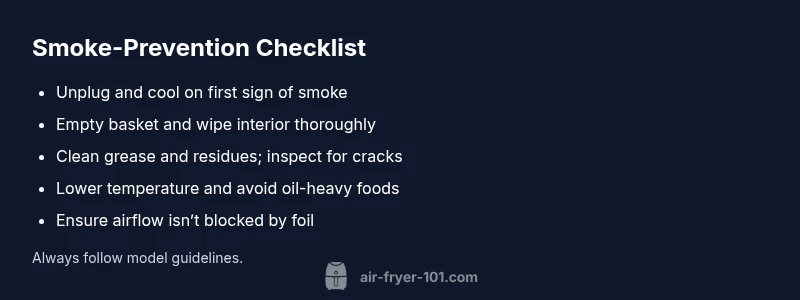
- Unplug and cool completely on first sign of smoke
- Empty basket and wipe interior thoroughly
- Clean grease and residues; inspect for cracks
- Lower cooking temperature and avoid oil-heavy foods
- Ensure no airflow-blocking materials are used
- Call support if smoke recurs after cleaning
Steps
Estimated time: 30-60 minutes
- 1
Power down and unplug
Immediately switch off, unplug, and allow the air fryer to cool completely before touching any interior surfaces. This minimizes burn risk and prevents further oil vaporization during cleanup.
Tip: Always unplug before cleaning—safety first. - 2
Empty and inspect the basket
Remove the basket and any remaining food. Check for visible grease buildup and burnt pieces. Wipe all interior surfaces with a damp cloth and dry before reassembling.
Tip: A clean start reduces future smoking chances. - 3
Clean grease and residues
Soak removable parts in warm soapy water if needed, then scrub with a non-abrasive sponge. Rinse and dry thoroughly to prevent reintroduction of oil during the next cook.
Tip: Dry thoroughly to avoid steam leaving odors. - 4
Check airflow and placements
Ensure nothing blocks the airflow: avoid foil prematurely covering vents, and don’t overcrowd the basket. Proper spacing helps heat distribute evenly and reduces smoke risk.
Tip: Follow your model’s guide on foil use. - 5
Adjust temperature and test
Lower the cooking temperature and test with a small batch to confirm smoke-free operation. If you must preheat, do so with minimal oil and monitor closely.
Tip: Start with the recommended temp range for your recipe. - 6
Proceed with a controlled cook
Return to cooking with careful observation. If you notice smoke again, stop, unplug, and reassess the setup before continuing.
Tip: If unsure, pause and consult the manual. - 7
Know when to seek help
If smoke recurs after applying fixes, contact support and avoid continuing to cook. Persistent smoking may indicate a safety issue.
Tip: Document symptoms and date when you contacted support.
Diagnosis: Air fryer smokes during or after cooking
Possible Causes
- highExcess oil or grease on the pan/basket
- mediumFood particles baked onto interior
- highOverheating due to very high temperature or preheating without food
- lowFoil or parchment catching on heating element
- lowElectrical issue or melted components
Fixes
- easyPower off, unplug, and allow to cool completely before handling
- easyRemove basket, wipe interior with damp cloth, and clean grease
- easyCheck temperature settings; reduce by 25-50 degrees and avoid preheating empty
- easyEnsure no foil/parchment blocks airflow; only use according to manufacturer guidance
- mediumIf smoke persists or you notice melted parts, contact support or discontinue use
Got Questions?
Why is my air fryer smoking right after I start it?
Starting smoke is often caused by oil residue in the basket or tray, burned food from a previous cook, or overheating. Follow the quick-start checks: unplug, cool, inspect for residue, and adjust temperature.
Smoke at startup is usually from oil or leftovers; unplug, cool, inspect, and adjust heat before cooking again.
Is it safe to keep using the air fryer if it starts smoking again after cleaning?
If smoke comes back after cleaning, stop using the unit and contact the manufacturer. There could be an overheat condition or a ventilation problem that needs professional inspection.
If it smokes again after cleaning, stop using it and call support.
Can I use foil or parchment in my air fryer to prevent mess even if it might cause smoking?
Some models tolerate foil or parchment, but improper use can block airflow and cause smoking. Always follow the manufacturer’s guidance for your specific model.
Check your manual before using foil; improper use can block airflow and cause smoke.
What foods are more likely to cause smoking in an air fryer?
Foods high in fat or marinades with sugar or syrup can create more splatter and smoking. Place drier foods or pat dry before cooking to reduce smoke risk.
Fatty or sugary foods can smoke more—pat dry and avoid excessive oil.
Should I return the unit if it continues to smoke after all fixes?
If smoke persists despite fixes and cleaning, contact customer support or consider returning or exchanging the unit under warranty.
If it keeps smoking, reach out to support or consider a return under warranty.
Quick Summary
- Turn off and cool before cleaning
- Clean interior thoroughly after any smoky cook
- Lower temps and avoid oil-heavy foods when smoking occurs
- Keep airflow unblocked and avoid foil blocking vents
- Seek professional help if smoke persists after fixes