What to Do If Your Air Fryer Is Smoking
Urgent troubleshooting guide for a smoking air fryer, with safety steps, common causes, cleaning tips, and prevention strategies to protect your kitchen and appliance.


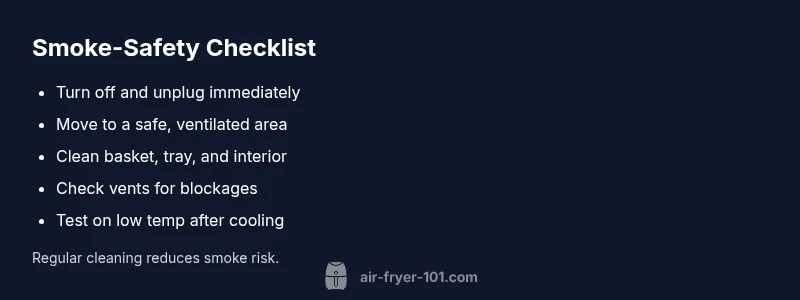
Immediate safety: If your air fryer is smoking, turn it off, unplug it, and move it away from flammable surfaces. Do not touch the hot basket; allow it to cool completely on a nonflammable surface. Inspect for obvious causes like oil buildup, burnt food, or overfilling, then clean before reuse.
Understanding Why Air Fryers Smoke
According to Air Fryer 101, smoke from a consumer air fryer typically stems from heat interacting with oil residues or food particles. This guide explains the most common culprits and how to identify them before you reset your cooking routine. By recognizing grease buildup, overheating, and improper cleaning, you can prevent dangerous flare-ups and extend the life of your appliance. In many cases, smoke is a warning sign that needs a quick cleanup and a few habit changes rather than a full replacement. This section also highlights how to differentiate harmless steam from real smoke and how to respond calmly to keep your kitchen safe.
Immediate Safety Steps
If you notice smoke, your first moves must be decisive and safe. Power down the unit by turning it off and unplugging it from the wall. Do not attempt to open or touch the hot basket until it has cooled completely. If you can do so safely, move the air fryer away from walls and flammable surfaces to a clear, nonflammable area. Ventilate the room by opening windows and turning on a fan. If you see fire or intense heat, evacuate and call emergency services. After cooling, inspect for obvious causes like grease buildup or burnt food before you decide to reuse.
Common Causes and How to Check
There are several frequent reasons an air fryer starts smoking, many of which are easily fixed with basic cleaning and careful usage:
- Oil or grease buildup on the basket, tray, or bottom of the unit can overheat and produce smoke. Inspect and wipe clean with warm, soapy water. Rinse and dry thoroughly before reuse.
- Overheating due to high temperatures or overcrowding can cause the food and oil to burn. Check the temperature setting against the recipe and avoid overfilling the basket.
- Food particles that fall into the vents or onto heating elements can burn and produce smoke. Remove any debris from the interior and ensure vents are unobstructed.
- Use of aerosol cooking sprays can leave a residue that smokes at high heat. If you must use oil, apply a light pour or pump spray away from the heating element.
- Electrical faults or a failing heating element are less common but possible. If smoke persists after cleaning and following safe use, consider professional inspection. This section also covers model-specific considerations and how to read your user manual for troubleshooting.
Remember: not every instance of smoke means a fire. Stay calm, assess quickly, and prioritize safety.
Cleaning and Maintenance After Smoke
After the immediate safety steps, a thorough cleaning is essential to prevent a repeat incident. Start by unplugging the unit and letting it cool completely. Remove the basket and tray and wash them with warm, dish soap. Use a non-abrasive sponge to remove grease from the interior walls and any stubborn residue on the heating element housing. Dry all components completely before reassembling. For built-up grime that’s hard to reach, a soft brush can dislodge particles without damaging nonstick surfaces. Consider running a short, empty cycle at a low temperature with a small amount of water to assist with residue loosening, but never place water directly into the heating chamber while the unit is powered. Regular maintenance, including wiping the interior after each use and deep cleaning every few uses, dramatically lowers smoking risk.
Prevention: How to Avoid Future Smoking
Prevention is the best strategy. Establish a cleaning routine that fits your cooking frequency:
- Clean grease and food debris after every use to prevent buildup. Small amounts of oil left behind can smoke during subsequent cycles.
- Avoid overcrowding. Air needs to circulate, and overcrowded baskets trap oil and burn more easily.
- Use appropriate temps and times. Follow recipe guidance and reduce temperature slightly if you’re cooking foods with higher fat contents.
- Choose quality cooking oils with high smoke points and apply sparingly. Avoid heavy aerosol sprays near heating elements.
- Regularly inspect seals, gaskets, and electrical cords for wear. A damaged cord can overheat and contribute to smoking.
- Keep your ventilation strong during cooking and allow the unit to cool fully between batches.
When to Seek Professional Help
If smoking continues after a thorough cleaning and adherence to the recommended settings, do not ignore the issue. Stop using the unit and contact the manufacturer or a qualified appliance technician for a diagnostic check. Electrical faults or degraded components could pose a safety risk, and continued use without professional assessment is not advised. In such cases, your warranty or service plan may cover repairs, so consult your manual or customer service for next steps.
Steps
Estimated time: 20-40 minutes
- 1
Power down and cool safely
As soon as you notice smoke, switch the fryer off and unplug it. Let the unit sit unplugged for several minutes so it can begin to cool. Avoid touching the hot exterior with bare hands until the surface has cooled. This first step minimizes burn risk while you assess the situation.
Tip: Use dry oven mitts to handle hot surfaces once cooled enough to touch. - 2
Move to a safe location and inspect
If it’s safe, move the appliance away from walls and flammable items. Check the power cord and plug for damage. Do not operate the unit if you see melted insulation or a burnt smell—these are signals to stop and seek help.
Tip: Ensure good room ventilation to dispel smoke and fumes. - 3
Remove and clean non-electrical parts
Carefully remove the basket and tray. Wash them with warm, dish soap and a non-abrasive sponge. Inspect the interior lining for oil residue and wipe clean with a damp microfiber cloth, drying thoroughly before reassembly.
Tip: Rinse thoroughly to prevent soap residue from re-smoke during the next use. - 4
Inspect for debris and airflow
Check that vents are free of debris and that nothing is blocking the fan or exhaust. Remove any burnt food particles from crevices with a soft brush. Confirm the interior is completely dry before putting items back in.
Tip: A soft brush is safer on nonstick coatings than abrasive tools. - 5
Test with a low-risk cycle
Reassemble the unit and run a short, empty or minimal-load cycle at a low temperature to verify if smoke recurs. Monitor closely and listen for unusual sounds or smells. If smoke returns, stop immediately and seek professional assistance.
Tip: Keep a close eye during the first test run; be prepared to unplug quickly if needed. - 6
Return to safe cooking practices
Once confirmed smoke-free, resume cooking with properly cleaned components and adjusted settings. Avoid overcrowding and oil-heavy foods until you’re confident in routine cleaning. Document any recurring issues for future reference and warranty needs.
Tip: Maintain a regular cleaning schedule to prevent future smoking incidents.
Diagnosis: Air fryer emits smoke during cooking
Possible Causes
- highOil or grease buildup on basket/tray
- highOverheating due to high temperature or overcrowding
- mediumFood particles blocking vents or contacting heating elements
- lowAerosol cooking sprays leaving a residue that smokes at high heat
- lowElectrical fault or failing heating element
Fixes
- easyTurn off/unplug and allow to cool; remove contents if safe
- easyClean basket, tray, and interior to remove grease; use warm soapy water
- easyCheck airflow: ensure vent clear and no food blocking openings; adjust basket alignment
- easyLower temperature or reduce cooking time; avoid overcrowding
- mediumIf smoking persists after cleaning and proper usage, contact a service professional
Got Questions?
Why is my air fryer smoking at low heat?
Smoke at any heat is typically caused by oil buildup, burnt food, or residue on the basket and heating chamber. Begin with a thorough cleaning and ensure nothing is overcrowded. If smoke continues after cleaning, consult the manufacturer’s guidance or a technician.
Smoke at low heat? Mostly from oil or food residue. Clean it well and check for blockages; if it persists, seek guidance from the manufacturer or a technician.
Is it safe to continue using the air fryer after smoking once cleaned?
If you’ve completely cleaned the unit and ensured there’s no residue or damage, you can try again with careful monitoring. Do not use it if you still see smoke or detect a burnt smell. Safety first.
If it’s clean and shows no signs of damage, you can try again with close monitoring. If smoke returns, stop immediately.
Can I use water to stop the smoke?
No. Water can cause splattering and damage the electronics. Unplug, let it cool, and clean as recommended. Water should not contact the hot interior while powered.
No water—unplug and let it cool, then clean. Don’t pour water into the hot unit.
What maintenance helps prevent smoking long-term?
Regular cleaning after each use, checking vents for obstructions, and avoiding overcrowding are key. Use oils sparingly and ensure components are dry before the next run.
Clean after every use, keep vents clear, don’t overload, and dry everything well before cooking.
When should I seek professional help for a smoking air fryer?
If smoke persists after cleaning, smells unusual, or you notice damaged cords or components, contact a technician or the manufacturer. Do not continue to use a potentially unsafe appliance.
If it keeps smoking after cleaning or there’s damage, get professional service.
Watch Video
Quick Summary
- Turn off and unplug at the first sign of smoke.
- Clean grease and debris after every use.
- Avoid overcrowding and high-oil foods.
- Ventilate the area and check vents for blockages.
- Seek professional help if smoke persists after cleaning.