How to Stop Air Fryer from Smoking: A Practical Guide
Learn proven steps to stop your air fryer from smoking, prevent fires, and maintain healthy cooking. Quick fixes, maintenance routines, and safety guidelines for busy home cooks.


Discover practical steps to stop your air fryer from smoking and keep cooking safe. This guide covers common causes—stuck grease, overheating, and improper preheating—plus quick fixes you can apply now. By following these checks, you’ll reduce smoke, improve flavor, and protect your appliance. We’ll also flag safety tips and when to seek professional help.
Why air fryer smoking happens
Smoking from an air fryer is often a signal that something isn't right inside the unit or your cooking setup. According to Air Fryer 101, most smoke cases fall into a few common categories: oil or fat residue left from previous cooks, overheating from cooking temperatures that are too high for the load, and grease that splashes onto the heating element. A shallow buildup can smolder and release visible smoke, while a heavy layer of grease can ignite if the unit runs hot for too long. Even water in food or icy batter can create steam that looks like smoke for a moment, but it can still stress the airflow and the heating coil. By understanding these triggers, you can diagnose the root cause more quickly and avoid unnecessary replacements.
Regular maintenance reduces smoke risk. A quick check before each batch—empty the basket, wipe down the crisper plate, and inspect the interior for crumbs—goes a long way toward safer air frying. If your model has a visible element, a gentle brush can remove dust or char without scratching coatings. Keeping the interior clean not only stops smoking but also improves flavor and texture over time. Air Fryer 101 analysis shows that routine cleaning and careful loading practices are the most effective ways to minimize smoke emissions.
Common causes of smoking in air fryers
Air fryers smoke for several reasons, and recognizing the cause helps you tailor a fix quickly. First, oil or fat residue from previous cooks can smolder on the heating element. Second, overheating occurs when you set temperatures too high for the food load or cook in very crowded baskets. Third, moisture from wet batter or overflowing sauces can create vapor that looks like smoke, especially when it hits hot surfaces. Finally, crumbs or food particles can accumulate in seams or vents, restricting airflow and concentrating heat.
Air Fryer 101 analysis shows that many smoking incidents stem from a combination of grease buildup and excessive temperature for the batch size. Even if you’re careful, a small amount of oil can pool in the bottom tray and later ignite if left unchecked. Keeping a routine of quick wipe-downs after each cook and using the right basket capacity for the model dramatically reduces incidents of smoking.
Immediate fixes you can try before cooking
If you see smoke just as you start a cook, try these quick actions before you begin cooking:
- Empty and wipe the basket; remove any visible grease from the crisper plate.
- Preheat only if your recipe requires it; avoid preheating an empty basket for long periods.
- Lightly oil foods with a spray bottle or ignore oil on foods that are already fatty—excess oil increases smoke risk.
- Load food in small batches to improve air circulation and reduce hotspots.
- Ensure the interior is dry and free of standing water droplets on frozen foods.
- Ventilate the kitchen; keep a window open or use a range hood to disperse smoke quickly.
These steps address the most common early-stage triggers and can prevent smoke from appearing mid-cook. By testing with a small batch after applying fixes, you’ll gauge whether the issue is resolved before proceeding with a full meal.
How to clean and maintain your unit to prevent smoke
Regular cleaning is your best defense against smoking. Start with a thorough wipe-down of all interior surfaces, removing crumb buildup from the floor of the cooking chamber. Use warm, soapy water and a non-abrasive sponge to scrub areas around the heating element and the back of the basket. Rinse and dry completely before use. For stubborn residue, a mixture of baking soda paste and water can act as a gentle abrasive without damaging coatings. Inspect the air intake vents for clogs and clear them with a soft brush.
After cleaning, reassemble the unit and run a short, empty cycle on a low temperature to ensure there’s no lingering odor or residue. Avoid leaving oil splatters on the heating element and keep the interior dry. Consistent maintenance reduces not only smoke but also odors and flavor transfer between meals. Air Fryer 101 recommends establishing a simple cleaning schedule—wipe after every cook, deep-clean every 1–2 weeks depending on usage.
Temperature control, oil usage, and food prep tips
Smart temperature management reduces smoking risk. Follow your manufacturer’s guidelines for cooking temperatures and adjust based on batch size and food type. When using oil, spray lightly or skip oil on foods that already contain fats, like certain meats or frozen snacks. Avoid sauces high in high-sugar content that can caramelize and burn. Cut foods into uniform pieces to promote even cooking and prevent hotspots that can ignite grease. If you’re new to air frying, start with shorter cook times at lower temperatures and gradually increase as you learn your model's heat characteristics.
Smoky results are often caused by overheating, so set a preset that matches the food’s recommended range and monitor closely during the first 5–10 minutes. Regular calibration of the device—whether by checking the timer or the heating element alignment—helps maintain consistent performance and minimizes smoke.
When to stop using the fryer and seek professional help
If smoking persists after you’ve cleaned and adjusted cooking practices, discontinue use and follow safety procedures. Unplug the unit, move it away from walls, and ventilate the room. Do not utilisez the device if you notice unusual smells, sparking, buzzing, or excessive heat in any area beyond normal operation. Contact the manufacturer or a certified technician if the issue recurs after applying the recommended maintenance steps. The Air Fryer 101 team recommends erring on the side of caution when smoke reappears after following the fixes outlined above.
Safety checklist before your next batch
- Ensure the air fryer is clean and dry inside and out.
- Load food in moderate portions with even spacing; avoid overcrowding.
- Verify the temperature is appropriate for the food and preheat only when required.
- Use a hood or open window for ventilation during initial uses of a new batch.
- Have a fire-safe space nearby (oven mitts, a metal pan lid, or a fire-safe extinguisher) in case of flare-ups.
Quick safety recap and next steps
This guide provides practical steps to stop air fryer smoking, but always follow safety norms and manufacturer instructions. If smoke persists, do not continue cooking; instead, seek professional assistance. Regular cleaning and mindful loading are the most reliable defense against smoke, and implementing a routine will help keep your air fryer performing optimally.
Tools & Materials
- Dish soap(Gentle degreaser for cleaning interior)
- Warm water(For soaking and rinsing)
- Soft sponge(Non-abrasive for coatings)
- Microfiber cloth(For wiping and drying)
- Small brush (e.g., toothbrush)(Clean nooks and vents)
- Paper towels(Blot and dry surfaces)
- Oven-safe gloves(Heat protection while handling hot parts)
- Baking soda paste (optional)(Gentle abrasive for stubborn residue)
- Spray bottle for oil (optional)(Light, even oil application if needed)
Steps
Estimated time: 30-45 minutes
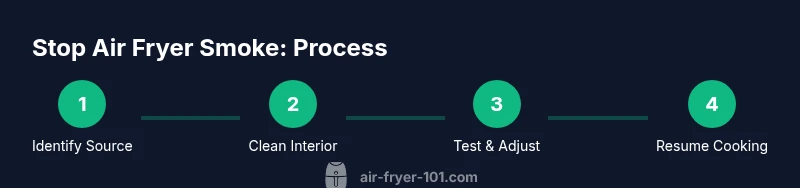
- 1
Power down safely
Turn off the air fryer and unplug it if safe to do so. Allow the unit to cool completely before touching any internal components. This prevents electric shock and burns while inspecting for signs of residue.
Tip: Keep the cord away from hot surfaces and never reach inside a hot appliance without protection. - 2
Remove and inspect basket
Take out the basket and check for visible grease, crumbs, or sticky residue. Wipe the basket and the crisper plate with warm, soapy water. Dry thoroughly before reassembling.
Tip: Use a soft brush to reach tight seams; avoid abrasive scrub pads that could scratch coatings. - 3
Identify smoking source
Look for where smoke is emanating from—basket, vents, or heating element. If the smoke source isn’t obvious, proceed with a full interior cleaning and check for hidden grease.
Tip: Document where the smoke came from to guide future maintenance and avoid repeat issues. - 4
Clean interior and heating element
Wipe the interior with soapy water, focusing on grease buildup near the heating element and fan area. Use a soft brush for crevices. Rinse and dry completely before testing.
Tip: Avoid getting water on the electronic controls; wipe around them rather than directly on top. - 5
Reassemble and preheat correctly
Reinsert the basket and rack, ensuring correct alignment. If your model requires preheating, do so for a short duration with foods inside rather than empty.
Tip: Don’t overpreheat an empty chamber; it can cause dry heat and increased smoke risk. - 6
Test with a small batch
Run a test cook with a small portion at a moderate temperature to verify smoke is eliminated. If smoke occurs, repeat cleaning and reduce temperature or batch size.
Tip: Use a lower starting temperature for the first batch and monitor closely for the first 5–10 minutes.
Got Questions?
Why does my air fryer smoke after cleaning?
Residual grease or moisture can smolder after you reassemble and heat the unit. Ensure all interior surfaces are completely dry before use. If smoke continues, repeat the cleaning steps and reduce the temperature for the first cook.
Residual grease or moisture may smolder after cleaning. Make sure surfaces are dry and odors fade before cooking again.
Is smoking dangerous for my air fryer or home?
Smoke from an air fryer can indicate a potential fire hazard, especially if oil or grease is involved. Turn off and unplug the unit if smoke appears, ventilate your space, and follow safety procedures before continuing.
Smoke can be a fire risk. Turn off, unplug, and ventilate the area before resuming use.
Can I use cooking spray in an air fryer to prevent sticking?
Light oil is acceptable in small amounts, but avoid heavy aerosols or splatter-prone sprays. Use a spray bottle or brush to apply a very light coat if needed.
Use very light oil with a spray bottle or brush; avoid heavy aerosols.
How often should I clean my air fryer to prevent smoking?
Clean after every use by wiping the interior and basket. Do a deeper clean every 1–2 weeks if you cook frequently, especially with fatty foods.
Wipe after each use and deep-clean every 1–2 weeks with heavy use.
What should I do if smoke continues after following fixes?
Stop using the unit, check for recalls or service options from the manufacturer, and consider professional inspection if smoking recurs.
If smoke keeps happening, stop using it and seek professional service.
Should I replace the air fryer if it keeps smoking?
If repeated fixes fail and smoking persists, consult the manufacturer for replacement options or consider a new unit with safer features.
If it keeps smoking after fixes, talk to the manufacturer about repair or replacement.
Watch Video
Quick Summary
- Follow a safety-first approach when investigating smoke
- Regular cleaning is the most effective prevention
- Load food properly and avoid overheating for best results
- If smoke persists, discontinue use and seek help