Do Air Fryers Smell Like Plastic? Troubleshooting Odors
Learn why air fryers sometimes smell like plastic and how to fix odors fast. Step-by-step deodorizing, safety tips, and prevention for future use.


Do air fryers smell like plastic? Usually yes, especially with new units, due to off-gassing from fresh plastics and coatings. Start by ventilating the kitchen, washing the basket and pan, and running an empty, high-heat cycle with the vent open. If the odor lingers, pause use and consult the manufacturer for guidance.
Do air fryers smell like plastic? Understanding the odor
New air fryers often emit a plastic-like smell during the first uses. According to Air Fryer 101, this is usually off-gassing from fresh plastic components, seals, or coatings. It signals that volatile compounds are leaving the safe, food-contact surfaces. The odor may be stronger when the unit is run at high heat or in a small kitchen with limited ventilation. Odors are more noticeable with certain packaging residues or if a nonstick coating is present. The key is to differentiate temporary smells from persistent ones. If the smell remains after several cycles or returns after cleaning, there could be a deeper issue.
Common causes of plastic smell in new air fryers
Many readers wonder, do air fryers smell like plastic, and why? The leading cause is off-gassing from new plastics, gaskets, and the nonstick coating that can release volatile compounds when heated. Air Fryer 101 analysis notes that odors tend to fade after the unit has completed several burn-in cycles and has had a chance to air out. Packaging residues left in the basket or on the grill plate can also contribute, especially if the unit was shipped with protective oils or coatings. Even small silicone seals or valve gaskets can contribute a faint plastic scent, especially if they are new. Another contributor is the use of parchment papers or liners that touch the interior or heating element; burning residues can cause acrid smells. Finally, ventilation plays a big role: a closed kitchen can make odors seem stronger and linger longer. If you notice the smell while cooking, pause to check for damaged parts or misused accessories.
Quick fixes you can try right now
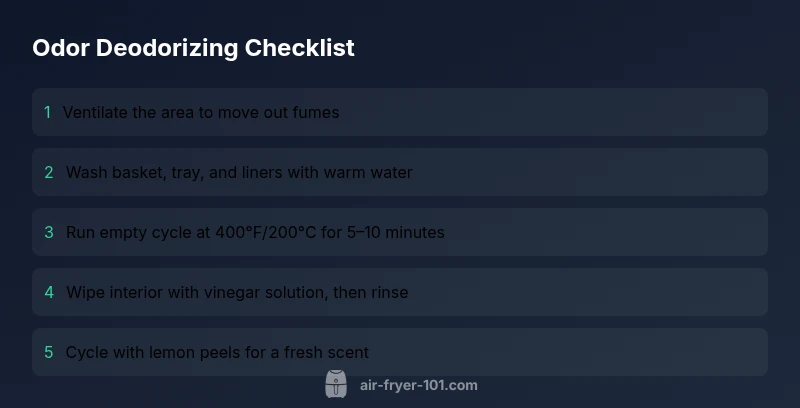
Do air fryers smell like plastic? Start with the simplest steps: ensure good ventilation, scrub removable parts, and run a burn-in cycle. Unplug the unit and let it cool, then wash the basket, pan, and tray with warm, dish-soap water and dry completely. Wipe down the interior with a damp cloth, avoiding the electrical base. Run an empty cycle at a high temperature (around 400°F/200°C) for 5–10 minutes with the door open or a kitchen vent on. If the odor persists, repeat the cleaning and ventilation steps, and consider deodorizing with baking soda or lemon. Baking soda can help neutralize lingering compounds; a light lemon cycle can leave a fresh citrus scent without leaving a residue. Always monitor for smoke or abnormal smells and stop if you see any.
Safe deodorizing routines you can perform at home
A structured approach reduces risk while restoring a fresh aroma. Begin with ventilation, hand-wash all detachable parts, and ensure everything is thoroughly dry before reassembly. Then perform a burn-in with no food: run at a high heat for 5–10 minutes to vent off residual chemicals. If odors persist, wipe the interior with a solution of warm water and white vinegar, then rinse and dry. Finish with a light lemon cycle using lemon peels placed in the basket and run a short 3–5 minute cycle. Avoid pouring water or cleaners into the base, and never submerge the main unit. For ongoing improvements, rotate the foods you cook in the appliance—this can help minimize repeated exposure to the same materials.
Odor prevention for future use and best practices
Prevention starts with routine care. Always wash the basket and tray after each use and dry completely before storing. Use parchment liners only when appropriate and never let them touch the heating element. Install proper ventilation in the kitchen during initial use and periodic deodorizing cycles. If you frequently cook strongly scented foods, consider air-frying a small batch of neutral items (like white bread) to help absorb odors between sessions. Lastly, store the device in a well-ventilated area to avoid trapped odors from other kitchen items.
Steps
Estimated time: 30-45 minutes
- 1
Power off and cool the unit
Unplug the air fryer and let it cool completely before handling any interior parts. This reduces the risk of burns and makes cleaning safer.
Tip: Always unplug before cleaning or inspecting the unit. - 2
Ventilate the kitchen
Open a window or turn on a fan to ensure cross-ventilation. Fresh air helps move out any volatile compounds released during the first uses.
Tip: Keep exposure out of your face and avoid inhaling vapors directly. - 3
Wash removable components
Remove the basket, tray, and any liners; wash them with warm, soapy water. Rinse thoroughly and dry completely before reassembly.
Tip: Dishwasher-safe parts can be cleaned in the dishwasher if specified by the manufacturer. - 4
Run an empty high-heat cycle
Place the basket back, start a 400°F/200°C cycle for 5–10 minutes without food to burn off residues.
Tip: Do not leave unattended; monitor for smoke or burning. - 5
Deodorize with baking soda or lemon
If odors linger, wipe surfaces with a baking-soda paste or run a lemon-peel cycle for a short period.
Tip: Avoid excessive moisture inside the base. - 6
Re-test with food and monitor
Cook a small neutral item (e.g., bread) and note whether the odor has diminished. If persistence continues, consider professional support.
Tip: If any unusual smells return, stop using the unit and inspect for damage.
Diagnosis: New air fryer emits a strong plastic odor during or after first uses
Possible Causes
- highOff-gassing from new plastics/components
- mediumPackaging residues on basket/grill
- mediumNew silicone seals or gaskets contributing odor
- lowParchment liners contacting heating element burning off
Fixes
- easyVentilate the area and run the unit unoccupied at high heat for 5–10 minutes
- easyWash all removable parts with warm, soapy water and dry thoroughly
- easyDo a burn-in cycle (no food) followed by a baking-soda or lemon deodorizing treatment
Got Questions?
Is it dangerous to inhale plastic odors from a new air fryer?
In most cases the odor is temporary and from volatile compounds released during initial heating. It’s wise to ventilate and avoid prolonged exposure while testing the appliance. If irritation occurs, discontinue use and seek advice.
The odor is usually temporary; ventilate and monitor for irritation, then decide if you should continue testing.
Do odors mean my air fryer is defective?
A plastic odor does not always mean a defect. It’s common with new units due to off-gassing. If odors persist after multiple deodorizing cycles or are accompanied by smoke, unusual heat, or performance issues, contact support.
Odors aren’t always a defect, but persistent problems warrant a professional check.
How long do odors last after a deodorizing cycle?
Most odors fade after a few burn-in and deodorizing cycles. If the smell lingers beyond a week of normal use, there may be residual manufacturing compounds or a seal issue that requires inspection.
Typically a few cycles; if it lasts longer, get it checked.
Is it safe to use vinegar or baking soda on my air fryer?
Yes, small amounts of white vinegar can help deodorize surfaces, and baking soda is effective for odor neutralization. Avoid soaking the base and rinse surfaces well after application.
Vinegar and baking soda are safe when used carefully and rinsed off.
Should I return or replace if the smell persists after deodorizing?
If odors persist despite deodorizing and there are other performance concerns, contact the manufacturer for guidance on returns or replacements.
If the smell doesn’t go away, reach out to customer support for options.
Are some air fryer models less prone to plastic odors?
Odors depend on materials and coatings. Some models use alternative nonstick coatings and fewer plastics near hot zones, which can reduce odor; check product details and reviews for odor-related feedback.
Look for models with durable nonstick coatings and fewer plastics near heat.
Watch Video
Quick Summary
- Ventilate early to dissipate odors
- Wash and dry removable parts after use
- Perform a burn-in cycle to accelerate off-gassing reduction
- Use deodorizing steps safely to prevent damage or hazards