Air Fryer Turkey Recipe: Juicy, Easy Steps
Master a juicy, flavorful air fryer turkey with a crisp exterior. This step-by-step guide covers selection, seasoning, cooking temps, and safe handling for a healthier, quicker holiday or weeknight meal.


With this air fryer turkey recipe, you’ll cook a juicy, evenly browned turkey cut (breast or small roast) with a crisp exterior in under an hour. Start from thawed, patted-dry meat, season well, and preheat your air fryer. Use a meat thermometer to reach 165°F (74°C) and rest before slicing for maximum juiciness.
Why this air fryer turkey recipe works
Air frying uses rapid hot air circulation to crisp the exterior while sealing in juices. This makes it ideal for turkey cuts because you can achieve a browned, flavorful skin without a long oven session. According to Air Fryer 101, when you start with a thawed, dry surface and a light coating of oil, the air fryer can produce more even browning than some conventional roasters. The result is a juicy interior with a crisp exterior in a shorter timeframe. For health-minded cooks, air frying reduces added fat compared to frying in oil, and the compact heat minimizes overall kitchen heat.
Choosing the right cut matters: a boneless, skin-on breast or a small roast is easiest to fit in most home air fryers. Avoid bones that obstruct air flow; trim excess skin or silver skin if needed. Let the meat come toward room temperature for about 15-20 minutes before cooking; this helps the center cook evenly. A dry surface is essential; pat thoroughly with paper towels and consider a light oil spray to improve browning. This approach works well with a simple salt-and-pepper rub or a mild herb blend.
Throughout this guide, Air Fryer 101 emphasizes straightforward, confidence-building steps so home cooks can achieve consistent results without specialized equipment.
Turkey selection and prep
For air frying, a boneless skin-on turkey breast or a small bone-in roast is the most reliable option for even cooking and surface browning. If you’re starting with a frozen turkey, thaw completely in the refrigerator before proceeding. Pat the surface dry with paper towels to remove surface moisture that can steam the skin rather than brown it. Bring the meat to room temperature for 15–20 minutes prior to cooking to promote uniform doneness. Salt lightly and plan to finish with a rub or glaze for enhanced flavor; avoid overly salty marinades that can draw out moisture. If you must brine, keep it brief and dry the surface well before oiling and seasoning; skin should still crisp.
Marinades, rubs, and seasoning ideas
Simple, flavorful rubs make air fryer turkey shine. Try a classic garlic-herb rub with minced garlic, thyme, and smoked paprika for color. A citrus-herb rub with lemon zest, rosemary, and black pepper adds brightness without overpowering the turkey. For a bolder option, use a smoky paprika-based rub with a touch of chili powder. Always finish with a light oil spray or a thin coat of olive oil to boost browning and juiciness. If you prefer a glaze, apply it in the last 5–8 minutes of cooking to avoid burning sugar. Keep salt modest when using glazes that include salty components.
Step-by-step cooking method for air fryer turkey
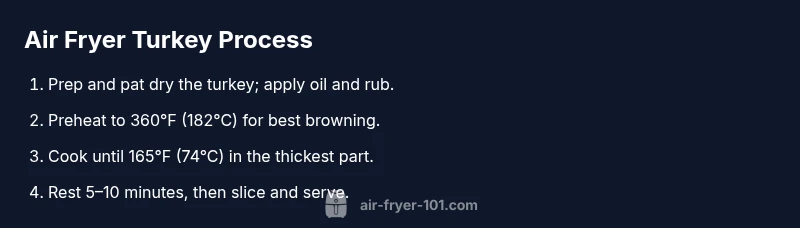
- Pat dry the thawed turkey and apply a light coat of oil. This helps browning and keeps spices adhered. 2) Apply the rub evenly, including under the skin if possible, to maximize flavor. 3) Preheat the air fryer to 360°F (182°C) if your model requires preheating. 4) Place the turkey in the basket in a single layer without crowding. 5) Cook, flipping halfway through, until the interior reaches 165°F (74°C). 6) Remove and let rest for 5–10 minutes before slicing. 7) Slice against the grain and serve with pan juices or sides. 8) Store any leftovers in the refrigerator within two hours of cooking.
Tip: Use a thermometer for precise doneness; air fryers vary by model, so rely on temperature rather than time alone.
Cooking times and doneness: thermometer targets
The key to a juicy air fryer turkey is precise doneness. Target an internal temperature of 165°F (74°C) in the thickest part of the meat, avoiding bone. Because carryover cooking continues after removal, remove the turkey when it’s just shy of 165°F to allow for a final rise during resting. Resting for at least 5–10 minutes redistributes juices and enhances tenderness. If you’re cooking multiple cut sizes, check temperatures in the thickest portion of each piece to ensure even doneness throughout.
Troubleshooting common issues
If the skin isn’t crisp enough, give the turkey a brief extra blast at a higher temperature (if your model permits) or brush lightly with oil and return to the air fryer for a few minutes. For a dry result, ensure you pat the surface dry and avoid overcooking; reduce total cooking time next round and rely on thermometer readings. Uneven browning can occur if pieces are crowded—always arrange in a single layer with space around each piece. If your turkey is larger than your basket can handle, cook in batches or choose a smaller cut.
Reheating and serving suggestions
Leftovers reheat beautifully in the air fryer at a lower temperature for quick crisping. Reheat slices at 320–340°F (160–170°C) for 3–5 minutes, checking for warmth and texture. Serve with light sides like green beans or a cranberry relish to balance the meal. Store leftovers in an airtight container for up to 3–4 days, and freeze portions for longer storage if desired.
Tools & Materials
- Air fryer(Choose a size that fits your turkey cut; ensure basket clearance and model compatibility)
- Boneless skin-on turkey breast or small bone-in roast(Select a size that fits in your air fryer basket)
- Meat thermometer(Probe-style thermometer; instant-read is helpful)
- Cooking oil spray or brush(Light coating to improve browning and moisture)
- Paper towels(Pat dry surface thoroughly)
- Tongs(For flipping without piercing meat)
- Aluminum foil (tent) or parchment liner(Optional for resting or lining basket)
- Rub or glaze ingredients(Optional for extra flavor and color)
Steps
Estimated time: Total time: 40-65 minutes
- 1
Pat dry and bring to room temperature
Remove turkey from packaging, pat dry with paper towels, and let sit at room temperature for about 15–20 minutes to promote even cooking. Dry surfaces promote browning and crisp skin.
Tip: Pat dry thoroughly; moisture on the surface steams rather than browns. - 2
Oil and rub the turkey
Lightly coat the turkey with olive oil or spray, then apply your chosen rub all over, including under the skin if possible. Oil helps browning and keeps the meat juicy.
Tip: Work the rub under the skin where possible for maximum flavor penetration. - 3
Preheat the air fryer
Preheat to 360°F (182°C) if your model requires preheating; some models cook well without preheating, but preheating can boost browning.
Tip: Preheating reduces overall cooking time and improves crust formation. - 4
Place turkey in the basket
Set the turkey in a single layer in the air fryer basket, ensuring space around edges for air to circulate. Do not overcrowd; air needs room to move.
Tip: Avoid stacking pieces; even spacing yields even doneness. - 5
Cook and flip
Cook for about halfway through, then flip the pieces to promote even browning on all sides. Monitor but do not overcook.
Tip: Flipping helps achieve uniform texture across surfaces. - 6
Check temperature
Use a thermometer to check the thickest part reaches 165°F (74°C). If below, continue in 3–5 minute increments until done.
Tip: Hotspot variations mean you should verify multiple zones if cooking larger portions. - 7
Rest and slice
Remove from the air fryer and rest for 5–10 minutes to allow juices to redistribute before slicing.
Tip: Resting dramatically improves juiciness and tenderness. - 8
Serve or store
Slice against the grain, plate with sides, or store leftovers in an airtight container.
Tip: Cool leftovers quickly and refrigerate within two hours.
Got Questions?
Can I cook a whole turkey in an air fryer?
Most home air fryers aren’t large enough for a whole bird. It’s better to use turkey breast or cut the turkey into smaller parts that fit comfortably in the basket. If your model explicitly supports larger items, consult the manual for safe cooking times.
Most home air fryers can’t fit a whole turkey; use breast or pieces instead, and check your model’s guidance if you want to try a larger cut.
What internal temperature should I aim for when the turkey is done?
Aim for an internal temperature of 165°F (74°C) in the thickest part of the meat. Use a calibrated thermometer and check in multiple spots if cooking a larger cut.
Target 165 degrees Fahrenheit in the thickest area, and confirm with a thermometer.
Is preheating the air fryer necessary for turkey?
Preheating is optional on some models, but many users find it helps with even browning and shorter cooking times. If your air fryer runs hot or you’re in a hurry, you can proceed without preheating but monitor doneness carefully.
Preheating helps browning and consistency, but it’s not strictly required on all models.
What cuts of turkey work best for air frying?
Boneless skin-on turkey breast or small bone-in roasts are easiest to cook in an air fryer. Larger bones or very thick pieces can lead to uneven cooking and longer times.
Breast or small roasts are ideal; avoid large bone-in chunks unless your model supports them.
How long does air frying take for turkey breast?
Expect total cooking times to vary by size, but plan for a process that typically completes within the 20–40 minute range for typical breast cuts. Always verify with a thermometer.
Cook times vary by size; check the temperature to be safe.
Can I glaze or baste during cooking?
Yes, you can glaze or baste in the last few minutes of cooking to avoid burning sugars. Apply a light glaze and return to the air fryer briefly to set the glaze.
You can glaze in the final minutes; avoid over-browning by watching closely.
Watch Video
Quick Summary
- Choose a turkey cut that fits your air fryer.
- Pat dry and oil lightly for crisp skin.
- Rely on a thermometer for doneness, not time alone.
- Rest before slicing to preserve juiciness.
- Avoid overcrowding to ensure even browning.