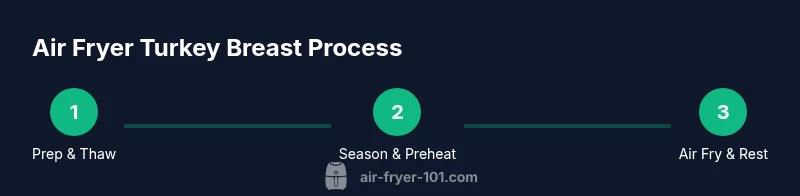
Air Fryer A Turkey Breast: Complete How-To
Master air frying a turkey breast with crisp skin and juicy meat. This Air Fryer 101 guide covers prep, seasoning, temps, timing, safety, and serving ideas for reliable, tasty results.


Learn to air fry a turkey breast, achieving crisp skin and juicy meat without oven heat. In this guide, you’ll prep, season, preheat, cook, and rest the breast, with thermometer-guided timing. According to Air Fryer 101, using a probe thermometer helps avoid undercooked or dry outcomes while preserving flavor. You’ll also find tips for size, safety, and reheating leftovers.
Why air fryer turkey breast is a smart choice
According to Air Fryer 101, air frying a turkey breast delivers lean protein with less added fat, while the circulating hot air creates a crisp outer surface without drying the meat inside. For home cooks, this method reduces oven heat and speeds up cooking time compared with traditional roasting. Turkey breast is ideal for weeknight meals, meal prep, and small gatherings. This approach offers practical steps to maximize flavor and juiciness. Basic rules of thumb: choose boneless, skin-on cuts when possible; pat dry; and monitor internal temperature with a reliable probe. Equipment matters: a sturdy air fryer with ample headroom, a thermometer you trust, and a light oil spray help you achieve browning without sogginess. Air Fryer 101 analysis shows that consistent preheating and even spacing yield the most reliable results across common air fryer models.
Understanding the science of air frying poultry
Air frying relies on convection: a high-speed fan blows hot air around the food, creating a Maillard reaction that browns the surface while sealing in juices. Poultry, including turkey breast, benefits from this approach because the lean meat dries quickly if left unattended. The goal is a crisp exterior with a juicy center. Keeping the surface dry before cooking helps browning; using a light oil spray or fat under the skin reduces moisture loss during heat exposure. In practice, even spacing, moderate oil, and gentle flipping or turning promote even color and texture. A well-calibrated air fryer can outperform a conventional oven for smaller cuts by shortening heat-up times and reducing overall cooking time, while still delivering a safe, flavorful result.
Choosing the right turkey breast: boneless vs bone-in
For air frying, boneless, skin-on turkey breast is typically the easiest to fit into most home air fryers and to brown evenly. Bone-in cuts can fit, but they may cook more slowly and require longer total time, which increases the risk of drying out the outer layers. Skin-on breasts retain moisture and develop a nicer crust when air fried, compared with skinless. If you’re buying a larger cut, consider trimming excess fat and tying any loose portions with kitchen twine to maintain uniform thickness. Check label guidance for weight and size, then plan for a single piece per basket to ensure adequate circulation of hot air.
Thawing, patting dry, and prep basics
Start with thawed turkey breast for best results; frozen meat will cook unevenly. If you’ve frozen your breast, thaw completely in the refrigerator before cooking and pat dry thoroughly with paper towels. Any surface moisture creates steam that can hinder browning. Trim noticeable fat along the edges to prevent flare-ups and to promote even browning. Bring the meat to room temperature for 15–20 minutes prior to cooking to help the interior heat distribute more evenly. Finally, apply a thin coating of oil and a simple rub of salt, pepper, and a few spices like garlic powder or smoked paprika for balanced flavor.
Seasoning and flavor ideas for turkey breast
A dry brine (salt and sugar applied 4–12 hours ahead) enhances juiciness without making the texture soggy. If you’re short on time, use a simple spice rub: salt, black pepper, garlic powder, paprika, and a pinch of dried thyme. For bolder flavor, add herbs like rosemary or sage and a lemon zest. Marinades can work, but apply them sparingly to avoid soggy surfaces. When air frying, skin-on surfaces benefit most from dry seasonings that promote crispness. For spice blends, consider a 2:1 ratio of paprika to garlic powder for color and aroma.
Preheating, oil, and chamber setup
Preheating is often recommended to reduce cooking time and promote browning; some models skip preheat, but starting with a hot chamber yields more consistent results. Use a light spray of neutral oil on the turkey’s surface or rub a tiny amount onto the skin to encourage browning. Place the breast in the basket or on a rack with space around it so hot air can circulate on all sides. Do not overcrowd the basket; air needs room to move. If your air fryer has multiple shelves, you can use a rack to raise the meat for even exposure to heat.
Cooking times, temperatures, and safety
Aim for a steady, moderate heat: typically around 360°F (182°C) for turkey breast in many air fryers. Check the internal temperature with a probe; the target is 165°F (74°C) for fully cooked poultry. Times vary with basket design, breast size, and whether the skin is on, so use temperature as the final judge rather than relying solely on a timer. If you’re unsure, start with 15–20 minutes, then check and continue in short increments until the thermometer hits 165°F. Let the meat rest briefly before slicing.
Resting, carving, and serving for maximum juiciness
Resting allows juices to redistribute; aim for 5–10 minutes tented loosely with foil after you pull the breast from the air fryer. Carve against the grain in thin slices to maximize tenderness. Serve with light pan juices or a simple herb butter to add moisture and flavor. Pair with roasted vegetables or a bright, acidic salsa to balance richness. If you have leftovers, refrigerate promptly in shallow containers to maintain quality and texture.
Troubleshooting common issues when air frying a turkey breast
If the surface isn’t browning, verify you’ve pat-dried the skin and used a small amount of oil. A dry surface plus insufficient air circulation can lead to pale skin. If the interior is undercooked, your breast may be too thick, or your air fryer’s temperature could be off—check with a thermometer and consider flipping or rotating the piece mid-cook. Dryness is often caused by overcooking or skipping the resting step; always let the meat rest and slice after. If you notice uneven color, cut the breast into similarly thick portions or use a rack for air circulation. Finally, avoid marinades that are heavy or sugary, which can burn during air frying.
Tools & Materials
- Air fryer(Choose a model with enough headroom for a 2–4 lb breast)
- Meat thermometer or probe(Prefer a probe that functions at high heat)
- Tongs(For turning while cooking)
- Paper towels(Pat dry surfaces thoroughly)
- Oil spray or light neutral oil(Use sparingly to aid browning)
- Seasonings (salt, pepper, paprika, garlic powder)(Basic rubs doable for most tastes)
- Optional air fryer rack(Helps elevate meat for even air flow)
Steps
Estimated time: Estimated total time: 40-60 minutes
- 1
Gather and prep
Ensure turkey breast is thawed and pat dry. Trim excess fat and bring to room temperature for even cooking. Choose a simple rub or dry-brine approach to set flavors.
Tip: Dry surface helps browning; pat thoroughly. - 2
Season the breast
Apply a light coating of oil and rub the surface with salt, pepper, and paprika. For deeper flavor, add garlic powder and dried herbs. Let sit 10–15 minutes if time allows.
Tip: A dry rub sticks better and promotes crisp skin. - 3
Preheat the air fryer
Preheat to about 360°F (182°C) if your model requires it; preheating improves browning and reduces start-up time.
Tip: Preheating helps the first surface to caramelize quickly. - 4
Cook the breast
Place the breast in the basket skin side up, with space around it. Cook until the internal temp nears 160°F (71°C).
Tip: Space around the meat ensures even air flow. - 5
Check and finish
Use a probe to verify 165°F (74°C) in the thickest part. Add short bursts of time if needed rather than a long single interval.
Tip: Avoid overcooking to prevent dryness. - 6
Rest and slice
Let the turkey breast rest 5–10 minutes before slicing against the grain for maximum juiciness.
Tip: Resting redistributes juices for a tender bite.
Got Questions?
What is the best temperature to air fry a turkey breast?
Most air fryer guides recommend cooking at a moderate temperature around 360°F (182°C). Always verify doneness with a thermometer and avoid guessing. The goal is a safe, juicy center with a browned exterior.
The recommended temperature is around 360 degrees Fahrenheit, and always check with a thermometer to ensure safety.
Can I cook a frozen turkey breast in an air fryer?
Cooking from frozen is possible but not ideal. It often leads to uneven cooking and drier edges. If starting frozen, plan extra time and use a thermometer to verify doneness after thawing partially during cooking.
Yes, you can cook from frozen, but it takes longer and may be uneven; thaw if possible and use a thermometer.
Do I need to brine or dry-brine turkey breast before air frying?
A light dry brine can improve juiciness without sogginess. If you’re short on time, a quick rub with salt and spices also works well. Brining longer than 12 hours is usually unnecessary for small to medium breasts.
A quick dry brine can help; if you’re short on time, a simple spice rub also works.
How big of a turkey breast can fit in a standard air fryer?
Most home air fryers fit a boneless, skin-on breast up to about 3–4 pounds, depending on basket size and model. For larger breasts, consider cutting into two pieces or using a rack to improve air flow.
Most can fit a 3–4 pound piece, or cut into two to fit larger breasts.
What is the resting time after air frying a turkey breast?
Rest the meat for 5–10 minutes after removing it from the air fryer. Resting helps juices redistribute and improves slicing texture.
Rest for 5 to 10 minutes to keep the meat juicy.
Can I reheat turkey breast leftovers in the air fryer?
Yes. Reheat at a lower temperature for a short period to prevent drying out, checking for an internal temperature of 165°F. Cover with a light glaze or broth to maintain moisture.
Yes, reheat gently in the air fryer until warm and at safe temperature.
Watch Video
Quick Summary
- Choose boneless, skin-on for best browning.
- Preheat and space the breast for even cooking.
- Check 165°F with a thermometer and rest before slicing.
- Experiment with dry brines and simple rubs for flavor.