How to Tell When Air Fryer Is Done: A Practical Doneness Guide
Master doneness for air-fried meals with visual cues, texture tests, and thermometer checks. Learn practical signals for chicken, veggies, potatoes, and frozen items—plus tips to avoid overcooking.


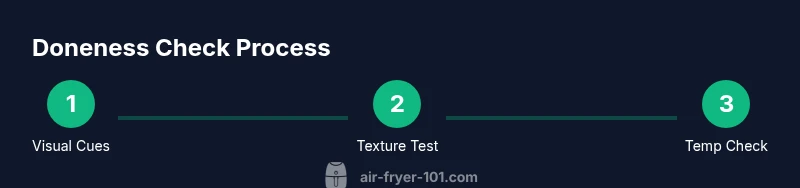
You tell when the air fryer is done by combining visual cues, texture tests, and a temperature check. Look for a golden, crisp exterior and a tender interior, then verify with a quick internal-temperature reading when appropriate. According to Air Fryer 101, using multiple signals reduces guesswork and prevents overcooking.
What 'done' means in an air fryer
In an air fryer, 'done' isn't a universal signal; it depends on the item you're cooking. Some foods stop changing much after the crust forms; others rely on internal doneness for safety. The most reliable approach blends appearance, texture, and temperature checks. The Air Fryer 101 team notes that relying on color alone often fails, especially with lean proteins or dense vegetables. This guide teaches how to tell when your air fryer is done using a layered approach: start with the visual cue, confirm with a texture test, and finish with thermometer checks for proteins. When you combine these signals, you reduce guesswork, prevent undercooking or overcooking, and improve consistency across cooking sessions. The following sections walk you through concrete cues for different foods, plus practical tips to apply in your kitchen today.
Visual cues to judge doneness
Visual cues are fast and intuitive but not definitive. Look for a uniform, golden exterior with crisp edges; patchy color or a soggy surface usually means uneven heating or insufficient air flow. The interior should show a transition from translucent to opaque, depending on the food. For proteins, a pink center is a warning sign unless you’re cooking a cut that accepts it (some beef cuts can be pink at medium doneness). For vegetables and potatoes, a lightly charred edge often signals surface dryness that helps crispness. Lighting matters; use a consistent light source and compare with a reference from a reliable recipe. Air Fryer 101 notes that color is a helpful starting point but not the final verdict; pair it with texture and temperature checks.
  ## Texture cues and tactile tests

  Texture testing adds a second layer of confidence. Grip a piece with tongs and gently press the surface; you want crisp, with a slight bounce rather than a soft, gummy feel. Fries and chicken nuggets should offer a hollow or crisp bite with a hot interior; vegetables should have a firm bite with no mush. For proteins, the inner portion should feel firm and consistent from edge to center; if it still yields to pressure, continue cooking in short increments. The shake test—jostling the basket to see if items separate and the surface stays intact—reveals whether a crust has formed that promotes airflow. Use this test alongside visual cues to determine if you’re close to done. Air Fryer 101 analysis shows that combining texture with color improves doneness accuracy.
Temperature targets and using a thermometer
An instant-read thermometer provides an objective check for doneness. Insert the probe into the thickest portion of the food, avoiding bones and the bottom of the basket, and compare with safe internal temperatures suggested by reliable sources. While vegetables and starches aren’t safety-driven like meat, internal temperature still reflects thorough cooking and flavor development. If you’re new to thermometer use, practice on a few test pieces to reduce anxiety and build confidence. Calibrate your thermometer occasionally to ensure accuracy, and wipe the tip between readings to prevent cross-contamination. Air Fryer 101 emphasizes that thermometer checks reduce guesswork and improve repeatability.
Doneness by food category: chicken, fish, beef, vegetables, potatoes
Chicken should reach a fully opaque center with no visible pink; fish should flake easily and be opaque throughout; beef and pork vary by desired doneness, but the center should be firm and uniform. Vegetables should be tender-crisp, not mushy, with bright color and a roasted aroma. Potatoes should be crisp on the outside and fluffy on the inside when fully cooked. Frozen items often require slightly longer times or a more powerful crust; watch for scorching before the interior finishes. Each category benefits from adjusting the initial cook time and then validating with texture and temperature checks. Air Fryer 101 guides you to map doneness signals across common foods.
Doneness tests for nuggets, wings, and sausages
Nuggets should be hot in the center with a crisp coating; wings need a fully cooked interior and a crackly skin. Sausages should be cooked through to the center with a stable bite and no cool spots. For all these items, allow a short rest after cooking to redistribute juices and finish residual cooking. If the center reads underdone, return to the air fryer for a few minutes, then recheck with the thermometer. This staggered approach reduces the risk of over-browning while ensuring safe, satisfying results. Air Fryer 101 suggests keeping a small jot-down of results for future reference.
Protein-specific checks: poultry, beef, pork
For poultry, color is not a reliable indicator of safety; rely on the thermometer. For beef and pork, the interior shade can vary by cut and preference, but the center should be evenly cooked and hold its shape. Resting the meat after cooking allows juices to redistribute and improves texture. Keep the thermometer clean and retest after a short hold; this habit yields more consistent results across days and different batches. Air Fryer 101 notes that building a personal doneness map—specific to your oven, basket size, and favorite foods—helps you cook with confidence.
Doneness for vegetables and starches
Cut vegetables evenly to ensure simultaneous cooking; irregular pieces cook unevenly. Root vegetables like potatoes need more time than greens, so start with similar sizes or cut larger items into smaller pieces. Green vegetables retain color when cooked properly; overcooked greens become limp and dull. For potatoes, aim for a crispy exterior and soft interior; consider parboiling or soaking to speed up evenness. When cooking multiple vegetables, place heavier items toward the bottom and lighter items on top to balance heat exposure. Air Fryer 101 reminds you to fine-tune times to your particular model and to check at the midpoint.
Common mistakes that fool you
Overcrowding the basket reduces airflow and can lead to uneven doneness. Preheating is sometimes skipped, delaying browning and crisping. Using too much oil or none at all can alter texture and color. Relying solely on crust color often misses undercooked interiors, especially for thicker pieces. Always incorporate a thermometer and texture cues to confirm doneness. Air Fryer 101 observes that consistent results come from a repeatable routine, not from a single indicator.
Tips for consistent results across models and brands
Air fryers vary in heat output and airflow; you’ll need to calibrate times for your own unit. Start with manufacturer guidelines and adjust in small increments based on results. Preheating, air path, basket design, and recipe thickness all affect doneness signals. Keep notes on settings that worked for each food and model; over time you’ll build a personal map that makes doneness predictable. The more you practice, the less you’ll rely on guesswork and the more you’ll enjoy consistent results. Air Fryer 101 suggests recording your results to standardize future batches.
Quick-reference printable checklist
A short, printable checklist helps during busy cooking days. Include preheat, arrange items in a single layer with space, optional initial timer, color targets, texture tests, thermometer checks, rest time, final check, and clean-up. Attach the checklist to the inside of a cabinet or keep a printed copy near the air fryer. Using a simple, repeatable checklist reduces mistakes and speeds up your decision-making when you’re juggling several dishes.
Next steps for building your doneness map
With these cues, you can start building your own doneness map for your favorite foods. Record the time, result color, texture, and final internal temperatures for several tests; compare against your notes and adjust accordingly. Over weeks of practice, you’ll know intuitively when something is done, while still using thermometer readings for safety. The Air Fryer 101 team recommends adopting this multi-signal approach to master doneness.
Tools & Materials
- Digital instant-read thermometer(Probe-type with at least a 1-2 inch stem; calibrated if possible)
- Tongs or silicone spatula(For testing without piercing the food surface)
- Kitchen timer or timer on your phone(Keeps you consistent across batches)
- Cutting board(Used for resting and slicing test portions safely)
- Paper towels(Pat dry to improve crispness when needed)
- Manufacturer guidelines or recipe card(Helps tailor times to your model)
Steps
Estimated time: Estimated total time: 20-40 minutes
- 1
Preheat and prepare
Preheat the air fryer to the target temperature and arrange a single layer of food with space between pieces. This ensures even air flow and faster, uniform browning from the start.
Tip: Preheating minimizes cold spots and yields crisper crusts. - 2
Set initial time and layout
Place food in a single layer with space for air to circulate. If cooking multiple items, group by similar thickness to avoid uneven doneness.
Tip: Avoid overcrowding; use the shake test at the 50% mark for early cues. - 3
Check color and texture mid-way
At the halfway point, inspect color and surface texture. If the exterior looks ready but the interior is underdone, pause and plan a brief rest.
Tip: Use tongs to lift a piece without piercing the crust; this preserves moisture. - 4
Test internal temperature for proteins
Insert the thermometer into the thickest part, avoiding bones. Compare to safe temperatures and decide if you should continue cooking in short increments.
Tip: Calibrate the thermometer occasionally for accuracy. - 5
Finish with rest and recheck
Let proteins rest for a few minutes; residual heat completes cooking. Recheck a portion to confirm even doneness across the batch.
Tip: Resting improves juiciness and flavor distribution. - 6
Document results for future batches
Note times, colors, textures, and temperatures for different foods and models; use this to build a personal doneness map.
Tip: A well-kept log speeds up future cooking and reduces guesswork. - 7
Adjust for model differences
If using a different air fryer, start with the same food and liquidize adjustments in small increments based on prior results.
Tip: Keep a model-specific note set to stay consistent across devices.
Got Questions?
Can I tell when my air fryer is done just by looking at color?
Color is a helpful cue but not reliable for safety. Use texture and a thermometer especially for poultry to verify doneness.
Color can hint that something is close, but you should also check texture and use a thermometer for poultry to confirm safety.
Is it safe to open the air fryer mid-cook to check progress?
You can open briefly to assess progress, but minimize interruptions since repeated openings reduce air flow and can extend cook time.
Yes, briefly check progress, but don’t open too often because it slows cooking.
What if the food looks done on the outside but is undercooked inside?
Rely on a thermometer and recook in short intervals until the center reaches a safe, desired temperature.
If the outside looks done but the inside isn’t, keep cooking a bit longer and recheck with a thermometer.
Do different foods require different doneness criteria?
Yes. Each food category has its cues; proteins require internal temps, while vegetables focus on texture and color.
Different foods have different cues; always adapt doneness checks to the item.
Should I rely on the 'shake test' or thermometer?
Use both: the shake test helps with surface doneness, but a thermometer confirms center doneness for safety.
Use the shake test for quick checks, and confirm with a thermometer for safety.
How can I make doneness consistent across different air fryer models?
Start with model-specific guidelines, then adjust in small increments based on repeat results. Build a personal doneness map.
Different models cook differently; learn your unit and adjust gradually.
Watch Video
Quick Summary
- Assess color, texture, and temperature together.
- Use a thermometer to confirm safe doneness for proteins.
- Rest foods briefly to finish cooking and improve juiciness.
- Build a personal doneness map for your model and favorite foods.
- Document results to improve consistency over time.