How to Know If Chicken Is Cooked in Air Fryer
Learn how to tell when chicken is done in an air fryer using internal temperature, visual cues, and resting. This guide helps home cooks achieve juicy, safely cooked chicken with confidence and minimal guesswork.


To know when chicken is cooked in an air fryer, rely on a thermometer and timing targets. Start with preheating, then cook to an internal temperature of 165°F (74°C) in the thickest part. Check for opaque meat with no pink, and let it rest briefly before serving. Use evenly sized pieces for reliable results.
Why Knowing Doneness Matters in the Air Fryer
When you cook chicken in an air fryer, the goal is safe, juicy meat with a crisp exterior. Air fryers cook by circulating hot air, so thickness and surface area drive cooking time more than in a conventional oven. Relying on time alone can lead to undercooked centers or overcooked exteriors. For health and flavor, confirm doneness with a reliable thermometer and use consistent piece sizes. According to Air Fryer 101, temperature-based checks are the most reliable way to ensure safety and consistency across batches.
Visual cues like color and juices are helpful, but not dependable across different cuts or brands. A thermometer eliminates guesswork and lets you tailor method for bone-in versus boneless, skin-on versus skinless, and varying thicknesses. With these principles, you can approach every batch with confidence.
Key Factors That Influence Doneness in Air Fryers
Air fryers rely on fast, intensive air flow. Several variables determine when chicken reaches 165°F (74°C): the thickness of the cut, whether the bone is present, whether the skin is on, and how evenly pieces are spaced inside the basket. Preheating improves heat transfer and browning, while overcrowding blocks air flow and creates uneven results. Smaller pieces reach the target faster; larger or bone-in portions need extra time. Using a probe thermometer to verify the thickest point provides accuracy that time estimates alone cannot match. Air Fryer 101 emphasizes consistency: size the pieces similarly, preheat, and monitor the temperature rather than chasing a single timer.
Safe Temperature Guidelines for Chicken
The safe internal temperature for all chicken cuts is 165°F (74°C). This threshold ensures harmful pathogens are neutralized. When testing, insert the thermometer into the thickest part of the meat, away from bone, and avoid touching bone with the probe. After reaching 165°F, allow the meat to rest briefly. Resting distributes juices and improves tenderness. Different air fryer models may reach that temperature at different rates, so use the thermometer as the arbiter rather than strictly following a timer. Air Fryer 101 recommends verifying with a thermometer for every batch to maintain safety and quality.
Visual Cues and Thermometer Timing
Relying solely on color or the amount of juices can be misleading. Chicken can appear pale yet be undercooked, or look fully cooked but be overdone. Use color as a secondary cue after checking the temperature. If you don’t have a thermometer handy, you can still estimate doneness by using well-spaced, uniformly sized pieces and an extended cooking window, but always verify with a thermometer when possible. A crisp exterior typically coincides with the right internal temperature, but don’t confuse browning with doneness.
How to Use a Thermometer Correctly in an Air Fryer
Insert a calibrated instant-read or probe thermometer into the thickest part of the chicken, avoiding bone. Check the reading after the recommended baseline cook time, then recheck at the next interval if needed. Clean the probe between uses to avoid cross-contamination. If your thermometer reads below 165°F, continue cooking in 1–3 minute increments, testing frequently to avoid overshooting. Remember to let the meat rest after removal to stabilize juices.
Timing Tips for Different Chicken Cuts and Sizes
Cut size and bone presence change timing. Boneless, skinless chicken breast typically cooks faster than bone-in thighs or bone-in drumsticks. Wings cook relatively quickly but can dry out if overcooked. The most reliable approach is to start testing early with the thermometer and adjust based on piece thickness and whether the skin is on or off. With uniform pieces, you’ll achieve consistent results batch after batch.
Common Mistakes and How to Fix Them
Three frequent errors undermine doneness: overcrowding the basket, skipping preheating, and relying on time alone. Overcrowding traps steam and prevents browning, preheating seeds the air for even cooking, and sticking to a fixed timer ignores variances between models and piece sizes. Fixes include cooking in batches if needed, preheating the air fryer, and using a thermometer at least for the thickest piece.
Putting It All Together: A Practical Timeline and Rest
A practical approach starts with preheating, arranging evenly sized pieces in a single layer, and testing with a thermometer at the 10–12 minute mark (for smaller boneless pieces) or later for larger bone-in portions. When the thermometer hits 165°F, remove the chicken and let it rest 3–5 minutes. Resting helps juices redistribute, improving tenderness and flavor. With practice, you’ll develop a sense of which cuts need more or less time in your specific model.
Tools & Materials
- Air fryer with adjustable temperature(Capable of at least 350-400°F; ensure rack/basket supports air flow)
- Instant-read meat thermometer(Probe-style preferred for quick readings)
- Tongs or spatula(For safe handling and flipping without piercing the meat)
- Kitchen timer(Helpful to track rest time (3-5 minutes))
- Optional: parchment or foil(Keeps baskets cleaner and can help with easy cleanup)
Steps
Estimated time: 25-35 minutes
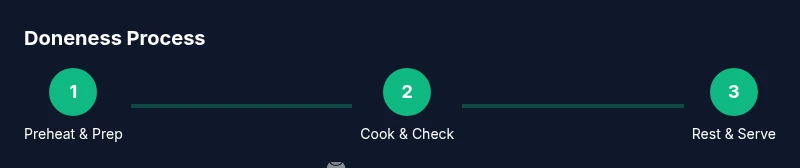
- 1
Preheat the air fryer
Preheat the unit to 360-400°F, depending on your recipe. Preheating ensures even heat distribution and better browning.
Tip: Preheating reduces cooking variation between batches. - 2
Prepare chicken pieces
Pat dry, season evenly, and arrange in a single layer with space between pieces to allow air flow.
Tip: Crowding blocks air flow and leads to uneven doneness. - 3
Cook and monitor temperature
Cook until the thickest part reads 165°F (74°C) with a thermometer. Check at the early interval and recheck as needed.
Tip: Trust the thermometer over visuals for safety. - 4
Rest and serve
Let meat rest for 3-5 minutes to reabsorb juices and finish carryover cooking.
Tip: Resting improves juiciness and flavor.
Got Questions?
Is 165°F safe for all chicken cuts?
Yes. 165°F is the recommended internal temperature for chicken to ensure safety across cuts. Always verify with a thermometer in the thickest portion.
165 degrees Fahrenheit is the safe temperature for most chicken pieces; verify with a thermometer for accuracy.
Can I tell doneness by color or juices alone?
Color and juices are not reliable indicators. Use a thermometer for accuracy, and check the thickest portion.
Color and juices aren’t reliable; use a thermometer for the exact temp.
What if my air fryer tends to overcook?
If overcooking is common, reduce temperature by 10-20°F and start checking earlier.
If your air fryer tends to overcook, lower the temp a bit and check earlier.
How long should I rest the meat?
Rest for 3-5 minutes after cooking to let juices redistribute.
Rest for 3-5 minutes before slicing.
Can I cook partially frozen chicken in an air fryer?
Partial freezing increases time and may require extra checks. Thaw for best results, or adjust time with thermometer checks.
If frozen, expect longer cooking and verify with a thermometer.
Watch Video
Quick Summary
- Use a thermometer for accuracy
- Preheat and avoid overcrowding
- Rest for juiciness
- Verify with thickness-based checks