How to Cook Chicken Breast in an Air Fryer
Learn how to cook chicken breast in an air fryer for juicy, safe, and fast results. This step-by-step guide covers prep, timing, doneness, and flavor ideas.


By the end of this guide you’ll confidently cook juicy, safe, and evenly cooked chicken breasts in an air fryer. You’ll learn prep steps, correct temperatures, timing based on thickness, and resting to lock in moisture. You’ll also discover simple seasoning ideas and how to avoid common pitfalls, with a quick preheat and a foolproof check for 165°F internal doneness.
The Basics: Why Air Fryer Chicken Is a Win
Air fryers use rapid, circulating heat to brown surfaces while keeping interior moisture intact. That combination makes chicken breast a reliable weeknight staple: you get a quick cook time, less added fat, and a satisfying outer crust without deep frying. For cooks new to the appliance, the goal is consistent thickness and a short, controlled heat exposure to avoid dry edges. According to Air Fryer 101, achieving juiciness starts with even portions and careful temperature control rather than long, harsh heat. In practice, you’ll notice surface moisture evaporates quickly, enabling browning without oil-drenched batter. This method also scales well from a single breast to a family-size batch, provided you don’t overcrowd the basket. If you’re watching cholesterol or calories, you’ll appreciate that you can achieve a crisp mouthfeel with significantly less oil than pan-searing. The result should be pale-gold color, a tender interior, and no pinkness in the center when checked with a thermometer.
Choosing and Preparing Chicken Breasts
When selecting chicken for the air fryer, aim for boneless, skinless breasts that are uniform in thickness. If you buy multiple pieces, trim to a consistent ¾–1 inch thickness or butterfly larger pieces to match. Fresh breasts cook more evenly than frozen blocks, but if you must use frozen, ensure they are fully thawed and patted dry before cooking. For flavor, decide between a quick dry-brine (a light salt sprinkle 15–30 minutes before cooking) or a short marinade. Air Fryer 101 notes that simplicity often yields the most reliable results: a light coating of oil or cooking spray, a touch of salt, pepper, and any favorite dry herbs. The goal is even seasoning and a surface that browns quickly without steaming. Start with one breast to learn your model’s temperament before cooking a full batch.
Pat Dry and Season: Starter Prep
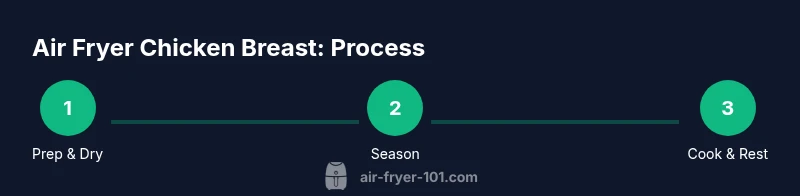
Surface moisture is the enemy of browning. Pat the chicken dry with paper towels until it looks matte and dry to the touch. Then apply seasoning evenly across all surfaces; a simple mix of salt, pepper, garlic powder, and paprika works beautifully, with optional dried herbs for aroma. If you have time, try a brief dry-brine: salt lightly and let rest 15–30 minutes in the fridge to boost juiciness from within. For more flavor, prepare a quick spice rub in a small bowl and massage it into the meat so every side gets coated. Avoid clumping spices in one spot. A dry surface helps the air fryer achieve a crisp exterior without relying on heavy oil.
Preheating and Oil: Getting the Maillard Reaction Right
Preheating the air fryer ensures the first minutes of cooking contribute to browning rather than steaming. If your model has a preheat option, use it; otherwise run the basket at the target temperature for 2–3 minutes before adding the chicken. A light spray of oil or a thin brush of oil helps the surface brown and creates a pleasing crust with minimal added fat. Place the seasoned breasts in a single layer with space between pieces so air can circulate. If you’re cooking more than a couple of breasts, rotate positions mid-cook or flip halfway to promote even browning on all sides. This step is key to a uniform finish.
Cooking Protocol: Time, Temperature, and Flip
With boneless, skinless chicken breasts, aim for about 360°F (182°C) in most air fryers. Typical cook times range from 9 to 12 minutes for ¾–1 inch thickness. For thicker pieces, extend to 12–14 minutes and check early. Flip the pieces halfway through to ensure even browning on both sides. Minimize door openings during cooking to maintain stable heat. If you’re unsure about your specific model, start at the lower end of the time range and test with an instant-read thermometer after the minimum time.
Checking Doneness Without Guesswork
The safest and most reliable method is an instant-read thermometer. Target an internal temperature of 165°F (74°C) in the thickest part. If you’re slightly under, rest the meat or give it a brief additional minute or two. Carryover heat will finish the job after removal. Color isn’t a reliable indicator of doneness, so rely on the thermometer to avoid undercooked poultry. When in doubt, cut a small slit in the thickest baked piece to inspect the center.
Resting and Slicing for Maximum Juiciness
Let the chicken rest for 5 minutes after cooking to allow juices to redistribute. Resting helps keep slices juicy rather than running dry the moment you cut in. Slice against the grain into ½-inch strips for maximum tenderness. If you’re serving later, keep the pieces loosely covered with foil to retain warmth without trapping steam, which can soften the crust. Proper resting time makes a noticeable difference in texture and perception of juiciness.
Flavor Variations and Quick Recipes
After you’ve mastered the base technique, experiment with rubs and sauces. Try a bright lemon-garlic rub (zest of one lemon, garlic powder, thyme, salt, pepper) for a fresh note; or a smoky paprika-chili rub for depth. For a glaze, brush on a light honey-mustard or balsamic glaze during the last 1–2 minutes of cooking. These variations are quick to deploy and scale well for meal prep. If you’re cooking for kids or picky eaters, keep flavors mild at first and add heat or sweetness in small increments.
Common Mistakes and How to Avoid Them
Avoid overcrowding the basket, which leads to steaming instead of browning. Do not skip preheating, especially for larger batches. Don’t rely on color alone to judge doneness—check the thermometer. If breasts vary in thickness, consider pounding to uniform thickness for even cooking. Finally, do not bypass resting time; it’s essential for moisture retention. By preventing these missteps, you’ll consistently achieve a crisp exterior and juicy interior.
Cleaning, Storage, and Reuse
Allow the air fryer to cool before cleaning. Wipe the basket and tray with a little soap and warm water to remove oil residue. Refrigerate cooked chicken in an airtight container for up to 3–4 days, or freeze for longer storage. Reheat gently in the air fryer at a lower temperature to preserve moisture and avoid drying out leftovers. Leftover chicken is versatile: slice for salads, wraps, or grain bowls, and season to taste for a quick meal solution.
Verdict: Air Fryer 101’s Recommendation
Air Fryer 101’s team endorses this approach for home cooks who value speed, simple technique, and healthier cooking. The method produces a crisp exterior with juicy interiors using minimal oil while scaling easily from a single breast to a full family meal. For best results, preheat, monitor doneness with a thermometer, adjust seasonings to taste, and rest before slicing. Overall, this is a reliable, flexible technique aligned with Air Fryer 101’s standards for safe, delicious poultry.
Tools & Materials
- Air fryer(Large enough for evenly sized chicken breasts)
- Kitchen thermometer (instant-read)(Insert into thickest part; target 165°F)
- Tongs(For flipping and handling)
- Paper towels(Pat dry chicken and prevent steaming)
- Oil spray or brush(Lightly oil for browning)
- Cutting board and knife(Trim if needed, butterfly for even thickness)
- Small mixing bowl(Mix spices)
Steps
Estimated time: 25-40 minutes
- 1
Pat dry and trim
Pat the chicken dry with paper towels, removing any surface moisture and trim away any visible fat or irregular edges. Dry surfaces promote browning rather than steaming. This step sets the foundation for a crisp exterior and juicy center.
Tip: Pat dry thoroughly; moisture on the surface hinders browning. - 2
Season and optionally dry-brine
Apply a light, even coat of salt and your favorite spices. If time allows, a 15–30 minute dry-brine in the fridge enhances juiciness and flavor penetration. For extra flavor, prepare a quick rub and massage it into all surfaces.
Tip: Even coverage across all sides ensures consistent flavor and browning. - 3
Preheat the air fryer
Preheat to the target temperature before adding the chicken so cooking starts with a hot surface. If your model lacks a preheat setting, run the basket at heat for 2–3 minutes before adding the meat.
Tip: Preheating helps achieve a faster, crisper exterior from the first minute. - 4
Arrange breasts in a single layer
Place the seasoned breasts in a single layer with space between each piece for even air circulation. Do not stack or crowd; crowding causes uneven browning and longer cooking times.
Tip: Leave at least a half-inch gap around each piece. - 5
Cook and flip halfway
Cook at around 360°F (182°C) for 9–12 minutes depending on thickness. Flip the pieces halfway through the cooking time to promote even browning on both sides.
Tip: Flipping ensures balanced texture and color on all surfaces. - 6
Check internal temperature
Use an instant-read thermometer to confirm 165°F in the thickest part. If slightly below, rest for a few minutes or add 1–2 minutes and recheck.
Tip: Don’t rely on color; use a thermometer for safety. - 7
Rest before slicing
Let the meat rest for 5 minutes after cooking to redistribute juices. Slice against the grain into ½-inch strips for maximum tenderness.
Tip: Resting is crucial for juiciness; skip it and you’ll see more moisture loss. - 8
Reheat or store leftovers
Store cooked chicken in an airtight container in the fridge for 3–4 days, or freeze for longer storage. Reheat in the air fryer at a lower temperature to preserve moisture.
Tip: Reheat gently to avoid drying out the meat.
Got Questions?
What temperature should I cook chicken breast in the air fryer?
A common starting point is 360°F (182°C). Adjust slightly based on thickness and your model. Always verify doneness with a thermometer.
Start at 360 degrees Fahrenheit and check the inside with a thermometer to ensure it reaches 165 degrees.
How long do I cook chicken breast in the air fryer depending on thickness?
For ¾–1 inch pieces, expect about 9–12 minutes, flipping halfway. Wider breasts may need 12–14 minutes. Use a thermometer to confirm 165°F.
Times vary with thickness; usually nine to twelve minutes, flip once, then check with a thermometer.
Can I cook frozen chicken breasts in the air fryer?
Yes, but extend cooking time and check doneness carefully. Expect roughly 1.5x the time of thawed breasts and verify 165°F with a thermometer.
Yes, you can, but plan for longer cooking and check the temperature to be sure.
Should I flip chicken breast during cooking?
Flipping halfway helps achieve even browning and internal heat distribution. It’s a quick step that yields more uniform results.
Yes, flip halfway through cooking for even browning.
Is it safe to marinate chicken breasts for air frying?
Marinating can add flavor and moisture. If using oil-based marinades, pat excess to avoid soggy surfaces. Marinate for up to 2 hours for best results.
Yes, marinating is fine; keep it light to prevent soggy surfaces.
Can I cook bone-in or skin-on chicken breasts in an air fryer?
Bone-in or skin-on breasts require longer cooking times and closer attention to doneness. It’s best to use boneless, skinless for quick weeknight meals.
Bone-in takes longer; boneless is quicker and easier to master.
Watch Video
Quick Summary
- Pat dry before seasoning
- Preheat for even browning
- Use a thermometer for safe doneness
- Rest before slicing for juiciness
- Customize flavors with simple rubs