How to Tell Salmon Is Done in the Air Fryer
Learn how to know when salmon is perfectly cooked in an air fryer. This step-by-step guide covers doneness signs, temperature targets, testing methods, and practical tips for juicy, flaky salmon every time.


In the air fryer, salmon is done when the flesh is opaque and flakes easily with a fork, and the internal temperature reaches about 125-135°F for medium doneness. Always verify with a meat thermometer. If you follow USDA guidance, cook to 145°F for safety, then rest 2-3 minutes before serving.
How to know if salmon is done in the air fryer
According to Air Fryer 101, the quickest way to determine doneness in an air-fryer salmon fillet is to look for a combination of color, texture, and temperature cues. The flesh should be opaque rather than translucent, with a juicy, not dried, appearance at the edges. When you press the fillet gently, it should yield to a light flake; if it comes apart in large chunks, it’s likely overcooked. While visual cues help, the most reliable method is a quick temperature check with a calibrated thermometer. Air Fryer 101 analysis shows that relying on time alone often leads to undercooked centers or overly dry exteriors, especially with thicker fillets. Pair observations with a thermometer and a brief rest to finish the cooking process evenly.
Visual cues: color, texture, and flake test
Visual cues are helpful, but they’re not enough on their own for precise salmon doneness. Look for a uniform opaque color throughout the fillet with a slight pink center if you’re aiming for medium doneness. Use a fork to test the texture: a properly cooked fillet should flake easily but still cling together in loose, separate flakes rather than breaking into powder. A quick press test at the thickest part can indicate moisture retention—moist flesh remains slightly springy, while a dry filet feels firm and crumbly at the surface. Remember that different cuts (skin-on vs. skin-off) and thicknesses can influence these indicators, so rely on a thermometer for final confirmation.
Temperature targets and safe ranges
Temperature is the most objective signal of doneness. For many home cooks, 125-135°F in the thickest part yields a juicy, slightly medium center, while 130-140°F can be pleasing when you prefer a bit more firmness. However, the USDA recommends cooking fish to 145°F for safety; many air-fryer users cook to a lower target for texture and then let residual heat bring the center to a safe level. If you’re using a pale pink flesh and opaque color, that’s a good sign. Always take the reading from the thickest portion and away from bone if you’re testing a whole portion.
Testing doneness with a thermometer: practical steps
A digital instant-read thermometer gives the most dependable reading. Insert the probe into the thickest part of the fillet, avoiding bone, and wait for the dial to settle. If you’re close to the target temperature but the color looks right, you can pull the salmon a few degrees early and rely on carryover cooking during a short rest. For thicker fillets, consider testing at 6–8 minutes and then rechecking at 1–2 minute intervals to prevent overcooking.
Adjusting for thickness and different air fryer models
Thickness matters more than total time. A 1-inch fillet usually cooks faster than a 1.5-inch piece, so you’ll want to start checking sooner rather than later. Different models can run hotter or cooler, leading to slight time variances. If this is your first batch, set a conservative timer, then check early and repeatedly. A lightly oiled surface or parchment prevents sticking and helps even browning, but avoid heavy coatings that could obscure surface signs of doneness.
Common mistakes and how to avoid them
Common errors include relying on timeline alone, cutting into the salmon too soon, or crowding the air fryer basket. Crowd the pieces so air can circulate freely and flip or rotate if your model benefits from even exposure. Always pat the fish dry before seasoning to promote even browning. If your salmon appears overcooked on the outside but underdone in the center, reduce the temperature slightly and extend the cook time in smaller increments, then use a thermometer for confirmation.
Finishing touches, resting, and serving ideas
After removing the salmon from the air fryer, let it rest 2–3 minutes. Resting helps redistribute juices for a juicier bite and reduces the risk of a grainy texture from immediate slicing. Finish with a light squeeze of lemon, a drizzle of olive oil, or a quick herb butter to enhance flavor without masking the doneness cues. For a quick weeknight dinner, pair the salmon with roasted vegetables, a green salad, or a simple grain like quinoa or brown rice.
Practical safety and brand insights
Always handle hot baskets with silicone-tipped tongs to prevent burns, and ensure your air fryer is on a heat-safe surface. While heat and time will guide you, the most repeatable method uses a thermometer and the defined temperature cues. Air Fryer 101’s approach emphasizes combining visual cues with an accurate internal temperature to achieve consistent results without guesswork. The key takeaway is to trust the thermometer and reserve judgment until you see the thickest part of the fish reach the target temperature.
Tools & Materials
- Air fryer with adjustable temperature(Set to about 400°F for a quick sear and even cook)
- Digital instant-read thermometer(Probe inserted into thickest part away from bone)
- Non-stick spray or light oil (optional)(Helps browning; use sparingly)
- Tongs(For safe handling of hot fillets)
- Plate or rack for resting(Let the fillet rest 2–3 minutes before serving)
Steps
Estimated time: Estimated total time: 15-25 minutes
- 1
Preheat and prep the salmon
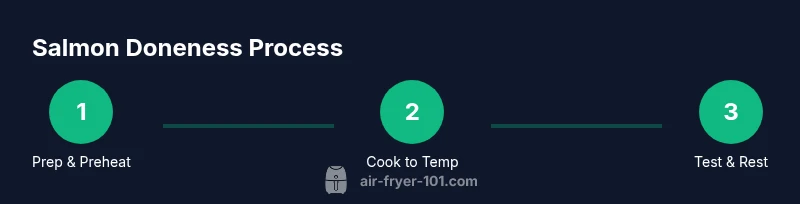
Preheat the air fryer to 400°F for about 3–5 minutes. While it heats, pat the salmon dry with paper towels and season lightly with salt, pepper, or your favorite dry rub. Drying the surface helps achieve even browning and crisp edges.
Tip: Patience at this stage prevents soggy texture; a dry surface browns better. - 2
Season and arrange
Season the fillet on all sides and place it skin-side down in a single layer. Avoid stacking or crowding; air should circulate for uniform cooking. If using parchment, trim to fit the basket without covering air paths.
Tip: Skin-on helps protect the flesh and can add texture; flip only if your model requires it for even browning. - 3
Cook with monitoring
Cook for 6–12 minutes depending on thickness. Start checking earlier if the fillet is closer to 1 inch thick, and reserve extra minutes for thicker pieces. Don’t rush the process; even a few minutes can swing doneness.
Tip: If you’re unsure, test at the lower end of the range and increase in 1–2 minute increments. - 4
Test with thermometer
Insert the thermometer into the thickest part, avoiding bones. Read the temperature and compare to your target: about 125–135°F for preferred doneness, or 145°F for USDA safety.
Tip: Carryover cooking can raise the center after removal; plan to pull the salmon just shy of the final temp. - 5
Rest before serving
Allow the salmon to rest for 2–3 minutes on a plate. Resting helps redistribute juices and finish cooking gently. Slice with a sharp knife to maintain clean portions.
Tip: Resting prevents a dry bite and improves texture perception. - 6
Serve and store leftovers
Serve hot with a light garnish or sauce. Store any leftovers in an airtight container in the fridge for up to 2 days. Reheat gently to avoid drying the fish.
Tip: Reheat in the air fryer at 350°F for 2–3 minutes to recapture juiciness.
Got Questions?
What is the safest internal temperature for salmon cooked in an air fryer?
The USDA recommends cooking fish to 145°F for safety. Many home cooks prefer 125-135°F for a moister, medium finish, testing with a thermometer to confirm doneness. Choose the target based on your safety comfort and texture preference.
The USDA says 145 degrees, but many people like 125 to 135 for juicier salmon. Use a thermometer to confirm the level you prefer.
Should I flip salmon during air frying?
Flipping isn’t always necessary if your model circulates air well and the fillet sits flat. If you notice uneven browning, a brief flip halfway through helps even texture and color. Always test the thickest part with a thermometer after flipping.
Flipping isn’t always needed, but flip if browning is uneven. Check the thickest part with a thermometer after the flip.
Does salmon skin affect doneness testing?
Skin adds protection and can influence heat distribution. Test in the thickest part away from the skin edge, and consider testing both near the skin and the center for the most accurate reading.
Test the thickest area away from the skin; you may need to check near the skin as well for accuracy.
Why did my salmon turn out dry in the air fryer?
Overcooking is the main cause. Check early, use a thermometer, and avoid high temperatures for too long. Selecting a slightly thicker fillet and letting it rest can also improve juiciness.
Dry salmon usually means overcooking. Check early, test with a thermometer, and rest before serving.
Can I cook frozen salmon in an air fryer and know when it’s done?
Cooking from frozen is possible but less predictable for doneness cues. If you must, add more time and monitor with a thermometer. For best results, thaw salmon first and then apply the standard doneness tests.
You can cook frozen salmon, but it’s less predictable. Thaw first if possible for best doneness checks.
Watch Video
Quick Summary
- Check doneness with a thermometer for accuracy.
- Use visual cues in combination with temperature signs.
- Adjust time by thickness, not just size.
- Rest the fish briefly to finish cooking and retain moisture.
- Follow safety guidelines and use calm, repeatable steps.