How to Air Fryer Chicken: A Complete Guide
Learn how to air fryer chicken for crispy, juicy results every time. Step-by-step prep, temperature guidance, tips, and safety for beginners and seasoned cooks.


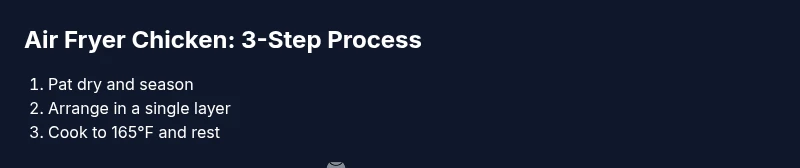
With your air fryer, you can coax crispy, juicy chicken in under 40 minutes. Preheat to 360°F (182°C), pat the pieces dry, and season. Arrange in a single layer, cook until the internal temperature hits 165°F (74°C), flipping halfway. Rest 3–5 minutes and serve for best texture.
Why mastering air fryer chicken matters
Cooking chicken in an air fryer is a fast, healthier alternative to deep-frying, delivering crisp exterior with tender meat. For home cooks, mastering this technique reduces oil use, lowers calories, and streamlines weeknight dinners. According to Air Fryer 101 Team, building confidence with air frying starts with proper prep and heat control. When you're learning how to air fryer chicken, the goal is to maximize surface browning while preserving juiciness inside. Start with boneless, skin-on cuts to dial in timing, then expand to bone-in pieces or wings. This method also suits batch cooking: you can air fry several smaller pieces at once if you keep them in a single layer with space between. Remember that preheating matters; it reduces overall cook time and helps achieve a uniform crust. With the right approach, you can consistently achieve a dinner-ready result in under half an hour.
Key variables that affect results
Several variables determine how well chicken comes out in an air fryer. The cut type (breast, thigh, or wing) and whether the bone or skin are present have the biggest impact on cook time and moisture. Skin-on pieces brown more readily, while skinless cuts dry faster unless you use a light oil or marinade. Thickness matters too; evenly sized pieces cook more uniformly. Marinating or applying a dry rub changes moisture retention and flavor depth, but sugar-heavy marinades can burn at high heat, so balance is key. The size of your air fryer basket and the number of pieces you place inside also limits airflow; always cook in a single layer with space for air to circulate. By understanding these variables, you can tailor times rather than rely on a single universal chart.
Tools & Materials
- Air fryer(Choose a model that supports 360–400°F and a 4–6 quart basket for family cooking.)
- Meat thermometer(Instant-read preferred for quick, accurate checks.)
- Tongs(For turning pieces without tearing crust.)
- Paper towels(Pat dry thoroughly to remove surface moisture.)
- Oil spray or light oil(Optional for extra browning; use sparingly.)
- Parchment liners or basket-safe liners(Helpful to prevent sticking on delicate coatings.)
- Plate or tray for resting(Used after cooking to rest meat.)
Steps
Estimated time: 25-40 minutes
- 1
Preheat the air fryer
Preheating ensures even browning and faster, more predictable cooking. Set the unit to 360°F (182°C) and let it run for 5 minutes before adding the chicken.
Tip: If your model lacks an explicit preheat function, simply run a empty cycle for 3–5 minutes. - 2
Pat dry and season
Pat the chicken dry with paper towels to remove excess moisture that can steam the surface. Apply a light oil spray if desired, then season with salt, pepper, and your chosen spices. A thin, even coat yields the best crust.
Tip: A quick, even coat is more effective than a heavy layer of seasoning. - 3
Arrange in a single layer
Place pieces in a single layer in the basket or on the tray, leaving space between each piece for air to circulate. Overcrowding dramatically reduces browning and increases cook time.
Tip: Use parchment liners to help with cleanup and prevent sticking. - 4
Cook first side
Cook the first side for 10–15 minutes (depending on cut) without moving too much. This initial heat browns the surface and starts moisture escape for juiciness inside.
Tip: Avoid opening the basket too often; each opening costs you precious browning time. - 5
Flip and finish cooking
Flip the pieces and cook for an additional 3–8 minutes until the thickest part reaches 165°F (74°C). Times vary by cut and thickness.
Tip: Use a thermometer for accuracy rather than relying on time alone. - 6
Rest and serve
Remove the chicken and let it rest for 3–5 minutes. Resting helps juices redistribute for a juicier bite and reduces carryover heat.
Tip: If needed, give a final 1–2 minutes in the air fryer to re-crisp the exterior.
Got Questions?
Can I air fry frozen chicken?
Yes, you can air fry frozen chicken, but expect longer cooking times and check doneness with a thermometer. For best texture, thaw first when possible.
Yes, you can air fry frozen chicken, but plan for a longer cook time and verify doneness with a thermometer.
What cut is easiest for beginners?
Boneless, skin-on chicken breasts or thighs are easiest to start with; they cook more evenly and stay juicy with careful timing.
Start with boneless, skin-on cuts for easier even cooking.
Do I need to preheat the air fryer?
Preheating helps achieve a consistent golden crust and reduces overall cook time for most models. If your unit doesn’t require it, you can skip it.
Preheating helps with even browning; some models skip this, but it’s usually beneficial.
Can I marinate chicken before air frying?
Yes, marinating adds flavor and moisture. Avoid very sugary marinades that may burn at high heat; pat dry before cooking if the surface is wet.
Marinating adds flavor, but keep sugary marinades light for best results.
Why is my chicken dry or chewy?
Overcooking, overcrowding, or starting with cold meat can dry the exterior. Ensure you reach 165°F and cook in a single layer with space between pieces.
Overcooking or crowding is usually the culprit; cook in a single layer and check temp.
How should I store and reheat leftovers?
Cool promptly and refrigerate within two hours. Reheat to 165°F, preferably in the air fryer for a crisp finish.
Store quickly and reheat to a safe temperature for best texture.
Watch Video
Quick Summary
- Preheat for consistent browning
- Pat dry and space pieces for even cooking
- Check for 165°F to ensure safety
- Rest briefly before serving
- Experiment with coatings for flavor without soaking the crust