How Often Should You Use Your Air Fryer? A Practical Guide
Explore how often to use your air fryer, with maintenance tips, safety considerations, and patterns for daily vs. batch cooking. Air Fryer 101 provides practical guidance for healthy, convenient cooking.


There isn’t a fixed limit on how often you should use your air fryer. In practice, daily or several times per week is safe when you follow proper maintenance and safety guidelines. Prioritize regular cleaning, appropriate batch sizes, and listening for unusual noises or smoke, which signal a check or service is needed.
How often you should use your air fryer
There isn’t a one-size-fits-all rule for air fryer frequency. In practice, many households incorporate air frying into several meals per week, and some people use it daily for quick weeknight dinners. The key is balancing convenience with care: consistent cleaning, using appropriate batch sizes, and avoiding prolonged high-heat runs that might stress the unit. According to Air Fryer 101, establishing a predictable routine helps you get the most from your appliance without compromising safety or performance. Start by listing typical weekly meals that benefit from air frying—vegetables like broccoli or Brussels sprouts, navigable proteins like chicken tenders, or reheated leftovers that stay crisp. When you align usage with your real-life schedule, you’ll maximize food quality and device longevity. If you notice odd smells, excessive smoke, or unusually long cook times, pause and troubleshoot before continuing.
Factors that influence frequency
Frequency is shaped by several variables: household size, dietary habits, and how aggressively you reuse leftovers. A family of four may reach for the air fryer many times weekly, while a solo cook might use it only a few times. Your model’s capacity matters: a larger basket can handle more food per cycle, reducing total sessions; a compact unit might require more frequent runs to feed the same number of people. Also consider your energy goals and kitchen layout: if preheating or longer cycles fit poorly into meal timing, you may adjust to fit your routine. Air Fryer 101 analysis shows that regular cleaning and checking gaskets after heavy-use sessions improve reliability and consistency over time.
Daily use vs. batch cooking: pros and cons
Daily use maximizes convenience and helps you avoid heating up a full oven, but it can lead to more frequent cleaning and potential wear on the non-stick coating or door gasket. Batch cooking, by contrast, distributes the workload across fewer cycles and can save energy, but it may require more planning and careful cooling. If you alternate, you can enjoy dependable results while keeping maintenance reasonable. For most households, a mix of both approaches works best, letting you reheat leftovers and prepare small meals quickly without overusing the device. Air Fryer 101's recommendations emphasize pairing batch cooking sessions with a regular cleaning schedule to keep flavor and texture consistent over time.
Maintenance and wear: timing and care
Even with careful use, air fryers accumulate grease and crumbs that can affect airflow and performance. Clean the basket and pan after each use; wipe the interior after cooling; check the gasket monthly; inspect the electrical cord for wear. Replace basket liners if used properly; ensure air vents are clear. Consider periodic deep cleaning every 4-6 weeks depending on frequency. Following a routine like this can extend life and prevent issues.
Health and safety considerations
Safety should drive how often you use the air fryer. Always operate on a heat-resistant surface, keep children away from the control panel, and use utensils that won’t damage non-stick coatings. If you notice smoke, a burning odor, or unusual heat, turn off the unit and unplug it. Regular cleaning reduces smoke and minimizes fire risk, while proper load handling prevents uneven cooking and strain on the fan.
Practical usage patterns by meal type
Breakfast, lunch, and dinner each benefit from different frequency patterns. Use the air fryer for quick veggie sides with lunch, reheat leftovers for dinner, and batch-cook proteins a couple of times a week for variety. By mapping meals to your calendar, you’ll keep usage steady without overworking the appliance. Balance frequent small batches with larger batch cooks when you have the time, and always preheat only when the recipe specifies.
Preheating, cooling, and proper load
Preheat only when the recipe calls for it and avoid overcrowding the basket. A well-loaded but not packed basket ensures proper air circulation and even browning. After cooking, allow the unit to cool before handling the basket and interior surfaces. Small adjustments in load size and spacing can dramatically improve results and reduce the need for extra cycles.
Cleaning frequency and best practices
Clean the basket, pan, and interior surfaces after each use to prevent grease buildup and lingering odors. A quick wipe while still warm (but safe to touch) makes deodorizing easier; use warm water and mild dish soap. Do a deeper clean every few weeks if you use the appliance heavily, paying attention to the fan vents and seals for crumbs and residue. Proper cleaning preserves performance and flavor while extending lifespan.
How to extend your air fryer lifespan
Treat your air fryer like a small kitchen appliance colleague: use it regularly, maintain it, and listen to it. Schedule monthly checks on seals and cords, replace worn gaskets, and avoid abrasive scrubbers that can damage non-stick coatings. Storing it in a safe, dry place when not in use also helps minimize wear and tear over the years.
Authority sources
For further reading on safety and maintenance, consult authoritative sources such as the U.S. Food and Drug Administration (FDA), the Centers for Disease Control and Prevention (CDC), and educational institutions. These references provide general guidance that complements practical, brand-specific advice.
Tools & Materials
- Air fryer owner's manual(Model-specific maintenance and safety guidance)
- Soft microfiber cloth(For wiping surfaces after use)
- Non-abrasive sponge(Gentle cleaning of basket and interior)
- Mild dish soap(For routine washing)
- Dry towel or lint-free cloth(Dry surfaces after cleaning)
Steps
Estimated time: 60-120 minutes
- 1
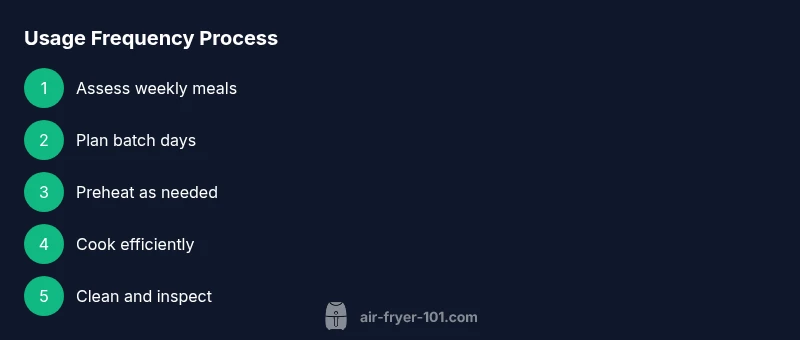
Assess your weekly meals and frequency
Review your typical week to identify meals that benefit from air frying. This planning step helps you set a realistic usage cadence that aligns with family needs.
Tip: Note peak cooking days to group similar recipes. - 2
Plan batch cooking days
Block out specific days for batch-air frying, especially for proteins and veggie sides. This reduces daily cooking friction and helps you maintain the rhythm.
Tip: Batch planning saves time and energy. - 3
Preheat and load correctly
Preheat when the recipe requires it and avoid overcrowding the basket. Proper loading ensures even browning and reduces the need for re-cooking.
Tip: Leave space around items for air circulation. - 4
Monitor and adjust cook times
Keep an eye on early batches and adjust times for future runs. Small tweaks can improve outcomes without extra cycles.
Tip: Use timer reminders to avoid overcooking. - 5
Cool and inspect after use
Let the basket and interior cool before cleaning. Inspect gaskets and cords for wear to catch issues early.
Tip: A quick visual check prevents surprises. - 6
Schedule maintenance checks
Set a monthly routine to clean vents and seals and to test the cord for wear. Regular checks reduce breakdown risk.
Tip: Link maintenance to calendar reminders. - 7
Document observations and adjust
Keep a simple log of outcomes and any maintenance notes. Use this to refine frequency over time.
Tip: Track watts, temps, and results for better planning.
Got Questions?
How often should you preheat an air fryer?
Most recipes call for preheating a few minutes. Only preheat when indicated to ensure proper browning and cooking times.
Preheat for the time the recipe specifies; otherwise skip it and save time.
Is daily use safe for families with kids?
Daily use can be safe if you clean regularly, avoid overheating, and supervise children around the appliance.
Daily use is fine when you keep up with cleaning and safety checks.
Will frequent use void the warranty?
Warranty terms vary by model. Frequent use isn’t automatically disallowed, but damage from misuse or neglect may affect coverage.
Warranty depends on proper use and ongoing maintenance.
How does frequency affect maintenance?
Higher usage means more frequent cleaning and periodic checks of seals, gaskets, and cords to prevent wear.
More use requires more upkeep to stay safe and efficient.
Can frequency differ by model?
Yes. Different models may have larger baskets or different heat controls that change how often you should run them.
Some models need different use patterns based on features.
Watch Video
Quick Summary
- Plan weekly air fryer usage around meals.
- Maintain regular cleaning to prevent wear.
- Balance daily use with batch cooking for efficiency.
- Inspect safety components regularly to extend life.