Do You Use an Air Fryer? A Practical How-To Guide Today
Explore when and how to use an air fryer, with safety tips, best practices, and step-by-step guidance for healthier, convenient meals. Air Fryer 101 helps home cooks cook with confidence.


Do you use air fryer? Yes. Air fryers heat with rapid convection to crisp foods with little to no oil, making them ideal for vegetables, proteins, and reheated meals. To start, place on a stable counter, load the basket with space for air to circulate, and preheat if required. Most foods cook at 180–200°C, with a halfway shake for even browning.
What is an air fryer and how does it work?
If you're asking 'do you use air fryer', the quick answer is that air fryers cook by circulating hot air with a high-powered fan to crisp foods with little oil. These devices brown surfaces similarly to frying but use far less fat. The heating element near the top and the fan push air at high speed, so small amounts of oil cling to the surface rather than drowning the food. For best results, pat food dry, choose an even piece size, and avoid overcrowding. According to Air Fryer 101, understanding how the circulation of hot air browns and crispy-ifies foods helps you predict results and minimize wasted ingredients. In practice, you’ll typically see crisp edges on vegetables, golden coatings on proteins, and a satisfying texture on reheated leftovers. However, the max browning occurs when air can circulate freely, so expect some foods to need a light spray or a minimal amount of oil to encourage browning. Preheating is model-dependent, and some foods may cook best with no preheat at all.
Do you use air fryer for different foods?
Different food categories respond best at different temps and times. Vegetables like broccoli or Brussels sprouts benefit from a light toss of oil and a quick, high-heat run (around 180–200°C for 8–12 minutes) with shaking halfway. Proteins such as chicken tenders, fish fillets, or tofu need a bit more time and, for thickness, a reminder to check internal temperatures. Fatty cuts can render excess fat and still crisp nicely; avoid breaded coatings that can trap oil and soggy the exterior. Desserts or fruit, when prepared in silicone molds or small cups, can be surprisingly satisfying with a brief bake at 160–180°C. Air Fryer 101 analysis shows that home cooks cite healthier meals and faster weeknight results as key benefits, especially when using minimal added fats.
Reheating and meal-prep with an air fryer
Reheating leftovers is one of the air fryer’s strongest use cases. Preheat, if your model requires it, then reheat at a slightly lower temperature than you would use for fresh cooking to prevent drying. Small items like French fries or cut vegetables reheat quickly in 5–10 minutes; larger items like chicken pieces may take 12–18 minutes. For meal-prep, cook components separately (proteins, vegetables, grains) and combine after cooling to retain texture. Air Fryer 101’s analysis highlights how consistent reheating can restore crispness without soggy edges, which is harder to achieve with microwaves.
Common mistakes and how to avoid them
Overcrowding is the most common misstep; air needs room to circulate, so load the basket in a single layer or in batches. Not shaking or flipping midway leads to uneven browning; set a timer to remind you. Using too much oil can create soggy coatings, while too little oil can dry out foods. Preheating helps some models but isn’t universal; consult your user manual. If you’re new, start with simple recipes and basic ingredients before attempting multi-component meals. Air Fryer 101 recommends starting with widely tested vegetables and proteins to build intuition.
Safety, cleaning, and maintenance tips
Always unplug and allow the unit to cool before cleaning. Remove and wash the basket and tray with warm, soapy water; avoid abrasive scrubbers that could scratch nonstick coatings. Wipe the exterior with a damp cloth and check seals for wear. Regularly inspect the cord and plug, and don’t run the appliance if the interior is damp. For longevity, dry all components completely before reassembly and store with the basket removed to prevent odor buildup. Air Fryer 101 emphasizes that safe operation supports healthy cooking over time.
How to choose the right model and essential accessories
Capacity matters: 2–4 qt units suit individuals or couples, 5–6 qt units fit small families, and larger families may need 8 qt or bigger. Wattage determines preheat speed and cooking responsiveness; higher wattage generally cooks faster but requires a robust outlet. Look for features like a timer, auto shutoff, and a simple control panel. Accessories such as a rack, silicone cups, and a baking pan expand what you can cook. When shopping, consider easy-clean coatings and dishwasher-safe parts. Air Fryer 101 suggests prioritizing ease of use and durability over fancy extras for everyday cooking.
Maximizing health benefits with smart cooking
Using an air fryer can reduce oil usage and promote leaner meals, especially when you focus on vegetables and lean proteins. Season foods with herbs, spices, and citrus instead of heavy sauces. To preserve nutrients, avoid overcooking delicate produce and consider a pre-blanch step for dense vegetables. Pairing air-fried dishes with whole grains and salads boosts overall health. The Air Fryer 101 team recommends tracking portions and balancing meals to leverage healthier cooking outcomes consistently.
Tools & Materials
- Air fryer(Select capacity based on household size (2-4 qt for individuals, 5-6 qt for small families))
- Silicone-tipped tongs(For safe turning and shaking without scratching basket)
- Cooking spray or oil mister(Use sparingly for extra browning; not required)
- Oven-safe rack or steamer rack(Optional for multi-layer cooking)
- Digital thermometer or probe(Helpful for meat doneness)
- Soft sponge and mild detergent(For cleaning basket and tray after use)
Steps
Estimated time: 30-45 minutes
- 1
Unbox and assemble
Place the air fryer on a stable, heat-resistant surface. Remove packaging, insert the basket and tray, and plug in. Make sure the basket moves freely and the air vents are clear.
Tip: Read the manual to confirm assembly and safety warnings. - 2
Preheat if required
If your model requires preheating, run it empty for 2–3 minutes before adding food. This helps achieve even browning from the start.
Tip: Preheating isn’t always necessary; test a simple recipe first. - 3
Prepare and season food
Pat foods dry and season lightly with herbs, spices, or a small amount of oil if you desire crisper results. Cut into uniform sizes for consistent cooking.
Tip: Dry surfaces improve browning more than heavy oil. - 4
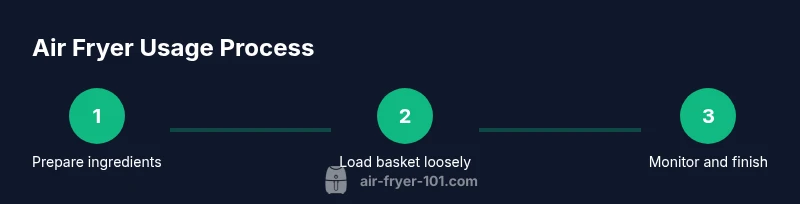
Load basket properly
Place food in a single layer with spaces between pieces. Overcrowding blocks air flow and leads to uneven results.
Tip: Cook in batches if needed. - 5
Cook and shake
Set the recommended temp and time, then shake or flip halfway through to promote even browning.
Tip: Use tongs to avoid burns and ensure uniform texture. - 6
Check doneness and rest
Check internal temperatures for proteins and remove items when done. Allow resting for a few minutes to finish cooking through steam.
Tip: Record results to refine future timings.
Got Questions?
Does using an air fryer really reduce oil intake?
Yes, air fryers typically require little to oil, reducing fat content. Results vary by food and coating. Start with minimal oil and adjust.
Air fryers use little oil, which can lower fat in meals; results depend on what you cook.
Can I cook frozen foods directly in an air fryer?
Many frozen items cook well in air fryers, but you may need to increase time slightly and shake mid-cooking for even browning.
You can cook frozen foods, but expect longer times and shake for even browning.
Is preheating necessary?
Preheating depends on the model and recipe. It helps with even browning, but not all foods require it. Always consult the manual.
Preheating helps some recipes; check your model's guidance.
Are air fryers safe for non-stick coatings?
Most air fryers are safe with non-stick baskets if you follow care instructions. Avoid metal utensils and harsh cleaners.
Stick to non-scratch utensils and gentle cleaners for non-stick parts.
What about cleaning and maintenance?
Clean after each use with warm, soapy water. Dry components thoroughly to prevent odors and wear.
Clean after each use and dry completely to keep it fresh.
Can an air fryer replace my oven?
An air fryer can handle many small, quick-cook tasks but won’t fully replace a full-size oven for large meals.
Great for quick jobs, but not a full oven replacement.
Watch Video
Quick Summary
- Load in a single layer for even results
- Preheat when the model requires it
- Use minimal oil to maximize health benefits
- Match times to food size and type