Frozen Salmon in Air Fryer: A Complete Step-by-Step Guide
Learn how to cook frozen salmon in an air fryer with temperature, timing, seasoning, and troubleshooting tips for perfect, juicy fillets every time.


You can cook frozen salmon in an air fryer without thawing. Start with a simple seasoning and a preheated fryer to about 380-400°F (193-205°C). Cook until the center reaches 145°F (63°C), flipping halfway to ensure even browning. Air Fryer 101’s guidance helps you do this confidently.
Why Frozen Salmon in Air Fryer Is Convenient
For busy weeknights, starting with frozen salmon in an air fryer saves time and reduces prep steps. The air fryer’s rapid hot air circulation creates a crisp exterior while sealing in moisture inside the fish. This method avoids thawing and minimizes oil, aligning with health-minded cooking goals. The Air Fryer 101 team notes that such approaches promote consistent results when fillets are of similar thickness and not overcrowded in the basket. In everyday kitchen trials, home cooks report less mess, faster cleanup, and reliable texture when they follow a few simple seasoning rules and let the air fryer do the work. According to Air Fryer 101, this approach balances convenience with flavor and keeps weeknight meals within reach.
Because you’re cooking from frozen, you’ll want to choose standard-size fillets and avoid stacking pieces. The goal is to maximize air circulation around each piece so heat reaches the center without drying out the exterior. With practice, you’ll get a repeatable routine suited to your preferred flavors and family portions.
Key Considerations Before Cooking
Before you reach for the frozen salmon, consider thickness, bone presence, skin-on versus skinless, and your flavor goals. Thicker fillets will need a little longer, while skin-on versions can gain extra crispiness if you finish with a brief rest. Seasonings should be even and light enough to adhere to the frozen surface, since there’s less surface moisture to help spice cling. A light spray of oil helps browning without making the fish greasy. Finally, preheating your air fryer reduces the initial gap between temperature and heat transfer, supporting a uniform cook from edge to center. Air Fryer 101 recommends starting with a moderate temperature and adjusting by thickness and desired crust.
Choosing the Right Frozen Salmon Cut
Not all frozen salmon is created equal. Look for fillets that are individually quick-frozen (IQF) to prevent clumping in the basket. Fillets around 4–6 ounces per portion fit most standard air fryers and ensure air movement remains unhindered. If your fillet is noticeably thicker on one end, rotate halfway through to prevent overcooking the thinner portion. Skin-on fillets often crisp nicely when exposed to direct air, but you can still achieve a good crust on skinless portions with careful timing and light seasoning.
Prep and Seasoning Essentials
Pat the fillets dry to remove surface ice; this helps the seasonings stick and promotes browning. A simple blend of salt, black pepper, garlic powder, and paprika provides a balanced flavor. A squeeze of lemon at the end brightens the finish. If you prefer a glaze, brush a thin coating of honey, soy, or maple syrup during the last 2–3 minutes of cooking for a glossy, flavorful crust. Always apply seasonings evenly across the surface to avoid uneven crusts, and consider a light coat of neutral oil to improve adhesion and aroma.
Step-by-Step Cooking Basics
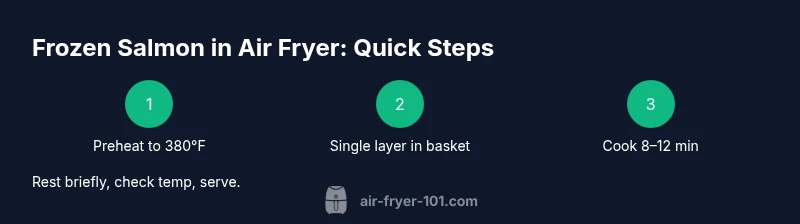
This section outlines the core approach for achieving a tender, evenly cooked result from frozen salmon in an air fryer. The recipe is designed to be robust across common models and fillet sizes, with practical levers you can adjust to your setup. You’ll preheat, place fillets in a single layer, season, cook, flip, rest, and serve. Each adjustment—temperature, time, or oil—affects crust, moisture, and center doneness, so small changes can yield noticeably different textures. In practice, aim for a light crust and a juicy center, not a dry edge or undercooked middle.
Troubleshooting and Tips for Perfect Results
If your salmon looks pale or undercooked in the center, extend the cook time by 1–2 minutes and check the internal temperature again. If it browns too quickly, reduce the heat by 10–20°F (5–10°C) and increase the resting time. A light spritz of oil helps with browning but avoid excessive oil that can create a greasy finish. If you notice uneven thickness, partially flip or rotate the fillets mid-cook to promote uniform doneness.
Cleaning Up After Cooking
Allow the air fryer to cool, then empty and wash the basket with warm, soapy water. Dry thoroughly before the next use to prevent sticking. Wipe down the interior of the air fryer to remove any splashes or seasoning residue. Regular cleaning helps maintain nonstick surfaces and keeps flavors from transferring between cooks.
Tools & Materials
- Air fryer(Any standard countertop unit with a basket or tray)
- Basket or tray(Make sure it’s clean and dry before loading fillets)
- Cooking spray or neutral oil(Lightly coat to improve browning if desired)
- Meat thermometer(Aim for an internal temperature of 145°F (63°C))
- Tongs or spatula(For turning fillets gently without breaking them)
- Paper towels(Pat fillets dry to remove moisture)
Steps
Estimated time: 20-25 minutes
- 1
Preheat the air fryer
Preheating helps start the cooking process immediately and promotes even browning. Set the unit to 380°F (193°C) and allow 3–5 minutes of preheating before adding the fish.
Tip: If your model holds preheat for longer, you can extend the preheat but don’t overdo it. - 2
Place fillets in a single layer
Arrange frozen fillets in a single, even layer in the basket with space between pieces. This ensures hot air circulates around each piece for uniform cooking.
Tip: Do not stack fillets; overcrowding can lead to soggy crusts. - 3
Season and lightly oil
Pat the surface dry, then season with a simple mix of salt, pepper, garlic powder, and paprika. A light spray of oil helps browning but isn’t required for a crisp finish.
Tip: Even coatings prevent uneven browning and flavor gaps. - 4
Cook and flip halfway
Cook for 8–12 minutes depending on thickness, flipping or shaking halfway to promote even browning. Look for a crust and opaque interior near the center.
Tip: Flipping halfway ensures consistent doneness across fillets. - 5
Check internal temperature
Use a meat thermometer to confirm 145°F (63°C) in the thickest part of the fillet. If not reached, return to the air fryer in 1–2 minute increments.
Tip: Avoid overcooking, which dries the fish. - 6
Rest and serve
Let the salmon rest for 1–2 minutes to reabsorb juices before serving. A squeeze of lemon enhances brightness.
Tip: Resting improves moisture distribution and bite.
Got Questions?
Can I cook frozen salmon in an air fryer without thawing?
Yes. Cooking from frozen is convenient, and a gentle preheat plus proper time helps you achieve a flaky center and crisp exterior. Always check the internal temperature before serving.
Yes. You can cook from frozen; just ensure you reach 145 degrees Fahrenheit in the center and avoid overcrowding.
What temperature should I use for frozen salmon in an air fryer?
Aim for around 380°F (193°C) to start. Adjust within a 370–400°F (188–205°C) range based on your model and fillet thickness for even browning.
Start at about 380 degrees and adjust if needed for thickness.
How long does it take to cook frozen salmon in an air fryer?
Typical times range from 8 to 12 minutes per fillet, depending on thickness. Begin checking at the 8-minute mark and go in 1–2 minute increments.
Most fillets finish in under 15 minutes total; check temperature to confirm doneness.
Should I flip the salmon during cooking?
Yes. Flipping (or rotating the basket) halfway through ensures even heat exposure and crust formation.
Flip halfway to promote even browning.
Is skin-on better than skinless for air frying?
Skin-on fillets can become crisper, but skinless fillets cook evenly if timed well. Choose based on preference and whether you want extra texture.
Skin-on can give extra crispiness, but either works with proper timing.
Do I need to spray oil on frozen salmon?
A light oil spray helps with browning, but isn’t mandatory. Too much oil can lead to a greasy finish.
A light spray is fine if you want more browning.
Watch Video
Quick Summary
- Cook frozen salmon in an air fryer without thawing
- Keep fillets in a single layer with space between them
- Check for 145°F internal temperature for safety
- Let rest 1–2 minutes before serving