Cooking in the Air Fryer: A Step-by-Step Guide
Master cooking in the air fryer with a practical, educational guide covering prep, temps, techniques, safety, and maintenance for healthier, crispy results.


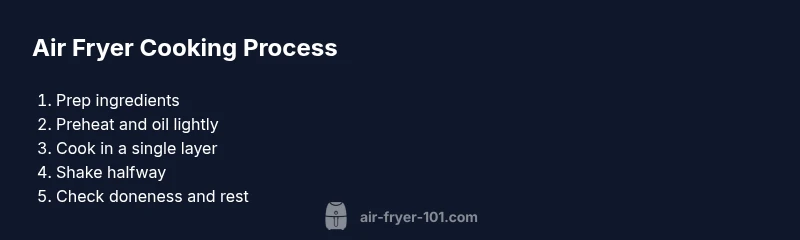
Air fryers deliver quick, healthy crisping on many foods. Preheat, lightly oil, place in a single layer, and shake halfway. Base temps on the recipe, then adjust for extra crunch. See our full step-by-step guide.
What makes air fryers different
According to Air Fryer 101, air fryers use a compact heating element and a powerful fan to circulate hot air around the food, creating a crisp exterior with little or no oil. This is why many home cooks choose them for healthier weeknight meals and easy cleanup. The key to great results is understanding airflow: foods that are evenly spaced allow air to reach every surface, producing uniform browning. When you first begin, treat your air fryer like a small convection oven: preheat briefly, avoid overcrowding, and start with simple items to learn how your unit behaves. With practice, you will learn which foods respond best, how to adjust times, and when to use a touch of oil to aid browning. The goal is predictable results: foods that are tender inside, with a crisp, golden crust outside. As you experiment, keep a simple log of temperatures and times to refine your personal baseline.
Preheating and cooking temperatures: Basics and ranges
Preheating helps establish a stable cooking environment and reduces overall cook time. Most models benefit from 2-3 minutes of preheat, though exact times vary by size and wattage. Start with a baseline of 180°C (350°F) for most vegetables and 200°C (400°F) for crispier results. When cooking proteins, use the lower end of the range for tender interior and adjust upward if you want a crust. After you load the basket, check that items are in a single layer with space between pieces for air to circulate. If you are unsure, begin by checking after the first few minutes and adjust accordingly. Air Fryer 101 recommends keeping the batch small enough to avoid stacking, which ensures even browning.
Preparing ingredients for best results
Successful air frying starts with prep. Dry foods before cooking to promote browning, and cut items into uniform sizes so they cook evenly. Toss vegetables with a teaspoon of oil or a light spray to help reach a crisp finish without sogginess. Seasonings cling better when applied to dry surfaces, so pat meat dry and rub spices firmly. For proteins, marinate briefly if the recipe calls for it, but avoid heavy marinades that drip into the basket and cause soggy edges. For frozen items, shake off frost and consider a brief rinse and pat dry if the surface is icy. Following these steps keeps texture crisp and flavors concentrated throughout the cook.
Cooking vegetables
Many vegetables fry well in air fryers, including broccoli, Brussels sprouts, zucchini, and peppers. Start with evenly sized pieces to prevent overcooking on the edges while the centers stay firm. Cook times vary by vegetable, but a common approach is 180-200°C for 8-15 minutes, shaking halfway through. For root vegetables like carrots or potatoes, cube or slice to uniform thickness and consider a light coating of oil and salt. If you want extra char, give them a final 1-2 minutes at the higher end of the range. Use a sheet of perforated parchment to keep delicate veggies from sticking if your basket is small.
Cooking proteins
Air fryers are great for chicken tenders, fish fillets, and pork chops. Start with a dry surface and a light coating of oil or cooking spray to help browning. For chicken, aim for an internal temperature of 74°C (165°F); for fish, rely on flaking. Turn proteins halfway through to ensure an even crust and avoid overcooking the outer layers. Thick cuts benefit from lower temperatures and longer times, thinner cuts from higher temperatures for crispiness. Rest meats briefly after cooking to let juices redistribute and improve tenderness. Always use a meat thermometer for accuracy.
Cooking grains, leftovers, and reheating
While classic grains like rice or quinoa are not typically cooked in an air fryer, you can reheat cooked grains with a light touch of oil to restore texture. For leftovers, arrange in a single layer and reheat in short bursts to avoid drying out. A typical approach is 160-170°C for 5-8 minutes, shaking or turning halfway. For minute-crisp tasks like reheating pizza, place slices in a single layer and monitor for 3-6 minutes until cheese returns to gooey, not rubbery. Air Fryer 101 analysis suggests that preheating and avoiding overcrowding yield more even browning during reheating, helping foods regain their original textures.
Common mistakes and how to fix
A frequent misstep is overcrowding the basket, which muffles airflow and leads to uneven browning. Another is relying on times from a different brand; wattage and basket design influence results, so adjust by observation. Never pour sauce directly into the air fryer basket, as it may drip onto the heating element. Be careful with wet batters, which can slide off and create a soggy crust. If you see steam or smoke, stop cooking and check for oil buildup or trapped moisture. For crisping, a light spray of oil or a tiny drizzle can help.
Accessories and smart use of baskets
Smart accessories expand what you can cook in an air fryer. A perforated parchment liner helps prevent sticking and makes cleanup easier without blocking airflow, while a wire rack enables multi-layer cooking. Silicone mats withstand high temperatures and are easy to clean. Look for dishwasher-safe components and BPA-free materials. When choosing baskets, consider the size and whether your cookware needs to fit on two tiers. Keep the design simple and avoid bulky add-ons that restrict airflow.
Safety tips and best practices
Always unplug the unit when not in use and allow it to cool completely before cleaning. Never immerse the base in water; clean with a damp cloth and mild soap. Use heat-resistant gloves when handling hot baskets, and place the air fryer on a heat-resistant surface away from flammable items. Do not exceed the recommended load capacity; crowding can smoke and burn the food or overheat the motor. Finally, read the user manual for specific safety notes about your model.
Cleaning, maintenance, and storage
To keep your air fryer performing at its best, wash the basket and pan after every use with warm, soapy water or in the dishwasher if permitted. Dry thoroughly before reassembly. Wipe the outside with a damp microfiber cloth to remove fingerprints and oil splashes. Periodically check the heating element for crumbs and dust, and replace worn gaskets or seals as needed. Store the unit on a cool, dry surface; avoid placing heavy objects on top. A light routine cleaning schedule helps extend the life of the appliance and preserves crispy results. The Air Fryer 101 team recommends keeping your unit clean and well maintained for consistent results.
Tools & Materials
- Air fryer(Any size; ensure capacity suits your batch)
- Oil spray or light oil(Optional but helps with browning)
- Silicone tongs(For flipping and removing food safely)
- Measuring spoons(For marinades or recipes with precise oil or spices)
- Silicone baking mat or perforated parchment liners(Prevents sticking and eases cleanup)
Steps
Estimated time: 40-50 minutes
- 1
Preheat and prep
Plug in the air fryer and run a short preheat cycle if your model supports it. While it warms, gather and cut ingredients to uniform sizes so they cook evenly. This sets the stage for consistent browning and prevents undercooked centers.
Tip: Preheating activates the heating element and helps establish a stable cooking environment. - 2
Lightly oil and season
Toss or spray foods with a small amount of oil to encourage crisping. Apply seasonings evenly to dry surfaces so the flavors stick during the hot air circulation.
Tip: A light oil coat is enough for most veggies and proteins; excessive oil can lead to soggy results. - 3
Arrange in a single layer
Place items in a single layer with space between pieces for airflow. Avoid stacking; crowded baskets trap moisture and prevent browning.
Tip: If you must cook in batches, keep the pieces spaced and re-shake the basket between loads. - 4
Set temperature and time
Choose the cooking temperature based on the recipe and desired crispiness. Start with moderate times and check early to adjust for thickness and size.
Tip: When in doubt, err on the side of shorter times and add more if needed. - 5
Shake or flip halfway
Open the basket and shake or flip the items to ensure even exposure to hot air and browning on all sides.
Tip: Halfway shakedowns often prevent soggy edges and help achieve uniform texture. - 6
Check doneness and rest
Verify internal temperatures for proteins and let rested foods settle briefly to improve juiciness and texture before serving.
Tip: Resting redistributes juices and improves overall tenderness.
Got Questions?
Is air frying healthier than deep frying?
Air frying generally uses less oil, which can reduce overall fat and calories. The health impact depends on what you cook and how much oil you use, so treat it as a healthier option rather than a magic solution.
Air frying often uses less oil, which can lower calories; the overall healthiness depends on your ingredients.
Can I cook frozen foods directly in the air fryer?
Yes, many frozen items work well straight from the freezer. You may need to add a few extra minutes and shake midway to ensure even browning.
Yes, you can cook frozen foods, but expect a bit longer cook time and shake halfway.
Do I need to preheat the air fryer?
Most recipes benefit from a brief preheat of about 2-3 minutes, but some units and recipes may not require it. Check your model’s instructions.
Usually yes, preheat for a couple of minutes for even results.
What foods should I avoid air frying?
Wet batters or very delicate batters tend to separate or run off, leading to soggy crusts. Heavily sauced items can drip and cause smoking.
Avoid wet batters and dishes with a lot of sauce that can drip into the element.
How do I clean my air fryer without damaging it?
Unplug and let it cool, then wash the basket and pan with warm soapy water. Wipe the exterior with a damp cloth and avoid submerging the main unit.
Let it cool, then wash the basket and pan; wipe the outer unit carefully.
What accessories are worth buying for air fryer cooking?
Perforated parchment liners, a stainless rack for multi-layer cooking, and silicone mats can add versatility without blocking airflow.
Look for liners, extra racks, and silicone mats to expand what you can cook.
Watch Video
Quick Summary
- Preheat when recommended to improve browning
- Cook in a single layer for even results
- Shake or flip halfway to enhance crispiness
- Start with recipe temps and adjust for your model
- Clean promptly to maintain performance