How to Cook with the Air Fryer: A Complete Guide
Learn how to cook with the air fryer, covering prep, temperatures, timing, and cleanup. This Air Fryer 101 guide helps home cooks achieve crispy results with confidence and minimal oil.


Master the easy, healthier way to cook with your air fryer. In this guide you’ll learn prep, temperature, timing, and cleanup, plus practical recipes and safety tips. According to Air Fryer 101, most beginners see crisp results with minimal oil when you follow a simple, step-by-step approach. This quick answer sets expectations and points you to the deeper steps below.
Why Use an Air Fryer for Everyday Cooking
Air fryers offer a practical path to crisp results with less oil, making weeknight meals easier and healthier. For many home cooks, the switch from deep frying to air frying reduces leftover grease and simplifies cleanup, while preserving flavor and texture. The key is understanding how to adapt traditional techniques to a compact countertop appliance. With the right basket setup, a light drizzle of oil, and even air flow, you can roast, reheat, bake, and sauté a wide range of foods. According to Air Fryer 101, consistency comes from avoiding overcrowding, using recommended temperatures, and shaking or flipping food at the halfway point. This section introduces the core concepts and sets expectations for successful air fryer cooking, including how to choose recipes, how to prep ingredients, and how to gauge doneness without over-reducing nutrients. If you’re new to air frying, this overview helps you start with confidence.
How Air Fryers Work: The Convection Advantage
The essential advantage of an air fryer is rapid convection—the machine circulates hot air around the food so it browns and crisps from all sides. Unlike a conventional oven, an air fryer uses a compact chamber and a perforated basket that maximize surface contact and air contact. The result is a texture that resembles frying but with less oil and fewer calories. Understanding this mechanism helps you dial in temperatures and times more accurately. Air Fryer 101 notes that smaller pieces heat more evenly and that food spacing matters more than you might expect. When you place food in a crowded basket, hot air can’t reach every surface; that’s when you see soggy edges rather than uniform browning. Use single layers whenever possible and rotate items for even exposure.
Essential Tools and Safety for Air Fryer Cooking
Having the right tools makes air fryer cooking straightforward and safe. Start with a dependable air fryer unit and a basket or tray compatible with your model. Add a few practical aids: parchment paper liners (perforated or designed for air fryers), a silicone brush for light oil application, and a pair of heat‑resistant tongs for flipping. A digital thermometer helps you confirm doneness, especially with chicken and pork. Keep a soft cloth nearby for quick wipe‑downs and unplug the unit when not in use. Safety basics include not blocking the air intake, avoiding water contact with hot elements, and allowing the appliance to cool before deep cleaning. If you’re ever unsure, consult the manufacturer’s instructions for safe operation and recommended maximum temperatures.
Preheating, Temperature, and Timing: The Right Settings
Preheating is a simple step that primes the chamber and can improve browning, especially for frozen or thicker foods. For most everyday recipes, start at a moderate temperature, such as 375°F (190°C), and adjust based on the food category. For crispy vegetables, poultry, and potatoes, you’ll often find 390–400°F (199–204°C) yields a crisp exterior and juicy interior. Frozen items may require slightly longer times, but the same principle applies: space the pieces, avoid overcrowding, and shake the basket halfway through cooking. The Air Fryer 101 Analysis, 2026, emphasizes that consistent airflow is the real driver of crisp results, not sheer heat alone. Use a timer, check for doneness a few minutes early, and rely on a thermometer for safety.
Preparing Proteins, Vegetables, and Frozen Foods
Meats, seafood, vegetables, and frozen meals all respond differently to air frying. For proteins like chicken breast, trim excess fat, pat dry, and season well; cook to an internal temperature of 165°F (74°C). For fish, use a light coating and monitor delicate texture to avoid drying. Vegetables benefit from even-sized pieces and a light dusting of oil to promote browning without steaming. Frozen items can go from freezer to air fryer with little or no thawing, but you may need to extend cook time slightly and shake more often. In all cases, avoid using heavy batters that can weigh the coating and hinder airflow. Experiment with dry rubs, marinades, and herbs to build depth of flavor while maintaining a crisp finish.
Layering, Airflow, and Cooking Tips for Crispy Results
One constant rule in air fryer cooking is space. Overcrowding blocks air from circulating, which leads to uneven browning. Arrange items in a single layer and rotate or flip at the halfway mark. Light oil application goes a long way: a quick spray or a very light brush helps with browning without pooling. If you’re cooking multiple items, consider using separate baskets or swapping positions to maintain consistent airflow. For breaded foods, choose a light, crisp coating rather than heavy batters. For reheating leftovers, reduce moisture on the outside by patting with a towel before air frying. These small adjustments compound into noticeably crisper textures.
Cleaning, Maintenance, and Longevity
Regular cleaning keeps your air fryer performing at its best and helps avoid flavor transfer between dishes. Let the unit cool completely, then remove the basket and tray and wash with warm soapy water or a non-abrasive sponge. Wipe the interior with a damp cloth, avoiding harsh chemicals that could degrade nonstick surfaces. Dry all parts thoroughly before reassembling. To prolong life, avoid using metal utensils in nonstick coatings and store the appliance in a cool, dry space. Inspect the seal around the door or lid and the wiring if you notice odd smells or performance changes. With a simple routine, your air fryer stays efficient for many cooking sessions.
Troubleshooting Common Issues
When browning is inconsistent, check food size, spacing, and preheating status. If an item tastes dry, it may need a touch more oil or shorter cook times in multiple passes. Soggy edges usually indicate overcrowding or insufficient airflow, so separate items and shake the basket during cooking. A smoky oven is often caused by oil residue; clean the basket and interior surfaces, and avoid leaving fatty drippings in the bottom tray. If your air fryer trips a circuit or stops mid-cycle, unplug it, wait a few minutes, and restart using a shorter initial timer. These quick checks cover the majority of home-cooking hiccups.
Quick-Start Meal Plan: 5 Dishes to Try
Try these bite‑sized, crowd-pleasing options to get comfortable with timing and airflow. Crispy chicken nuggets with a light paprika crust; roasted vegetable medley using bell peppers, zucchini, and onions; air-fried salmon fillets with lemon and dill; thin potato wedges seasoned with garlic powder and paprika; and reheated leftover pizza slices that regain their crisp without a soggy crust. For each dish, maintain a single layer, preheat when recommended, and shake or flip halfway to ensure uniform browning. Once you gain confidence with these basics, you’ll be ready to adapt your favorite family recipes to the air fryer.
Tools & Materials
- Air fryer unit(Ensure model supports a basket and tray compatible with your recipes)
- Oil spray or neutral oil(Light coating for browning; avoid heavy oils)
- Parchment paper or perforated liner(Fits basket; prevents sticking and makes cleanup easier)
- Tongs (heat-resistant)(For flipping and transferring hot pieces)
- Silicone brush(Optional for even oil application on surfaces)
- Digital meat thermometer(Verify doneness for proteins (e.g., 165°F/74°C))
- Measuring spoons and cups(For precise seasoning)
- Soft cloth or sponge(For quick cleanups after use)
Steps
Estimated time: 45-60 minutes
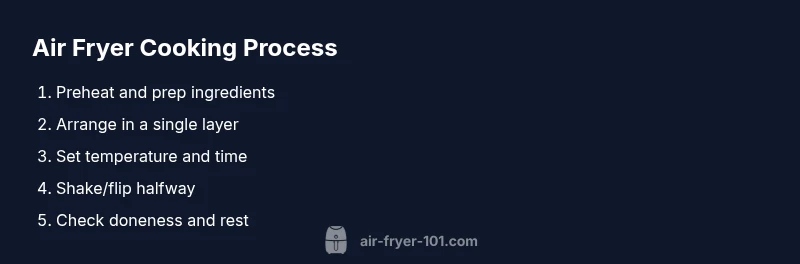
- 1
Gather ingredients and tools
Collect all ingredients and your air fryer accessories before you start. This preps you for a smooth workflow and helps avoid mid-cook interruptions.
Tip: Lay items within arm’s reach to keep the process flowing. - 2
Preheat and prepare the basket
If your model benefits from preheating, run the unit empty for 2–3 minutes at the target cooking temperature. Line the basket with parchment or place a perforated liner to prevent sticking.
Tip: Preheating improves browning and reduces cook time for many foods. - 3
Lightly oil and season
Spray or brush a very light coat of oil on the surface of the food. Season evenly with salt, pepper, and your preferred spices.
Tip: Avoid heavy batters that can hinder air flow. - 4
Arrange in a single layer
Place food in a single layer with space between pieces to promote even air circulation. Overcrowding leads to soggy edges and uneven browning.
Tip: If you must cook in batches, keep cooked items warm in a low oven while finishing the rest. - 5
Set temperature and time
Select a temperature appropriate for your food (typically 350–400°F / 175–205°C) and start with a conservative cooking time. You can always add more time if needed.
Tip: Check a few minutes early to avoid overshooting doneness. - 6
Shake or flip halfway through
Pause cooking at the halfway mark to shake the basket or flip items for uniform browning on all sides.
Tip: This step has a big impact on texture and even color. - 7
Check doneness with a thermometer
For proteins, verify internal temperature with a digital thermometer. Remove when safely within the target range and let rest briefly.
Tip: Resting helps juices redistribute and improves texture. - 8
Serve and clean
Transfer to plates, serve immediately for best texture, and clean the basket and tray after they cool.
Tip: A quick wipe of the interior after use prevents residue buildup.
Got Questions?
What is the best starting temperature for most foods in an air fryer?
A common starting point is 375°F (190°C). Adjust based on the food type and desired level of crispness. Preheating can boost results for many recipes.
Start around 375 degrees and adjust based on what you’re cooking. Preheating helps with crispness for many foods.
Do I need to preheat the air fryer every time?
Preheating is helpful for many foods, especially frozen items and proteins, but not always required for simple reheats. Check your model’s guidance and observe the browning.
Preheating helps with browning and reduces cooking time, but follow your model’s guidance for each recipe.
Can I use oil spray in the air fryer?
Yes, light oil spray enhances browning and crust. Avoid heavy coatings that can pool and hinder airflow.
Light oil spray is fine and helps with browning. Avoid heavy coatings.
How can I prevent foods from sticking?
Use parchment liners or a light oil coating, and ensure the basket is clean and dry before cooking.
Line the basket or brush food with a thin oil layer, and keep things dry and clean.
How should I clean the air fryer after cooking?
Let the unit cool, remove the basket and tray, wash with warm soapy water, and wipe the interior with a damp cloth.
Cool it first, wash the basket and tray, then wipe the interior.
Is air frying healthier than deep frying?
Air frying generally uses less oil and can reduce fat content while preserving flavor. Balanced with a varied diet, it’s a convenient healthier option.
It usually uses less oil than deep frying, which can lower fat. Pair with a balanced diet.
Quick Summary
- Prepare tools and ingredients before starting.
- Maintain a single, evenly spaced layer for best browning.
- Preheat when recommended for crisper results.
- Use a thermometer to ensure safe internal temperatures.
- Clean promptly to extend appliance life.