Air Fryer Salmon Settings: A Complete How-To Guide
Learn precise air fryer settings for salmon, including temperature, timing by thickness, preheating, and finishing tips to achieve moist, flaky results without drying out the fish.


You will learn how to cook salmon in an air fryer with precise temperature and time guidelines tailored to thickness and finish. This guide covers prep, preheating, seasoning, rack placement, and resting to ensure moist, flaky salmon every time. Key requirements include a clean fillet, light oil or spray, and a kitchen thermometer for best accuracy.
Why air fryer settings for salmon matter
The exact temperature, time, and prep steps matter because salmon is lean and cooks quickly. Tiny changes in heat or moisture can swing from a juicy, buttery fillet to a dry slice. According to Air Fryer 101, consistency comes from controlling three levers: the fish’s thickness, how you prep it (pat dry, oil lightly, season evenly), and how you monitor doneness. By understanding these levers, home cooks can reproduce the same results across different sessions and models.
Understanding thickness, fillet type, and how they drive timing
Salmon thickness is the primary driver of cook time. A 1-inch fillet will behave differently from a 1.5- to 2-inch portion, and skin-on can help prevent moisture loss while aiding browning. The air fryer’s rapid hot air circulates around the fillet, so larger thickness requires either more time or a higher heat for a quick brown without overcooking the center. For best outcomes, measure thickness at the thickest point and note whether the skin is present or removed to adjust time accordingly.
Prepping salmon for air fryer: pat dry, oil, season
Begin with pat-drying the fillets until moistness is minimized; this aids browning and reduces steaming. Lightly coat the surface with oil or spray—this helps with crisping and even color. Season generously but evenly with salt, pepper, and your preferred herbs or spices. If you like a glaze, apply it during the last minute of cooking to avoid burning. Avoid overcrowding—leave space for air to circulate so every filet cooks evenly.
Core settings: temperature and time for different results
For most home cooks, a starting point is around 400°F with 7–9 minutes for 1-inch-thick fillets. For thicker cuts, increase time in small increments (1–2 minutes) or raise the temperature slightly if the outer layer browns too slowly. If you prefer ultra-browned edges, you can extend time by 1–2 minutes, but monitor closely to avoid drying the center. The goal is a barely opaque center with a gentle flake.
How preheating and rack placement affect browning
Preheating the air fryer helps achieve crisp edges faster by starting the cooking environment at near-operational temperature. Place fillets in a single layer with space between pieces; using a perforated liner or parchment helps prevent sticking without blocking airflow. Avoid stacking or overlapping—the efficient air flow is what yields even browning and a consistent texture from edge to center.
Cooking by skin-on vs skinless: tips for each
Skin-on salmon benefits from the added protection against overcooking and superior browning on the exposed flesh. Flip only if your model’s basket cooks unevenly, otherwise you can finish skin-side up to maximize crispness. Skinless fillets may brown more quickly, so start with the lower end of time estimates and monitor closely. A light brush of oil on the skin or surface can help crisp but should be evenly distributed.
Finishing touches: resting, saucing, and serving
After cooking, let the salmon rest for a couple of minutes to allow juices to redistribute. A quick brush of lemon juice, a pat of butter, or a drizzle of olive oil can brighten flavors. Serve with quick sides like roasted vegetables or a fresh salad. If you plan to sauce, do so after resting to preserve texture and moisture.
Troubleshooting: common issues and quick fixes
If the fish looks dry, reduce time slightly next run or lower the temperature a bit and add a light glaze. If the surface isn’t browning, increase surface oil or preheat longer. If fillets stick, pre-dry thoroughly and use parchment or a light non-stick spray. Always avoid overcrowding to keep air circulating and cook evenly.
Flavor ideas and seasoning profiles for variety
Experiment with different herb blends, citrus zest, and spice rubs. A garlic-herb crust, a chili-lime twist, or a honey-soy glaze can elevate the dish and complement greens or grains. Keep balance in mind: a touch of acidity from lemon or vinegar can brighten the fish without masking its natural richness.
Safety, cleaning, and maintaining your air fryer
Let the air fryer cool before cleaning. Remove the basket, wash with warm soapy water, and dry completely to avoid residue buildup. Check seals and gaskets regularly for wear. Keeping the interior clean maintains airflow and consistent results for salmon and other foods.
Quick reference cheat sheet: timing by thickness and finish
Create a simple chart in your kitchen: thickness (1 inch, 1.25 inch, 1.5 inch) vs. finish (skin-on, skinless) with suggested temps and times. Use a thermometer to confirm doneness and adjust for your preferred level of doneness. This mental model helps you reproduce results across different days and fillet sizes.
Tools & Materials
- Air fryer (3-6 quart recommended)(Choose a model with a good fan and consistent heat.)
- Salmon fillets (skin-on or skinless, 4-6 oz each)(Pat dry before cooking.)
- Cooking oil or spray(Use a light coating to aid browning.)
- Digital meat thermometer(Verify internal doneness without cutting into the fish.)
- Tongs or spatula(Gentle turning without breaking the fillet.)
- Parchment liners or non-stick sheet(Helps prevent sticking and makes cleanup easier.)
- Salt, pepper, and optional seasonings(Season evenly for best flavor.)
Steps
Estimated time: 15-25 minutes
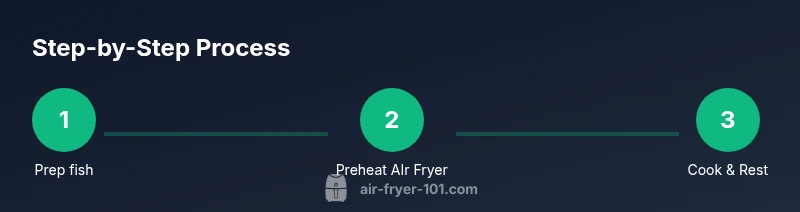
- 1
Choose and inspect salmon
Select fillets that are uniform in thickness. Check for any off smells or discoloration and trim as needed. Pat dry thoroughly to remove surface moisture.
Tip: Moisture on the surface can hinder browning; dry well for better crust. - 2
Preheat the air fryer
Preheating helps ensure the surface sizzles as soon as the fish enters the basket. If your model doesn’t require preheating, skip this step and proceed with caution.
Tip: Preheating time varies by model; 2-3 minutes is usually sufficient. - 3
Lightly oil and season
Brush or spray a thin layer of oil on both sides. Season generously with salt, pepper, and any preferred herbs. Don’t over-season—salts can draw moisture if used excessively.
Tip: Seasoning early allows the salt to draw moisture evenly, enhancing flavor. - 4
Arrange in a single layer
Place fillets in a single layer with space between them to promote air circulation. Use parchment if sticking is a concern.
Tip: Avoid overlapping to ensure even browning. - 5
Set temperature and time
Choose a starting point around 400°F and a baseline of 7–9 minutes for 1-inch fillets. Thicker pieces may need more time; adjust in small increments.
Tip: If unsure, start with less time and check doneness early. - 6
Flip if needed
Turn fillets halfway through cooking only if your air fryer struggles with even browning. Some models may finish well without flipping.
Tip: Use a gentle motion to avoid tearing the flesh. - 7
Check for doneness
Use a thermometer or visual cues: opaque color and flaking edges indicate doneness. Internal temperature varies by preferred doneness.
Tip: Aim for a slight touch of translucence in the center for medium texture. - 8
Rest briefly
Let the salmon rest for a couple minutes after cooking. Resting helps redistribute juices and keeps the center moist.
Tip: Resting is when the carryover cooking finishes the process gently. - 9
Flavor finish and serve
Add a finishing drizzle or citrus zest, then plate with your chosen sides. Fresh herbs can elevate the dish without overpowering the fish.
Tip: A squeeze of lemon brightens the natural richness. - 10
Clean up the air fryer
Wash the basket and tray after cooling. Wipe the interior if needed to remove any oil residue and keep airflow clean for next use.
Tip: Regular cleaning prevents sticking and odor transfer. - 11
Experiment and log results
Note the thickness, time, and temperature that produced your best result. Create a personal reference chart for quick cooking later.
Tip: Keep a small notebook or digital note for quick recipe tweaks.
Got Questions?
Can I cook frozen salmon in an air fryer?
Yes, you can cook frozen salmon in an air fryer, but expect longer cook times and a firmer texture. Thawing first is preferred for even cooking, but you can improvise by increasing time slightly and monitoring doneness.
Yes, you can cook frozen salmon in an air fryer, but you’ll need extra time and careful monitoring for even cooking.
Is preheating required for salmon in air fryer?
Preheating is not strictly required on all models, but it helps achieve a crisp exterior and even heat. If your oven or air fryer has fast preheat, enable it; otherwise, proceed with a shorter rest between steps.
Preheating helps browning and even cooking; use it if your model supports it.
Skin-on or skinless, which is better?
Skin-on salmon tends to stay juicier and browns nicely, acting as a natural barrier. Skinless fillets cook a bit faster and can brown quickly; adjust time accordingly.
Skin-on usually gives better texture and moisture; skinless cooks quicker, so watch the time.
What internal temperature should I target?
Doneness varies by preference, but use a thermometer to avoid overcooking. Remove from heat a little before reaching your target, as residual heat continues to cook the fish.
Use a thermometer and aim for your preferred level of doneness, accounting for carryover cooking.
Do I need to spray oil every time?
A light oil coating helps browning and prevents sticking, especially with skin-on fillets. If you’re avoiding oil, ensure your basket has a good non-stick surface and pat dry thoroughly.
A light oil helps with browning and prevents sticking; adjust if you prefer less fat.
How do I prevent overcooking thinner fillets?
For thinner fillets, reduce time by 2–3 minutes and check early. Flip only if your air fryer tends to cook unevenly, otherwise rely on shorter times for even results.
Thin fillets cook faster; start with less time and check early.
Watch Video
Quick Summary
- Control thickness to predict cook time
- Dry surface and light oil improve browning
- Single-layer arrangement = even results
- Resting preserves moisture