Air Fryer Salmon Temperature: A Doneness Guide
Master air fryer salmon temp with a practical guide to safe internal temps, doneness targets, and timing tips. Learn measurement methods, model considerations, and troubleshooting for consistently flaky, moist salmon.


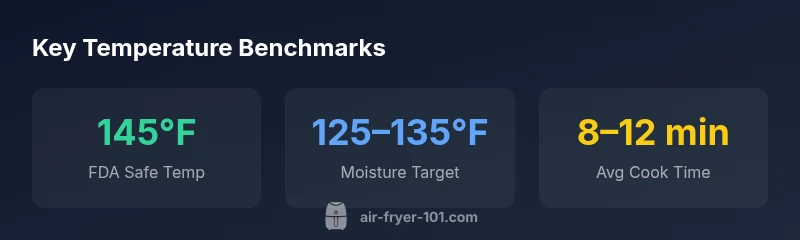
According to Air Fryer 101, mastering air fryer salmon temp starts with a safe base of 145°F internal doneness per FDA guidance, but many home cooks prefer 125–135°F for a moister center. This article explains target temps, how to monitor them, and how to adjust times for different air fryer models to achieve consistent, flaky results.
Why Temperature Matters for Air Fryer Salmon
The air fryer salmon temp is a linchpin of the final dish. Temperature, not clock time alone, governs moisture retention, crust formation, and tenderness. Air fryers heat by circulating hot air, which speeds up cooking and yields a more even doneness than traditional pan-searing. Thickness, skin presence, and any glaze or marinade all interact with heat to determine how quickly the interior reaches its peak. From a safety perspective, the FDA recommends cooking fish to an internal temperature of 145°F, but chefs and home cooks alike often experiment with lower targets for a moister center. In the context of air frying, starting at 145°F ensures safety across most fillets, while some preference-led cooks enjoy the juicier bite of 125–135°F. The practical takeaway is that you should monitor temperature with a thermometer and adjust by small increments to respect carryover and model variation.
When you factor in model differences and the variability of fillet thickness, a single cook-time can no longer be trusted across every recipe. Consider preheating only if your model calls for it, and always verify doneness with an instant-read thermometer. If you’re new to air frying salmon, begin with the FDA-based target of 145°F and then trial 125–135°F for a moister finish on thinner fillets. With consistency, you’ll learn how your specific air fryer behaves and tailor temps to your preferred texture.
notesForEditorCountFromFirstBlockToSecondBlockStripped],
bodyBlocksOutputPlaceholder
Salmon Doneness Temperature Guide (Air Fryer)
| Category | Target Temp | Notes |
|---|---|---|
| FDA Safe Target | 145°F | FDA guidance for seafood safety |
| Moisture Preference | 125–135°F | Juicier texture; chef preference |
| Higher Doneness | 140–150°F | Firmer texture; potential dryness |
Got Questions?
What is the safe internal temperature for salmon in an air fryer?
The FDA recommends cooking fish to 145°F. Use a digital thermometer to verify near the thickest part of the fillet. Times will vary with thickness and model, so monitor and adjust.
Salmon should reach 145 degrees for safety; check with a thermometer near the thickest part.
Can I cook salmon from frozen in an air fryer?
Yes, you can cook salmon from frozen in an air fryer. Increase the cook time by a few minutes and check doneness with a thermometer before serving.
Yes, you can start from frozen—just add a few extra minutes and verify doneness.
Should I preheat the air fryer for salmon?
Preheating helps achieve a quick sear and even browning. If your model requires preheating, run 2–3 minutes before adding the fillet; otherwise you can start cooking from room temperature.
Preheat for even browning if your model supports it.
How does thickness affect doneness?
Thicker fillets require more cook time. Use thickness as a guide for estimating time and always confirm with a thermometer.
Thicker pieces need more time; measure thickness and check temp.
What are tips to prevent dryness?
Pat dry, lightly oil, and avoid overcooking. Consider a glaze or marinade to add moisture and flavor.
Moisture tips: pat dry, oil lightly, don’t overcook.
“Getting the right air fryer salmon temp is the difference between a flaky fillet and a dry result. Temperature control is the simplest predictor of success.”
Quick Summary
- Target safe temps first: aim for 145°F (FDA guidance)
- Check doneness early with a thermometer
- Adjust by fillet thickness and air fryer model
- Pat dry and lightly oil for a crisper crust
- Account for carryover cooking after resting 1–2 minutes