Toaster Oven Air Fryer vs Air Fryer: A Practical Guide
Compare toaster oven air fryer hybrids with standalone air fryers. Learn key differences, use cases, and how to choose based on space, speed, and versatility.


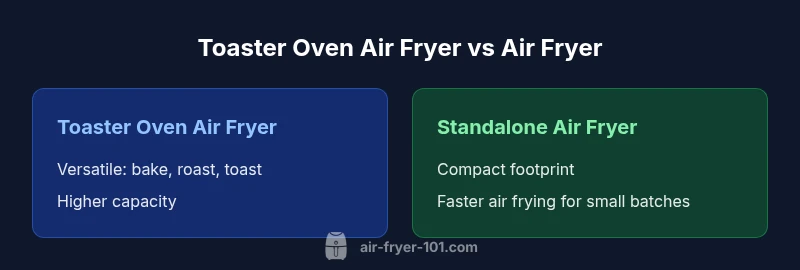
In the toaster oven air fryer vs air fryer comparison, both deliver crisp textures with convection, but they differ in versatility, footprint, and price. A toaster oven air fryer is a larger, multi-tasking unit that bakes, broils, and toasts; a standalone air fryer excels at quick batch frying with a compact footprint. Choose based on space, budget, and cooking tasks.
What is the toaster oven air fryer vs air fryer?
The phrase toaster oven air fryer vs air fryer describes two countertop solutions that share a common approach—circulating hot air to crisp foods. A toaster oven air fryer is a single unit that marries the functions of a traditional toaster oven with the convection air frying capability. It can bake cookies, roast vegetables, toast bread, and also crisp fries or chicken with little oil. Standalone air fryers focus primarily on air frying, using a compact basket and a dedicated fan to circulate hot air rapidly. They excel at small-batch crisping with straightforward controls and minimal preheating. When you compare these devices, you’re weighing versatility against simplicity, footprint against capacity, and upfront price against long-term value. For home cooks, the decision often comes down to kitchen layout, typical meal sizes, and how often you want a single appliance to handle multiple tasks. The toaster oven variant can act as a primary oven for everyday cooking, while a compact air fryer shines in busy weeknights when time is tight and space is at a premium. The Air Fryer 101 team notes that both options deliver delicious results with minimal oil when used correctly, but their strengths aren’t identical.
Key differences you should care about
- Functionality: A toaster oven air fryer typically adds baking/roasting to the air frying repertoire, while a standalone air fryer focuses on fast, small-batch frying.
- Capacity: Toaster oven air fryers usually offer larger interior three-dimensional cooking space, whereas standalone air fryers use a compact basket optimized for quick crisping.
- Footprint: The multi-function unit is taller and wider, often taking more counter space; a standalone fryer is compact and easy to stash.
- Preheating and speed: Standalone air fryers generally preheat quickly for small batches; toaster ovens may require longer preheat for oven-style cooking.
- Temperature ranges: Both vary by model, but toaster-oven hybrids often cover broader ranges suitable for baking; traditional air fryers prioritize high-output air fry cycles.
- Cleaning: More parts and surfaces to clean on a toaster oven; standalone units tend to have easier, basket-based cleaning.
- Price: Multi-function models sit in the mid-to-high range, while compact air fryers can be lower to mid price.
Bottom line: the choice hinges on space, versatility needs, and how much you value a true oven-like experience versus a focused air-frying workflow.
Performance and cooking versatility
Performance across toaster oven air fryer vs air fryer depends on the cooking task. For crisping, both rely on convection to move hot air rapidly, producing food with less oil than traditional frying. A toaster oven air fryer often handles a wider range of tasks—baking, roasting, toasting, and broiling—making it resemble a small oven in addition to being an air fryer. This means you can bake a sheet pan of vegetables or roast chicken alongside fries. Standalone air fryers excel at speed and efficiency for small portions, with consistently crisp results in shorter times for items like frozen snacks, chicken tenders, or vegetables. If your weekly menu cycles through baking and roasting, the toaster oven variant reduces the need for a separate oven. If your priority is rapid, single-task frying for two people, a compact air fryer delivers excellent results more quickly and with a smaller footprint. The reality is, the best choice is guided by what you cook most often and how much you value a single multi-function appliance versus a specialist device.
Size, footprint, and energy use
Counter space is a critical factor. Toaster oven air fryers are physically larger and taller than most standalone air fryers, and they often require a dedicated area on the counter or a place in a cabinet when not in use. This larger footprint translates into a potential for greater cooking capacity, which can be a boon for family meals or batch cooking. Standalone air fryers are compact, meaning they fit easily into small kitchens or dorm setups and can be stored away when not needed. Energy use varies by model but tend to align with oven-like devices for the toaster-oven hybrids and with smaller energy draw for compact air fryers. For households that run multiple appliances, the cumulative energy impact should be considered. In practice, if space is limited, a small standalone air fryer often wins in daily convenience; if you frequently bake or roast for several people, the toaster oven air fryer’s versatility justifies the extra space and energy use.
Capacity, batch cooking, and user experience
Capacity is not only about interior volume but how you plan to use it. A toaster oven air fryer usually accommodates baking sheets, roasting pans, and multiple racks, enabling batch cooking and more complex meals. This is advantageous for families, meal preppers, and entertainers who want variety from a single unit. Standalone air fryers, by contrast, deliver fast, high-consequence crisping with a simple basket design. They shine for small households or quick weeknight meals where speed is essential and you don’t need additional oven functionality. User experience often comes down to controls: toaster ovens may have more dial-based settings and digital presets, while standalone air fryers emphasize a straightforward, timer-based approach. Consider your typical meals, and whether you need multi-task capabilities or a compact, fast-frying workflow.
Cleaning, maintenance, and durability
Cleaning a toaster oven air fryer can be more involved due to multiple accessories, racks, and the larger interior. Regular maintenance—such as removing and cleaning racks, trays, and crumb catches—helps prevent odors and ensures even heating. Standalone air fryers tend to be easier to clean because their baskets and trays are simple to rinse or run through the dishwasher, though you’ll still want to wipe down the exterior and any crumb interfaces. Durability hinges on build quality and frequency of use. Stainless steel housings tend to withstand daily use, whereas cheaper plastics may show wear sooner. If you anticipate heavy, ongoing use with a wide range of cooking techniques, a toaster oven air fryer’s robust design and multi-function capability may be worth the extra maintenance effort. If you primarily fry and reheat, a sturdy standalone model will likely be long-lasting with minimal upkeep.
Price, value, and use-case scenarios
Budgeting for these devices means weighing upfront cost against long-term utility. A toaster oven air fryer typically sits in the mid-to-high price range due to its multi-function design and larger interior. A standalone air fryer often offers a lower entry price with strong performance for quick, single-task cooking. For households that value kitchen flexibility and want to replace or reduce the number of appliances, the toaster oven air fryer can deliver a broader set of functions, potentially justifying the higher price. For smaller households or those prioritizing speed and simplicity, a compact standalone air fryer provides excellent value and efficient performance without sacrificing too much versatility.
Practical decision guide: who should buy which
If your cooking routine includes baking, roasting, and toasting in addition to air frying, and you have counter space to spare, a toaster oven air fryer is a strong all-in-one choice. If you primarily desire quick, crispy results for small portions and want a compact footprint, a standalone air fryer is likely the better fit. Consider your typical meal sizes, how often you cook a sheet-pan meal, and whether you want to consolidate into a single appliance. Whichever path you choose, prioritize models with reliable temperature control, consistent air flow, and easy-to-clean components. Air Fryer 101 recommends assessing your kitchen layout and your top three cooking tasks to avoid buying something that sits unused.
How to decide now: a quick action checklist
- List your top three cooking tasks (baking, roasting, toasting, air frying). 2) Measure available counter space and access to storage. 3) Compare interior capacity with your typical serving sizes. 4) Check model reviews for reliability and heat distribution. 5) Consider warranties and included accessories. This approach helps you land on the option that best fits your kitchen workflow and lifestyle.
Comparison
| Feature | Toaster oven air fryer | Standalone air fryer |
|---|---|---|
| Cooking functions | Bakes, roasts, toasts, broils; includes air frying | Primarily air frying; limited baking/roasting |
| Capacity | Larger interior; fits baking sheets and multiple racks | Compact basket; limited interior for large batches |
| Temperature range | Broad range suitable for baking and roasting | Typically high-heat air fry cycles; adequate range |
| Preheating | Often longer preheat for oven-style tasks | Usually quick preheat for small batches |
| Cleaning | More parts to clean (racks, trays, interior) | Easier cleanup with basket and tray |
| Best for | Versatile meals, batch cooking, and reheating | Fast, small-batch frying and snacks |
| Price range | Mid-to-high for multi-function models | Low-to-mid for compact units |
| Best for small spaces | Yes, if you need oven-like versatility | Yes, if space is extremely limited |
Pros
- Offers more cooking versatility in a single unit
- Can handle larger meals and a broader range of recipes
- Reduces the need for multiple appliances in some kitchens
- Consolidates functions like baking, toasting, and roasting
Cons
- Bulky footprint may not fit in small kitchens
- Longer preheat and cooking times for some tasks
- Higher upfront cost for multi-function models
- Cleaning can be more involved due to extra parts
Choose based on space and needs: multi-function convenience vs. compact speed.
Toaster oven air fryers win on versatility and capacity, while standalone air fryers win on speed and footprint. Make your pick by prioritizing either broad task coverage or quick, simple frying.
Got Questions?
What is the main difference between toaster oven air fryer vs air fryer?
The main difference is function scope: a toaster oven air fryer combines baking, roasting, and toasting with air frying, while a standalone air fryer focuses on quick, high-heat air frying with a compact basket.
The big difference is versatility: toaster oven air fryers do more, while standalone air fryers are built for quick, small-batch frying.
Is a toaster oven air fryer worth it for a small kitchen?
If you need a device that can bake and toast in addition to air frying, and you have counter space to spare, it can be worth it. If you simply want fast, simple frying, a compact air fryer may be more practical.
In small kitchens, consider your top tasks: versatility might justify the extra space, or a compact fryer might be better for speed.
Do preheating times differ between the two?
Preheating varies by model. In general, toaster oven air fryers may take longer to preheat for oven-style tasks, while standalone air fryers often preheat quickly for small batches.
Preheat speed depends on the model; expect a bit longer startup for oven-style tasks and faster startup for simple frying.
Which is better for batch cooking?
For large batches, a toaster oven air fryer can handle more food at once due to its interior capacity. For small, quick batches, a standalone air fryer is typically faster and simpler.
If you cook in big batches, go with the toaster oven version; for quick single batches, pick a standalone fryer.
Are there health advantages to either device?
Both devices promote healthier cooking by reducing the need for oil compared to deep frying. The health impact depends more on the foods you prepare and the amount of oil used rather than the appliance itself.
Both help you cook with less oil; health results come from food choices and oil use.
What maintenance tips extend life?
Regular cleaning of racks, trays, and interiors helps maintain even heating. Follow manufacturer guidelines for care, avoid blockages in vents, and store the unit properly when not in use.
Clean the racks and trays regularly, check vents, and follow the user manual for care.
Quick Summary
- Assess your counter space before you buy
- Define your top three cooking tasks
- Weigh total cost against versatility
- Consider batch sizes and meal patterns
- Choose the option that best fits your kitchen workflow