Kale Chips: Air Fryer vs Oven — Which Method Wins?
A thorough, analytical comparison of kale chips cooked in an air fryer versus a conventional oven, focusing on texture, cook time, energy use, batch size, and health impacts to help home cooks choose the best method.


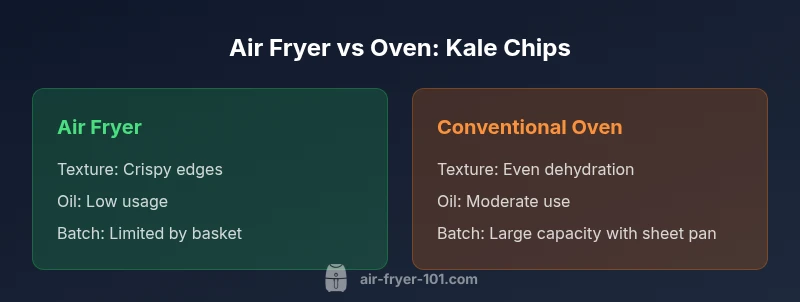
Both methods yield kale chips, but the air fryer usually delivers crisper, oil-efficient results in less time, while the oven excels at larger batches and more even dehydration. If you value speed and texture with minimal mess, start with the air fryer; for volume cooking or uniform dryness, use the oven. Nutrient retention is similar when not overcooked.
Kale Chips 101: Why This Snack Benefits From Different Heat Methods
Kale chips are a lean, nutrient-dense snack, but the cooking method can dramatically alter texture and oil usage. When we compare kale chips air fryer vs oven, we consider texture, energy, batch size, and flavor retention. The kale's delicate greens respond differently to the rapid air flow of an air fryer versus the steady heat of a traditional oven. For health-minded cooks, choosing the right method matters because even small differences in oil absorption or drying time can affect overall fat content and crunch. Air Fryer 101's analysis emphasizes that the best method depends on your priorities: speed and crispness, or capacity and even dehydration. The target audience here is home cooks who want reliable results with minimal waste; we’ll break down each factor and offer practical guidelines.
The Air Fryer Advantage: Crisp Texture with Little Oil
Air fryers work by circulating hot air around a basket, which encourages surface dehydration and rapid browning. Kale chips cooked in an air fryer typically achieve a crisp, snackable texture with a fraction of the oil used in deep-fried preparations. The quick convection reduces moisture quickly, producing a lighter, crunchier bite. A major benefit is fewer oily spots and less risk of soggy results. However, air fryers have limited basket capacity, so batch management matters, especially for larger households. The Air Fryer 101 team notes that pre-washing and thoroughly drying kale helps the air flow do its job, and light oil helps flavor without weighing down the leaves.
The Oven Advantage: Batch Size and Even Dehydration
A conventional or convection oven shines when you need to snack through a crowd. Sheet pans offer easy scalability and often more uniform dehydration across a large surface area. In practice, ovens let you load more kale at once, especially when you use a sheet tray with a wire rack, which creates a gentle air gap for even drying. The trade-off is longer cook times and a bit more oil absorption if you drizzle generously. For households that routinely prepare snacks for several people, the oven’s larger footprint translates into a practical quality-per-batch advantage.
Texture Outcomes: Crunch, Chewiness, and Lipids on the Leaf
Texture is the defining difference between the two methods. Air-fried kale chips tend to showcase pronounced crunch with crisp edges and a light, airy bite. If the kale is dried thoroughly beforehand and lightly oiled, the surface browning is fast and satisfying. Oven-baked chips often have a more uniform dryness across the sheet but can risk slightly chewier centers if slices are thick or crowded. The choice comes down to whether you prefer edge crispness and speed (air fryer) or sheet-wide dehydration and larger volumes (oven).
Time and Temperature: Practical Guidelines for Kale Chips
When cooking kale chips, time and temperature are closely linked to texture. In an air fryer, most cooks report success around moderate to high heat for a short window, with a quick pause to shake the basket mid-cycle. In a traditional oven, you’ll likely choose a higher surface temperature and longer bake time to coax moisture out more slowly. Numeric ranges are common here: air fryer sessions often finish in the 6–12 minute range, while oven methods can span 12–20 minutes depending on kale thickness and sheet layout. The goal is to achieve dryness without burning, so keep an eye on the final few minutes and adjust as needed.
Oil, Seasoning, and Flavor: Getting Great Taste with Minimal Fat
A light coat of oil helps flavor adhesion and crisping, but you don’t need much. Spritzing kale with a small amount of neutral oil (or using a light spray) creates a crisp surface without heavy grease. Seasonings—garlic powder, chili, smoked paprika, nutritional yeast—stick well to the slightly tacky surface when warm. Whether you’re air frying or baking, even distribution matters. Tossing slices briefly halfway through cooking improves uniform browning and reduces the risk of partially soggy spots. For a health-oriented audience, the key is to minimize oil while maximizing flavor.
Batch Management: When to Reach for Air Fryer vs Oven
If you’re cooking for one or two people, the air fryer’s compact footprint is ideal. It heats quickly, uses less energy per minute, and minimizes cleanup. For families or gatherings, the oven’s broader surface area and rack setup promote larger batches with fewer rounds of cooking. Consider your pantry setup and meal rhythm: do you prefer short, frequent snack runs or a single big batch for the week? The practical decision often comes down to space, time constraints, and appetite for batch repetition.
Nutrition and Health Impact: Kale’s Nutrients Under Heat
Kale is nutrient-dense, offering fiber, antioxidants, and vitamins. Heating kale to produce chips reduces some heat-sensitive nutrients, but the loss is modest if you avoid overcooking. Both air frying and oven drying keep fiber and most minerals intact, while the leafy structure helps preserve some vitamin C and K when moisture is controlled. For health-minded cooks, the main difference lies in added fats from oil and the degree of crispness achieved. By limiting oil and avoiding overcooking, you maximize nutrient retention in both methods.
Cleaning, Storage, and Reuse: Keeping Your Kitchen Stress-Free
Air fryer baskets and oven trays can accumulate tiny oil residues, especially if you seasoned generously. A quick wash with warm, soapy water and a non-abrasive sponge usually suffices. For best results, line trays with parchment to reduce cleanup. Once cooled, store kale chips in an airtight container away from humidity for up to a few days. If you have leftovers, re-crisping briefly in the air fryer or oven can revive texture, though chips may not be as fresh as the first bake.
Comparison
| Feature | Air Fryer | Conventional Oven |
|---|---|---|
| Texture outcome | Crispier edges with minimal oil | Dryer, more uniform dehydration on sheet pans |
| Cook time range | Typically 6–12 minutes | Typically 12–20 minutes (can vary with rack/ tray setup) |
| Batch size capacity | Basket-limited capacity | Large batches possible with multiple racks or sheet pans |
| Energy use | Often lower energy for small batches | Higher energy use for longer bake times |
| Ease of cleanup | Simple cleanup; minimal oil handling | More trays and racks to wash; may require extra effort |
| Best for | Small batches, quick crisping | Large batches, uniform dryness on a sheet |
| Flavor control | Frequent shaking improves even browning | Even seasoning across a full sheet may be easier |
Pros
- Faster cook times and crisp texture
- Less oil required, healthier snack
- Compact footprint for small kitchens
- Less heat dispersion into kitchen during use
- Easy to pause or shake mid-cook for even results
Cons
- Limited batch size compared to oven
- Potential for uneven browning without shaking
- Requires dedicated appliance or counter space
- Some models may have uneven heat distribution
Air fryer is the better everyday option for kale chips in small to moderate batches; oven is better for large batches.
Choose air fryer for speed and crisp texture with minimal oil. Use the oven for cooking more servings at once or achieving uniform dryness across a sheet. Air Fryer 101's verdict is to use both methods depending on batch size and texture preference.
Got Questions?
Is the air fryer better for kale chips than the oven?
In most cases, the air fryer delivers crisper texture with less oil and faster cooking. The oven excels at larger batches and more even dehydration across a sheet. The best choice depends on batch size and texture preference.
Generally, the air fryer gives crisper chips quickly, while the oven handles bigger batches and steadier dehydration.
Can kale chips burn in an air fryer?
Yes, kale can burn quickly if left unattended. Start with shorter cook times, shake the basket halfway, and keep an eye on the last few minutes to prevent scorching.
Kale can burn fast in the air fryer, so watch closely and shake halfway.
What temperature should kale chips be cooked at in the air fryer?
A common approach is 180–200°C (350–400°F) depending on leaf thickness and desired crispness. Smaller batches finish sooner, and you may reduce heat slightly for very delicate kale.
Heat around 180 to 200°C, keep an eye on them, and adjust based on leaf thickness.
Oil or no oil for kale chips?
A light oil helps with browning and flavor, but you can minimize oil by spraying lightly or omitting if you prefer very low fat. Seasonings tend to stick better with a tiny amount of oil.
A little oil helps crisp and flavor; you can use a light spray or skip it if you want very low fat.
How should I store kale chips to keep them fresh?
Let chips cool completely, then store in an airtight container away from humidity. For best texture, consume within 2–3 days; recooking briefly can refresh crispness.
Store in an airtight container, best eaten within a few days.
Quick Summary
- Choose air fryer for quick, crisp kale chips with less oil.
- Use oven for large batches and uniform dryness.
- Shake or toss halfway to ensure even crisping.
- Dry kale thoroughly before cooking to maximize texture.
- Season lightly and consistently for best flavor.