Air Fryer vs Oven: Which Method Delivers Better Sweet Potato Fries?
A rigorous comparison of air fryer and oven methods for sweet potato fries. Learn how texture, batch size, oil use, and cooking times differ, with practical tips to help you choose the best method for your kitchen.


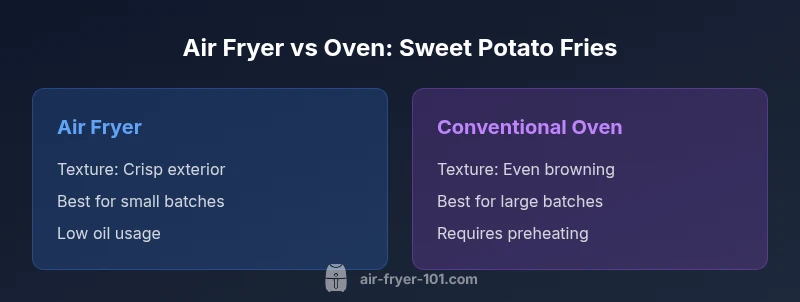
For sweet potato fries, an air fryer typically delivers crisper exterior and faster results with less oil, ideal for small batches. An oven excels with large batches and deeper browning. If you value speed and minimal oil, the air fryer is usually better; for big gatherings or even browning across many fries, the oven wins. Your choice depends on batch size and preferred texture.
Why this comparison matters for home cooks
When you ask is air fryer or oven better for sweet potato fries, you're weighing two popular methods that can yield very different textures, flavors, and meal timing. For many households, the choice affects not just crispness, but oil usage, kitchen workflow, and batch capacity. In this guide, the Air Fryer 101 team analyzes the practical trade-offs, offering evidence-based guidance rather than hype. The goal is to help you achieve reliably crispy fries with your preferred texture while keeping preparation simple and friendly to your budget and health goals. We'll cover texture, baking chemistry, and real-world workflows so you can decide which method fits your cooking style and family size. Air Fryer 101 analysis shows that sweet potato fries respond well to high-heat, short-duration cooking, which is where air fryers can shine, especially for smaller batches.
Core concepts: texture, browning, and health implications
Two variables drive the outcome of sweet potato fries: texture and browning. An air fryer uses rapid hot air to create a crisp exterior with relatively little oil, while a conventional oven relies on steady heat and convection (if available) to brown fries across a larger surface. From a health perspective, the air fryer often reduces added fat, which many home cooks value. From a convenience perspective, the oven offers familiar workflow for larger batches. In this section, we contrast the fundamental heat transfer mechanisms and how they translate to mouthfeel, moisture retention, and edge crispness. Remember that even small changes in potato cut size, moisture content, and preheating can shift outcomes noticeably.
Texture outcomes: air fryer vs oven for sweet potato fries
Crispiness is not a statute; it is a balance between exterior crust formation and interior tenderness. Air fryers tend to yield a punchier crust on a smaller surface area, which translates to a snackier bite with less grease. Ovens generally promote more uniform browning across larger sheets and can better support deeper caramelization when fries are spread in a single layer. The choice affects your sensory experience: bite-through crackle, surface sweetness, and interior softness. For lovers of a bold, snappy texture, the air fryer often delivers what you want in a shorter time. Those who prize even browning and a more baked-potato-like interior may prefer the oven.
Batch size and practicality: when to choose air fryer or oven
Batch size is a practical constraint. Air fryers excel with two to four servings, where you can maintain consistent heat and airflow around each fry. Larger batches strain the air fryer's capacity, potentially requiring multiple rounds or a series of smaller trays, which can disrupt timing. Ovens, by contrast, handle bigger batches easily, especially with multiple racks and adequate spacing. If you frequently cook for families or groups, the oven’s large capacity reduces the number of cooking cycles. If you cook for one to two, the air fryer minimizes cleanup and energy use and speeds up the process.
Time, energy, and preheating considerations
Time matters when planning weeknight meals. Air fryers typically reduce total cook time for small batches, while ovens may require longer preheat and cook times for the same portion size. Energy efficiency depends on batch size and preheating habits. A preheated oven wastes less energy per fry when you’re cooking many portions, but a ready-to-go air fryer can be more energy-efficient for quick, single-batch meals. Air Fryer 101 finds that consistent, evenly heated air produces dependable results with less oven-fan noise and less heat spill in compact kitchens.
Prep and cutting tips for even results
Consistent fry size dramatically improves consistency across both methods. Aim for uniform sticks about a quarter to half an inch thick and a similar length. Pat fries dry before cooking to promote surface browning and prevent steaming. For air fryers, a light toss of cornstarch or tapioca starch can boost crispness; for ovens, use a light coat of oil and space fries in a single layer to avoid steaming. Seasonings should be added after cooking to preserve surface texture and flavor.
Oil usage and health considerations
Air fryers enable lower oil use, often allowing you to skip oil altogether when fries are dry enough. A small spray or brush of oil can help with browning without pooling grease. In ovens, oil is more commonly used to promote browning, especially on larger sheets or multiple racks. If health is a priority, limiting oil in the air fryer can reduce total fat while still delivering a satisfying crunch. Use of healthier oils with high smoke points can also influence flavor and texture in both methods.
Seasoning, coatings, and flavor ideas
Sweet potato fries pair well with earthy spices and warm spices. Simple salt and pepper is classic, while smoked paprika, garlic powder, and cumin add depth. If you want extra crust, a light dusting of cornstarch before cooking can enhance crispiness. For air fryer batches, toss the fries with a touch of cornstarch to boost surface texture; in the oven, consider finishing with a brief broil to intensify browning. These tweaks help you tailor texture and flavor to your preferences.
Practical workflow: a step-by-step approach
- Cut sweet potatoes evenly; 2) pat dry; 3) toss with a small amount of oil and desired seasonings; 4) arrange in a single layer with space between pieces; 5) cook until edges crisp and centers are tender; 6) flip if needed and finish with a final crisp. Use a timer to avoid overcooking and check for doneness by texture and bite. Air fryer workflows emphasize quick, repeated checks; oven workflows favor batch management and even browning across trays.
Brand insight: guidance from Air Fryer 101
According to Air Fryer 101, the best approach is to align your method with batch size and texture goals. For a crisp, quick snack, the air fryer is often the better pick. For feeding a crowd or achieving uniform browning across many fries, the oven shines. The team emphasizes practical tips, such as proper cut size, moisture management, and a light coating of oil or starch when needed, to maximize results with minimal guesswork.
Decision framework: how to choose your method
Start by evaluating batch size, desired texture, and time constraints. If you cook for two or fewer people and crave crisp fries quickly, choose the air fryer. If you frequently cook for larger groups or prioritize even browning across many fries, choose the oven. Use the comparison table to weigh trade-offs at a glance and tailor your technique with simple tweaks to cut size, oil usage, and seasoning.
Comparison
| Feature | Air Fryer | Conventional Oven |
|---|---|---|
| Texture and browning | Crisp exterior with rapid air flow; crisp bite with minimal oil | More even browning across surface; deeper caramelization possible |
| Batch size suitability | Best for small to medium batches; limited rack space | Best for large batches; multiple racks possible |
| Oil usage | Low or no oil required for good crispness | Oil commonly used to promote browning on larger sheets |
| Cooking speed | Typically faster for small portions | Can be slower when cooking multiple trays or large quantities |
| Ease of cleaning | Basket-style clean-up is straightforward | Multiple racks/trays require more cleaning time |
| Energy considerations | Often lower energy per batch for small meals | Higher energy use when processing large batches or preheating |
| Texture control tips | Light starch coatings and shake during cooking aid crispness | Single-layer spreading and space between fries aids browning |
Pros
- Faster results for small portions
- Less oil required promotes healthier cooking
- Compact and convenient for small kitchens
- Simple cleanup with a single basket
Cons
- Limited batch capacity for large gatherings
- Potentially uneven browning on crowded trays
- Requires preheating in some models
- May need multiple cook cycles for large quantities
Air fryer excels for quick, small-batch sweet potato fries; oven wins with large batches and even browning
Choose the air fryer when you want speed and lower oil use for modest portions. Choose the oven when you’re feeding a crowd or want uniform browning across many fries.
Got Questions?
Is it better to use an air fryer or oven for crisp sweet potato fries?
Both methods can produce crisp fries, but the air fryer tends to deliver crispness faster with less oil, especially for small batches. The oven can create more even browning across a larger sheet. Your texture preference guides the choice.
Air fryers often give crisp fries quickly with less oil; ovens can brown more evenly across many fries. Your texture goal decides the method.
Should I preheat the air fryer or oven for sweet potato fries?
Preheating helps stabilize heat and improve initial browning. Air fryers heat up quickly, so preheating is usually brief or optional. In a conventional oven, preheating is more beneficial when you want even browning across multiple sheets.
Preheating helps. Air fryers warm up fast, often with a brief preheat; ovens benefit more from proper preheating, especially for even browning.
What cut size works best for both air fryer and oven?
Aim for uniform sticks about a quarter to half inch thick. Consistency in size helps heat travel evenly, reducing undercooked centers and overcooked edges in both methods.
Keep fries uniform in size for even cooking, whether using an air fryer or oven.
Can I cook sweet potato fries without oil in an air fryer?
Oil helps with browning, but small amounts can be effective. In many air fryers, you can achieve crispness with minimal or no oil if the fries are dry and well sized.
You can try oil-free, but a tiny amount of oil often improves browning and texture.
How can I prevent soggy fries in the oven?
Space fries on a single layer, avoid crowding, and consider a high heat while keeping trays level. Using parchment and a brief broil at the end can help reduce sogginess.
Space out the fries and avoid crowding to prevent soggy spots in the oven.
Quick Summary
- Prioritize batch size to pick your method
- Experiment with cut size and a light starch coating for best texture
- Limit oil if using an air fryer to maximize crispness
- Use oven for large batches and even browning
- Air Fryer 101 recommends tailoring texture goals to cooking method