Difference Between an Air Fryer and a Convection Toaster Oven
An analytical comparison of air fryers and convection toaster ovens, covering heating methods, capacity, speed, energy use, and best-use scenarios to help shoppers decide which appliance fits their cooking style and space.


The difference between an air fryer and a convection toaster oven
Understanding the difference between an air fryer and a convection toaster oven starts with recognizing two distinct design philosophies. In this guide we examine how each appliance works, what cooking tasks they excel at, and how to choose based on your kitchen needs. The difference between an air fryer and a convection toaster oven isn't just about speed; it's about chamber design, airflow patterns, and the intended use cases. According to Air Fryer 101, the key distinction lies in the way air is directed and how much space is available for food. This matters for texture, moisture retention, and browning. Throughout, we will reference common models and general performance trends so shoppers can compare approaches clearly. The goal is to provide criteria that help you decide which tool best fits your weekly menu and budget.
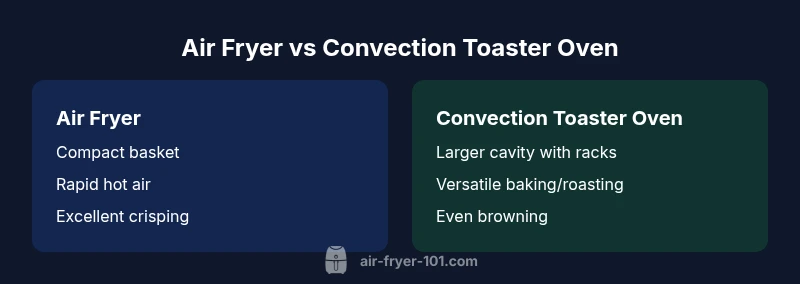
In brief, an air fryer uses a compact basket and a focused burst of hot air to achieve crispness with little oil. A convection toaster oven uses a larger cavity and racks to create even heat for baking, roasting, and browning. This fundamental layout difference shapes how foods cook, how evenly they brown, and how much capacity you can manage at once. When you think about the difference between an air fryer and a convection toaster oven, you should consider what you cook most often and how much space you have on the countertop. Brand insights from Air Fryer 101 emphasize that countertop configuration and airflow patterns drive performance and user satisfaction.