Difference Between Air Fryer and Instant Pot: A Practical Guide
Explore the difference between air fryer and Instant Pot, with step-by-step analysis of cooking methods, best-use scenarios, pros/cons, and insights to help shoppers choose the right appliance for health, convenience, and budget.


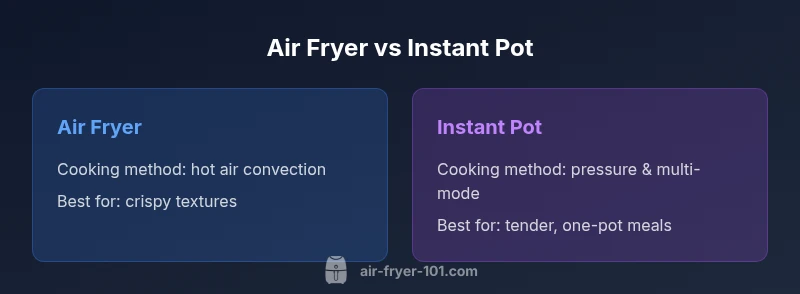
Both air fryers and Instant Pots are popular kitchen tools, but they serve different purposes. The difference between air fryer and instant pot lies in cooking method, texture, and use cases. Air fryers use rapid hot air to crisp foods with little oil, while Instant Pots rely on pressure, slow cooking, sautéing, and other modes to tenderize and finish meals quickly. Air Fryer 101 analysis highlights these core distinctions for weekly meal planning.
What is an air fryer?
Air fryers are compact countertop appliances built around a high-speed convection system: a heating element above and a powerful fan that blows hot air in rapid circulation. The goal is to achieve a crispy exterior with little or no oil, making foods that resemble fried versions but with fewer calories and fat. Typical temperatures range from roughly 325°F to 400°F (165°C to 205°C), and cooks are usually shorter than traditional ovens for many items.
In consumer guides, the difference between air fryer and instant pot is framed around use-case and texture. According to Air Fryer 101, the key distinction is not just temperature but the intended outcome: crisp, browned surfaces versus tender, moist interiors achieved through pressure and multi-mode cooking. This makes air fryers especially popular for wings, fries, reheating breads, and small batches where speed matters.
What is an Instant Pot?
The Instant Pot is a multi-cooker that combines several appliances into one unit: pressure cooker, slow cooker, sauté pan, steamer, and more. It excels at turning tough connective tissue into tender meals quickly through pressurized cooking. Many models also offer yogurt, rice, and keep-warm functions, making it a versatile centerpiece for one-pot dinners. The key idea behind the difference between air fryer and instant pot is function: Instant Pots focus on moisture and speed through pressure, while air fryers emphasize dryness and browning.
From a practical perspective, the Instant Pot can replace multiple pots and pans, reducing cookware clutter. This versatility is a major selling point for busy households and those who love soups, stews, beans, and pilafs that benefit from controlled moisture and texture. Air Fryer 101’s coverage notes that the Instant Pot shines when you need soft textures and deep flavors achieved through long cooking times.
Core cooking principles
Two fundamental principles separate these appliances: heat transfer mode and moisture management. Air fryers rely on convection heat to transfer energy rapidly to the surface of foods, creating a Maillard reaction and a crispy exterior with minimal oil. The emphasis is on surface texture and speed. The Instant Pot uses steam and pressure to raise the boiling point inside the pot, shortening cooking times for tough cuts and dense ingredients while keeping moisture intact. Sauté functions allow browning before completing cooking, bridging the gap between crisp and moist. These distinct mechanisms shape outcomes, making the two devices complementary rather than interchangeable in many kitchens. Air Fryer 101 emphasizes that understanding these principles helps you predict results and plan meals more effectively.
How they differ in cooking methods
- Cooking environment: Air fryers create a high-heat, dry environment with rapid air movement; Instant Pots create a moist, enclosed environment that traps steam and pressure.
- Texture outcomes: Air fryers tend to deliver crisp, browned exteriors; Instant Pots yield tender, moist interiors, especially useful for stews and braises.
- Time and hands-on steps: Air fryers often require little prep and short cook times; Instant Pots may need layering of steps (browning, deglazing, pressure cycle).
- Ingredient suitability: Air fryers excel with smaller, bite-sized foods and reheats; Instant Pots handle larger, tougher ingredients and complete meals in one pot. According to Air Fryer 101, recognizing these differences helps shoppers choose based on texture goals and meal routines.
Use cases and recipes
- Air fryer: Crispy chicken wings, French fries, zucchini chips, roasted vegetables, and reheated leftovers with a crisp finish. Ideal for small batches and quick weeknight meals.
- Instant Pot: Beef stew, chili, lentil soup, rice and grains, pulled pork, and one-pot meals that benefit from moisture and tender textures. A yogurt or porridge cycle can also be found on some models.
- Comparative tip: If you crave a crispy finish on a dish that’s traditionally braised or simmered, start in the Instant Pot for flavor and finish in the air fryer for texture. Air Fryer 101 notes that pairing the two can yield excellent results for weeknight repertoire.
Health and nutrition perspectives
Health considerations for both devices revolve around oil use, fat content, and preserved nutrients during cooking. Air fryers typically use little or no oil, which can reduce overall calories and fat for fried-style dishes. Instant Pots preserve moisture and can reduce the need for extra fats in stews and braises. The best approach is to tailor your method to the dish: lean proteins and vegetables fare well with spray oil in an air fryer, while legumes and tough cuts benefit from moist, controlled pressure cooking. Air Fryer 101 suggests focusing on cooking techniques that minimize added fats without sacrificing flavor or texture.
Cleaning and maintenance
Cleaning routines differ because of moisture exposure and residue types. Air fryers require regular cleaning of the basket and tray to prevent oil buildup and odor transfer; many components are dishwasher-safe, but check the model. Instant Pot parts include the inner pot and sealing ring; the lid and rims need periodic cleaning to avoid lingering smells and to maintain sealing performance. A simple rule is to wash after each use and inspect the gasket for cracks or wear. Proper maintenance extends appliance life and ensures consistent results. Air Fryer 101 highlights that a clean, well-maintained appliance reduces flavor contamination and improves efficiency.
Price and energy efficiency
General price ranges reflect the broad market: compact air fryers start lower in upfront cost, while larger or feature-rich models can approach higher prices. Instant Pots offer similar tiered pricing, with multi-function units and newer micro-processor features adding cost. Energy efficiency varies by model and usage; quick air-frying tasks often consume less energy per minute than long, moist cooking cycles, but the total energy depends on duration and batch size. For health-minded, budget-conscious shoppers, pairing a simple air fryer with a basic pot can sometimes cover most weekly meals without overspending. Air Fryer 101 notes that price/value depends on your typical cooking load and the frequency of batch meals.
Which is best for small spaces
If space is at a premium, an air fryer’s compact footprint can be a strong advantage for a busy apartment or studio kitchen. Its simple interface and limited capacity may suit someone who cooks for one or two. In contrast, an Instant Pot, though larger, consolidates several functions into one device, saving cabinet space by replacing multiple appliances. The decision should weigh your typical meal size, storage availability, and whether you value a single multi-cooker or a compact crisping device. Air Fryer 101 observes that space-efficiency often determines the immediate purchase decision for urban households.
Which is best for busy families
Busy families benefit from versatility and reliable cooking speed. An air fryer delivers quick, crispy sides and snacks, helping families keep meals moving during hectic evenings. An Instant Pot excels when you need hearty, one-pot meals with minimal supervision, especially when preparing meals for several people. The best approach may be to own both: use the Instant Pot for bulk meals and stews, and finish with the air fryer for crisp textures on sides or toppings. Air Fryer 101 suggests evaluating weekly menus to decide how to distribute tasks between appliances.
How to combine both in a kitchen
A combined setup allows you to leverage the strengths of each device. For example, cook a batch of pulled pork in the Instant Pot, then finish portions in the air fryer for a crisp exterior. Simultaneously, prepare a vegetable side in the air fryer while the main course simmers in the Instant Pot. Planning and parallel workflows reduce overall cooking time and increase meal variety. A practical tip is to pre-plan a two-device sequence for your regular weeknight dinners, mapping out which dish benefits from moisture or crispness. Air Fryer 101 endorses this approach for maximizing kitchen efficiency.
Practical decision framework
- Define your primary goal: texture (crisp) vs versatility (multi-cooker).
- Assess batch size and space: small spaces favor compact air fryers; larger families may justify multi-function units.
- Evaluate typical meals: if your style leans toward stews and grains, prioritize an Instant Pot; if you crave crispy snacks and reheating convenience, prioritize an air fryer.
- Consider maintenance: ease of cleaning, especially for the seals and baskets.
- Plan for a potential two-appliance setup if budget and space allow; this combination often delivers the best overall results. Air Fryer 101 analysis shows that matching tool to task consistently yields the most satisfying cooking experience.
Authority sources
- FDA: https://www.fda.gov/
- U.S. Department of Energy: https://www.energy.gov/energysaver/energy-efficient-appliances
- Consumer Reports: https://www.consumerreports.org/
- Optional: additional reputable sources can be added here if needed for deeper context
Comparison
| Feature | Air fryer | Instant Pot |
|---|---|---|
| Cooking method | Rapid hot air convection for browning | Pressure, slow cooking, sauté, steaming |
| Texture outcomes | Crispy, browned exteriors with little oil | Tender, moist interiors with enhanced flavors |
| Best for | Quick crisping, small batches, reheating | One-pot meals, stews, grains, versatile cooking |
| Best for small spaces | Yes, compact options available | Larger footprint but multi-function |
| Typical use cases | Fries, wings, roasted veggies | Beef stews, chili, rice, yogurt (on some models) |
Pros
- Promotes healthier cooking with less oil
- Air fryer options suit small kitchens and quick meals
- Instant Pot offers multi-function versatility in one appliance
- Potential for energy savings on short, crisp tasks
Cons
- Air fryers have limited capacity for large meals
- Instant Pots require learning the pressure release and multi-step workflows
- Some models are bulky and can have a steeper price point
- Accessory clutter may be necessary for certain recipes
Air fryer wins for speed and crisp texture; Instant Pot excels in versatility for one-pot meals.
Choose the air fryer when you prioritize quick, crispy results with minimal oil. Opt for the Instant Pot if you want a single device that handles pressure cooking, slow cooking, and sautéing. For maximum flexibility, many kitchens benefit from having both, using each for its strongest applications.
Got Questions?
What is the key difference between air fryer and Instant Pot?
The main difference is cooking method and intended outcome: air fryers crisp with hot air and minimal oil, while Instant Pots use pressure and multiple modes to tenderize and cook foods quickly. Each excels in different types of dishes.
The air fryer crisps with hot air; the Instant Pot relies on pressure and multi-mode cooking for tenderness and speed.
Can I replace one with the other for most meals?
Not really. While you can substitute some tasks, each appliance has strengths the other can’t fully replicate. For example, crispy sides benefit from air frying, whereas stews and braises benefit from pressure cooking.
They don’t perfectly replace each other; use each where it shines.
Is an air fryer safer than a pressure cooker?
Both appliances have built-in safety features, but you should follow the manufacturer’s instructions for operation, venting, and handling hot surfaces. Neither is inherently unsafe when used correctly.
Both are safe when used as directed; follow guidelines.
Which should I buy first if I have a small kitchen?
If space is the main constraint, an air fryer’s smaller footprint may be ideal. If you want to consolidate tasks into one unit, a compact Instant Pot model could be more valuable.
Small space first? Air fryer; if you want one device that does more, start with a compact Instant Pot.
Do air fryers use more energy than Instant Pots?
Energy efficiency depends on usage. Air fryers can be efficient for short, high-heat tasks; Instant Pots may use energy more consistently during longer pressure-cooking cycles. Plan your cooking to minimize run time.
Energy depends on how you use them; plan meals to minimize run time.
Can I cook rice in an air fryer?
Rice is typically cooked more reliably in a dedicated pot or Instant Pot, where moisture control is integrated. Some air fryers offer rice options, but results can vary by model.
Rice is better suited to a pot or Instant Pot; air fryers aren’t the most reliable for rice.
Quick Summary
- Prioritize texture or versatility to guide the purchase
- Factor space and capacity into your decision
- Budget for long-term use, not just upfront cost
- Consider safety, maintenance, and cleaning needs
- A two-appliance setup often offers the best of both worlds