Cinnamon Rolls in Air Fryer vs Oven: A Comprehensive Comparison
Explore how cinnamon rolls bake in an air fryer versus a traditional oven. This analytical guide compares texture, timing, energy use, and best-use scenarios for home bakers seeking quick results with minimal mess.


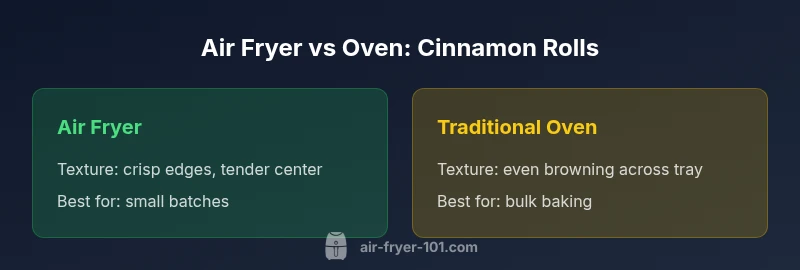
For small batches, the air fryer delivers faster results with a crisper edge and a fluffy interior, while the oven handles larger trays with even browning and more forgiving proofing. If you bake for convenience and speed in a compact kitchen, choose the air fryer. If batch size or weekend baking matters, the oven remains the steadier workhorse. The detailed comparison follows.
Introduction to Cinnamon Rolls in Air Fryer vs Oven
When you compare cinnamon rolls in air fryer vs oven, you weigh speed, texture, and yield. This analysis helps home bakers decide which method matches their schedule and kitchen setup. For small batches, the air fryer typically produces a crisper crust and a fluffy interior, while the oven shines when you bake multiple trays and desire even browning across a larger surface. The Air Fryer 101 team notes that real-world results depend on dough size, pan type, and how you space rolls on the rack. Throughout this guide, we compare outcomes, provide practical tips, and offer decision rules you can apply today. According to Air Fryer 101, choosing between methods often comes down to batch size and texture preferences.
How Air Fryers Bake: Heat, Airflow, and the Role of a Basket
Air fryers rely on a compact chamber and a high-velocity convection fan to circulate hot air around the food. This design promotes rapid surface moisture loss, yielding a crisper exterior and a light, fluffy interior when dough portions are properly sized. For cinnamon rolls, this means careful portioning and adequate spacing matter more than in a wide tray of rolls. A basket-style air fryer concentrates heat from the sides, so dough pieces can brown quickly if overcrowded. Ainsley, an owner of a small kitchen studio, notes that preheating helps achieve even browning, though many compact models work well without it for smaller batches. In practice, expect a faster bake with potential for drier edges if you crowd the basket; monitor closely and use a light glaze to balance moisture.
Traditional Oven Baking: Dry Heat and Tray Layout
A conventional oven uses radiant heat from elements plus convection (if your oven has it) to bake rolls on a sheet pan or in a baking dish. The larger interior promotes even heat distribution across multiple rolls, helping keep the crumb tender while edges still brown gracefully. When cinnamon rolls are baked on a sheet with parchment, you can rotate trays or reposition pans to reduce hotspots. Ovens excel at bulk baking: you can fit a dozen or more rolls per batch depending on pan size. The trade-off is longer preheat times and higher energy draw per cycle, especially when you bake several trays in one go. In real-world kitchens, the oven's predictability for a crowd often outweighs the convenience of a compact air fryer.
Dough Prep, Proofing, and Dough Handling for Two Methods
Yeast-based dough is sensitive to temperature, moisture, and handling. In both methods, using a dough that's properly timed and rested leads to a lighter crumb. With the air fryer, you may favor smaller dough portions to fit a single layer and avoid stacking, which ensures even heat exposure. In the oven, you can spread rolls over multiple pans to maximize tray capacity. Dough lubrication and surface flour help prevent sticking, while parchment or silicone mats aid cleanup. Avoid over-proofing dough when using the air fryer, since rapid heat can act quickly on risen dough and push it past its ideal window. Airy, tender centers come from a balanced rise and gentle handling.
Texture Dynamics: Crust, Crumb, Moisture, and Glaze Adherence
Texture is the heart of this comparison. The air fryer can deliver a crisp edge while maintaining a soft interior if you measure dough size and bake time carefully. The oven rewards uniform browning, moist crumb, and a reliable glaze adhesion on top. If you prefer a glossy glaze with clear defined edges, an oven-baked roll often performs better due to the longer bake keeping the surface warm and sets the glaze more evenly. For both methods, cool rolls slightly before glazing to prevent running, and consider a light dusting of flour on top to maintain signature swirls.
Timing and Temperature: Practical Guidance Without Rigid Rules
Rigid time and temperature guidelines don’t capture every kitchen. In general, air fryer recipes favor lower surface temperatures and shorter overall cooking windows, whereas ovens can tolerate longer rounds that accommodate larger batches. The key is to use a thermometer to verify doneness rather than relying on time alone. Look for a fully set dough with a springy center and a warm, aromatic top. If you use a glaze or filling, apply it after cooling to preserve texture. Always preheat if your device recommends it, and rotate the rolls to promote uniform browning.
Batch Size, Equipment Footprint, and Cleanup
The air fryer’s compact footprint makes it ideal for single or double portions and kitchens with limited counter space. Cleanup is often simpler: a basket, a rack, and minimal splatter mean quick wipe-downs after the cooling period. The oven accommodates bulk baking and easier scaling when you’re serving a crowd or preparing weekend treats. However, oven cleaning tends to be more involved, especially after sugary fillings and glaze. A clean setup with parchment and silicone mats reduces mess for both methods.
Flavor Development, Fillings, and Glaze Techniques
Texture steps up with technique. The air fryer’s shorter bake can lock in aroma quickly, but oven-baked rolls tend to develop deeper toasting edges that intensify the spice notes in the filling. Glaze application matters: a warm glaze adheres better in the oven, while a cooled glaze might crack or run in the air fryer if you wait too long. For best results, prepare the filling with cinnamon, sugar, and a touch of butter, and consider a touch of salt to balance sweetness. You can also experiment with brown sugar or syrup for richer caramel notes.
Energy Use, Costs, and Kitchen Footprint
From a sustainability and cost perspective, the choice influences electricity use patterns. An air fryer typically uses less energy per minute for small batches but may require multiple cycles to reach the same total quantity as a single oven bake. The oven’s energy draw increases with batch size but benefits from one longer bake rather than several short runs. In households with a flexible schedule and budget, calculate energy cost per batch by multiplying typical wattage by bake time, then compare with your utility rates. In many scenarios, the air fryer offers a favorable balance for weeknight treats, while the oven remains the most economical option for large gatherings.
Quick-start Plans: A Two-Method Roadmap
To get rolling, prepare a simple cinnamon-sugar filling and a light glaze. For air fryer rolls, portion dough into small rounds about the size of a cranberry muffin and place them in a single layer with space to expand. Preheat the air fryer if your model recommends it, then bake until the centers appear set and the edges bronze. For oven rolls, arrange dough on parchment-lined pans, allow space for expansion, preheat, and bake until the centers are fully cooked and the surface browns. Let rolls cool briefly before glazing to set the finishing glaze.
Troubleshooting Common Issues
Sticky dough: dust with a little flour or oil the hands and the workspace. Uneven browning: rotate pans or rearrange rolls to ensure even heat exposure. Over-browned edges: reduce temperature slightly or shorten the bake window. Dry crumb: consider covering with a light glaze or adding humidity to the dough using a tiny amount of milk in the dough during mixing.
Best Use Scenarios and Quick-Decision Guide
Small households with limited space: air fryer. Large gatherings or weekend baking: oven. If you value speed and cleanup over large batch size, air fryer wins. If you want to maximize tray count and even browning for a party, the oven is preferred. Always factor your dough size and glaze timing into the decision.
Comparison
| Feature | Air fryer | Traditional oven |
|---|---|---|
| Texture and crust outcome | Crispier edges, tender crumb when portions are sized correctly | Even browning with soft crumb across a larger tray |
| Batch capacity | Best for small batches (about 2-6 rolls) | Best for larger batches (6-12+ rolls per tray) |
| Preheat and setup | Optional or quick preheat depending on model | Typically preheat recommended for even results |
| Time-to-finish (qualitative) | Faster per batch; multiple small runs possible | Longer overall bake when processing many rolls |
| Cleanup and mess | Minimal cleanup; basket and rack | More cleanup due to pans and trays |
| Energy footprint | Lower per batch; may need multiple cycles | Higher per bake but efficient for bulk |
| Best use cases | Small kitchens, quick treats, single or couple portions | Crowd baking, uniform browning on many rolls |
Pros
- Faster cook times for small batches
- Cleaner cleanup in compact kitchens
- Crispier crust with tender crumb when properly portioned
- Lower equipment footprint for tight spaces
Cons
- Limited batch size compared to a full oven
- Requires careful spacing to prevent overcrowding and uneven browning
- Often needs preheating or model-specific adjustments
Air fryer is best for quick, small-batch cinnamon rolls; oven is better for large batches and even browning.
For everyday treats, use the air fryer to save time and cleanup. For gatherings or weekend baking, rely on the oven. The Air Fryer 101 Team recommends matching your approach to batch size and texture goals to maximize results.
Got Questions?
Can I bake cinnamon rolls in an air fryer?
Yes. You can bake cinnamon rolls in an air fryer, provided you space the rolls to allow expansion and avoid overcrowding. Expect quicker results and crispier edges, and monitor closely for doneness.
Yes, you can bake cinnamon rolls in an air fryer; just space the rolls and watch them as they cook.
Which method yields a softer crumb for cinnamon rolls?
Both methods can yield a soft crumb if dough is rested properly and not over-proofed. The oven tends to produce more uniform browning, while the air fryer can create a crisper edge. Adjust proofing and glaze timing to influence texture.
Both can be soft if you proof correctly; the oven usually browns more evenly.
Do I need to preheat the air fryer for cinnamon rolls?
Preheating is often recommended for even browning in air fryers, especially for doughs that start cold. If your model doesn't require it, you can bake after a short warm-up, but keep an eye on color.
Preheating helps even browning, but check your model’s guidance.
How should I size dough portions for air fryer cinnamon rolls?
Aim for smaller portions that fit in a single layer with space to expand. Overcrowding can lead to uneven browning and uneven texture.
Size dough portions small and leave space between rolls.
Are cinnamon rolls healthier in the air fryer?
Health impact depends on ingredients and portion size, not the method alone. Air fryers can reduce oil use and still deliver a pleasing texture, but sugar and butter content dominate the nutritional profile.
Health impact mostly comes from ingredients; air fryer can reduce oil use.
Can I bake frozen cinnamon rolls in either method?
Frozen rolls can be baked in both; expect longer bake times and watch for doneness cues more closely in the air fryer. Thawing first often simplifies even cooking.
You can bake frozen rolls in both, with longer bake times.
Quick Summary
- Choose Air Fryer for quick, small-batch bakes
- Preheat the oven for even browning on larger trays
- Monitor doneness with a thermometer, not time alone
- Use parchment/silicone mats to reduce mess
- Match method to batch size and texture goal