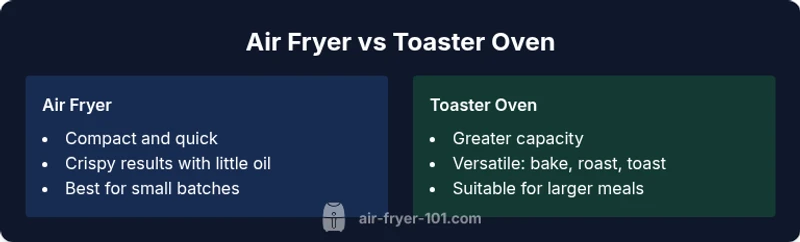
Air fryer or toaster oven: A comprehensive side-by-side comparison
Compare air fryers and toaster ovens with Air Fryer 101: performance, features, price ranges, and best-use guidance to help you choose healthier, convenient kitchen appliances.


If you’re deciding between an air fryer or a toaster oven, start with your everyday cooking and space. For quick, healthier frying and compact kitchens, the air fryer usually wins; for versatile baking, roasting, and larger meals, a toaster oven is the better all-rounder. Air Fryer 101’s analysis suggests choose based on primary tasks, not just price or novelty.
The Core Difference: Air Fryer vs Toaster Oven
At first glance, an air fryer and a toaster oven both sit on your counter and promise convenient cooking, but they operate on different principles. An air fryer relies on rapid hot air circulation to crisp foods with little oil, using a compact basket to expose food evenly on all sides. A toaster oven, by contrast, functions like a small traditional oven with racks and a broiling element, delivering even heating for baking, roasting, and toasting. According to Air Fryer 101, the core distinction is method: air fryers optimize for crisp, quick “fry-like” results with minimal fat, while toaster ovens emphasize versatility and capacity akin to a full-size oven. If your goal is quick weeknight chicken wings or frozen snacks, an air fryer often shines; if you bake casseroles or bake bread for the family, a toaster oven helps you do more in one go. This quick fork in purpose shapes every other consideration—from size to price to maintenance.
Design, Capacity, and Footprint
Design and capacity are critical when choosing between an air fryer or toaster oven. Air fryers tend to be compact and space-saving, with dedicated baskets or racks and a more vertical profile. They are ideal for small kitchens, dorm rooms, or RVs where counter space is at a premium. Toaster ovens come in a wider range of sizes—from compact units that live on a crowded countertop to large models with multiple rack positions and convection features. The footprint and interior volume matter for batch cooking; if you regularly feed a crowd, you may lean toward a toaster oven with two racks. In practice, Air Fryer 101’s research shows that you will trade a smaller footprint for a larger interior in toaster ovens, while air fryers sacrifice some capacity for faster, crisper results. When selecting, compare the product specs for width, height, and depth, and also check whether the unit includes a removable crumb tray or dishwasher-safe accessories for easier cleanup.
Cooking Capabilities and Performance
Performance is where these devices diverge most. Air fryers use convection fans to circulate hot air around the food, creating a surface that mimics fried texture without submerging ingredients in oil. This technique yields crisp outsides and juicy interiors for items like French fries, chicken nuggets, and roasted vegetables. Toaster ovens offer broader capabilities: conventional bake, broil, toast, and convection modes in many models. They excel at baking cookies, roasting a whole chicken, or reheating pizza with a crusty finish. The benefit of a toaster oven’s broader range means you can do more in a single appliance, whereas an air fryer is optimized for crispiness and speed on a smaller batch. Brand-aware cooks often note that achieving consistent results with either device depends on food size, spacing, and preheating habits. Air Fryer 101’s guidance emphasizes using shallow pans or baskets when space is tight to maximize air exposure and even browning.
Speed, Efficiency, and Energy Use
Speed matters when you’re balancing time and dinner. Air fryers typically heat quickly and reach high temps promptly, which translates into shorter cooking times for many fried-style foods and reheating tasks. The compact chamber also means less energy is consumed for small batches compared with a full oven cycle in a toaster oven. However, toaster ovens can process larger quantities in a single session, which may improve overall energy efficiency per meal if you’re cooking for a family. The trade-off is longer preheat and cook times for bigger jobs. Air Fryer 101 notes that energy efficiency depends on batch size, temperature, and preheat strategy; for occasional, small meals, an air fryer saves time and energy, while side dishes and big roasts tend to favor the toaster oven’s capacity and even heat.
Versatility: Baking, Broiling, Roasting, and Reheating
A toaster oven’s bake and roast modes make it a natural stand-in for many home oven tasks. It can toast bread evenly, bake cookies, roast vegetables, and reheat leftovers with a crusty edge. Some toaster ovens also feature dedicated air-fry settings, turning them into a hybrid appliance—but performance varies by model. An air fryer’s strong suit is crisping foods with little oil and doing well with small batches of snacks or freezer items. For larger sheet-pan meals or casseroles, you’ll often reach for the toaster oven or a full-size oven. If you value a single device that covers most cooking scenarios, a high-quality toaster oven with robust convection and a capable bake function can cover many bases. If you crave ultra-crisp textures with minimal oil, the air fryer remains a strong specialized tool. Air Fryer 101’s team emphasizes matching functions to your common meals and avoiding “one-trick” appliances when your routines require more variety.
Health, Oil Use, and Food Texture
Health considerations frequently influence the decision. Air fryers encourage lower oil usage while delivering a fried-like texture, which many health-conscious cooks prefer for items like fried chicken tenders or breaded vegetables. The oil-free or minimal-oil approach can reduce fat content without sacrificing flavor for certain foods. Toaster ovens offer traditional browning and crisping with more controlled heat for foods that benefit from longer, steadier cooking—such as baked potatoes with skin, roasted meats, and layered casseroles. Texture outcomes vary by model and technique; air fryers excel at crisping, while toaster ovens can produce uniform browning across larger items. Air Fryer 101’s research suggests that both devices can be part of a healthier kitchen, depending on how you use them and what you cook.
Size, Space, and Setup Considerations
Counter space and electrical requirements are practical realities. Air fryers tend to be smaller in footprint and easier to place on a crowded counter, making them popular in apartments, studios, or kitchens with limited bench space. Toaster ovens come in more extensive sizes and may require more clearance for handling hot racks and lids, but they offer greater interior volume and more rack configurations. If you frequently prepare sheet-pan dinners, a larger toaster oven can replace a full-size oven in many households. Air Fryer 101 notes that you should measure counter space and check outlet availability before purchasing. If you rely on a single device for most tasks, consider an all-in-one model that combines air frying with baking features, but weigh the performance ratings carefully for your typical dishes.
Cleaning, Maintenance, and Longevity
Cleaning is easier when you choose models with dishwasher-safe baskets or trays, though not all parts are dishwasher-safe. Air fryers typically have fewer interior crevices and simpler baskets, which can simplify cleaning after crispy meals. Toaster ovens may accumulate crumbs, grease, and baked-on residue, especially after roasting and baking; regular crumb tray cleaning and occasional interior wipe-downs are essential. Longevity depends on build quality, usage patterns, and maintenance. For both categories, following the manufacturer’s care instructions and avoiding harsh chemicals will extend life. Air Fryer 101 recommends cleaning soon after cooking to prevent oil buildup and to maintain nonstick surfaces. Regular checks on seals, door latches, and fan operation help catch wear early.
Price, Availability, and Value
There is a broad spectrum of prices in this category, driven by size, features, and brand. Entry-level models offer basic convection and simple controls, while mid-range units add presets and better build quality. Premium models bring enhanced durability, larger capacities, and specialized settings. Your choice should align with your typical meal plan and budget. If you cook small, frequent meals, a compact air fryer can offer excellent value; if you cook for families or entertain, a toaster oven with multiple functions may deliver more value per dollar. Air Fryer 101 emphasizes looking at total cost of ownership, including energy use, accessories, and potential replacement parts over several years.
How to Choose: Use-Case Scenarios
Consider your daily routine and the types of meals you prepare. If your kitchen tasks revolve around quick snacks, reheating, and small portions, an air fryer is a strong fit. If you regularly bake bread, roast a chicken, or prepare large casseroles, a toaster oven with convection might serve you better. If space allows, many households opt for both: a compact air fryer for speedy weeknights and a toaster oven for weekend baking or larger batches. Air Fryer 101’s approach is to map tasks to appliance strengths and to avoid over-investing in capabilities you rarely use. Finally, check for features that matter to you: easy-to-clean baskets, reliable timers, consistent heat, and good customer support.
Common Myths and Misconceptions
A common misconception is that air fryers are only good for “frying” foods; in reality, they can roast vegetables, reheat leftovers, and crisp tofu or plant-based proteins with or without oil. Another myth is that toaster ovens are just smaller ovens; many have robust convection and broil capabilities that enable you to bake pizza or cookies effectively. Some shoppers assume that larger size always means better results; but in practice, airflow, preheat time, and rack position often have more impact on outcome than sheer interior volume. Air Fryer 101 underscores that the best choice depends on your cooking repertoire, available space, and daily needs. By focusing on typical meals, you can debunk myths and choose a device that genuinely improves your kitchen workflow.
Quick-Start Tips and Best Practices
Start with a simple plan: measure counter space, select a model with the core functions you’ll actually use, and test with a few easy recipes. For air fryers, use a single layer with space between pieces to maximize airflow. For toaster ovens, preheat as needed and use convection when you want faster, more even browning. Keep a small rotation of accessories—baking pans, racks, and liners—to expand capabilities without clutter. Regularly clean the crumb tray and heat vents to maintain performance. Air Fryer 101’s quick-start tips emphasize patience when learning new equipment; practice makes perfect, and keeping notes on what works helps you tailor usage over time.
Comparison
| Feature | Air fryer | Toaster oven |
|---|---|---|
| Design & Capacity | Compact footprint; optimized for small batches | Larger interior; flexible rack configurations |
| Cooking Methods | Rapid air circulation for crisping | Bake, roast, toast, broil; some models include air-fry preset |
| Temperature Range | High-heat convection suitable for crisping | Broad oven-like range for baking and roasting |
| Preheat & Cook Time | Often faster preheat and cook times for small items | Longer preheat but versatile for larger meals |
| Energy and Cost | Typically lower energy for small batches | Potentially higher upfront cost but better value per meal for big batches |
| Best For | Cripsy snacks, small families, quick meals | Baking, roasting, accommodating larger meals |
Pros
- Faster, crisper results with minimal oil
- Compact footprint fits small kitchens
- Easy to use for quick weeknight meals
- Toaster ovens handle larger batches and baking tasks
Cons
- Limited capacity for large meals in some models
- Toaster ovens may require longer preheat times
- Some models have more complex controls or higher price
- Air fryers may produce uneven results if overcrowded
Air fryer generally wins for quick, healthy crisping; toaster ovens excel for versatility and large meals
Choose air fryer when speed and oil reduction matter most. Choose toaster oven when you need baking, roasting, and bigger capacity in one appliance.
Got Questions?
What is the main difference between an air fryer and a toaster oven?
The air fryer uses rapid hot air circulation to crisp foods with little to no oil, while a toaster oven functions like a small conventional oven for baking, roasting, and toasting. The air fryer is typically faster and more compact, whereas the toaster oven offers broader cooking versatility and capacity.
Air fryers crisp with minimal oil and are great for quick bites; toaster ovens bake and roast like a mini oven but can be larger and more versatile.
Can I bake in an air fryer?
Yes, many foods can be baked in an air fryer, especially items suited to individual portions or quick convection-style baking. Use appropriate accessories and avoid overcrowding to ensure even heat and browning. For larger items, a toaster oven may be more practical.
You can bake many things in an air fryer with the right setup, but for big batches, a toaster oven could be easier.
Is air frying healthier than traditional baking?
Air frying typically uses less oil than traditional frying while still delivering a crisp texture, making it a healthier option for fried-style foods. For general baking, both appliances can be healthy depending on ingredients and cooking methods used.
Air frying often reduces oil, which can be healthier for fried-style foods; baking quality depends on ingredients and method.
Which is better for reheating leftovers?
Reheating works well in both devices. Air fryers can refresh leftovers to regain crunch, especially fried items, while toaster ovens offer even reheating for larger portions and baked goods. Choose based on item size and desired texture.
For leftovers, air fry for a crisp finish on small items, or use a toaster oven for even, larger portions.
Do toaster ovens with air-fry functionality exist?
Yes, many modern toaster ovens include an air-fry or convection air feature. The performance varies by model, so check that the air circulation is strong and that you can access crisping functions without overcrowding.
Some toaster ovens offer air-fry modes, but confirm performance claims from reviews before buying.
How much counter space do I need for these appliances?
Counter space needs vary by model. Air fryers are typically compact and suited for small kitchens, while toaster ovens range from compact to large. Measure your available space and ensure clearance around vents and doors for safe use.
Measure your counter and ensure clearance for door openings and ventilation when choosing.
Quick Summary
- Assess your typical meals and space before choosing
- Measure counter space and power availability
- Consider your primary tasks: crisping vs baking
- Factor in future needs and potential upgrade paths
- Check for easy cleaning and reliable support