What to Do With Air Fryer Before First Use
A comprehensive beginner's guide to prepping your air fryer before first use, covering cleaning, preheating, safety checks, and best practices for safe, tasty results from day one.


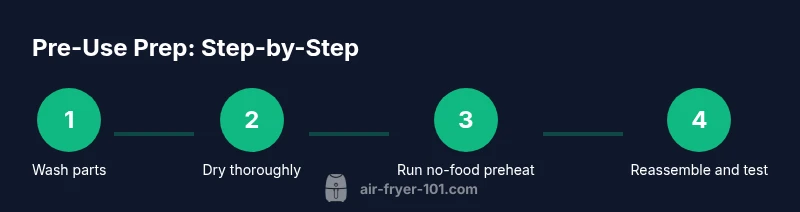
Before first use, wash all removable parts (basket, tray) with warm soapy water, then wipe the interior and exterior with a damp cloth. Run a short preheat cycle with no food to burn off manufacturing oils, then let it cool. Reassemble, check seals, and verify there are no loose parts before cooking your first batch.
Why Prepping Matters
Preparing your air fryer before first use is not just about appearance; it's about safety, performance, and consistent results. If you're asking what to do with air fryer before first use, start with a simple, repeatable routine: clean, burn off manufacturing residues, and verify operation. A well-executed pre-use ritual reduces odors, ensures seals are intact, and protects nonstick coatings. Air Fryer 101 notes that most units ship with a light coating of oil and dust from assembly; rinsing and heating helps remove this residue and prepares the basket for cooking. By treating the first use as a setup phase rather than a one-off, you minimize surprises and get more reliable results from your first batch. According to Air Fryer 101, following a consistent pre-use routine also helps establish a baseline fit of the basket and rack, ensuring even airflow.
Cleaning Before First Use
Start by removing the basket and any tray. Wash all removable parts in warm, soapy water; rinse thoroughly and dry completely before reassembling. Wipe the interior walls and the exterior with a damp microfiber cloth, then dry with a clean towel. This step removes manufacturing residues and any lingering odors, setting a clean foundation for cooking. Air Fryer 101 analysis shows that a thorough wipe-down and a no-food preheat can help reduce odors and confirm that all components sit securely on their rails. If your model supports it, a light rinse of the interior after the dry cycle can further ensure food-safe surfaces for your first test batch.
The Safety Checklist
Safety first means checking that the power cord is intact, the plug is undamaged, and vents are clear of obstructions. Do not immerse the main unit in water; only the removable parts should enter water. Ensure the basket slides smoothly on its rails and that the door latches securely. Keep the appliance away from water sources, and place it on a heat-resistant surface with good airflow. For households with children or pets, store the unit out of reach during cleaning and setup to prevent accidental activation. If you notice any unusual smells or smoke during setup, unplug immediately and consult the user manual. Air Fryer 101 recommends a static, calm environment during this setup so you can confirm every safety step is complete.
Preheating and Seasoning Guidelines
Preheating nourishes even browning and helps establish accurate cooking behavior for your air fryer. Many models recommend a brief no-food preheat to burn off oils and manufacturing residue; others may have a dedicated preheat function. If your model supports seasoning, check the manual for whether a light oil spray on the rack is advised. Air Fryer 101 analysis shows that a quick no-food preheat paired with a clean basket often yields more consistent results, especially for items like frozen fries or veggies. Remember: avoid aggressive oils or marinades during the preheat, as they can cause excessive smoking during the first runs. Always follow the manufacturer’s guidance for your specific model.
First Cook Expectations and Tips
When you start your first cook, expect slightly longer prep time as the unit settles. Do not crowd the basket; give air enough room to circulate for even browning. Shake or flip foods halfway through the cook to promote uniform texture. Use parchment liners only if the manual allows, and avoid using metal utensils that may scratch nonstick surfaces. Preheat and test with a simple, forgiving item like potato wedges or carrots before moving to more delicate proteins. This early practice helps you calibrate timing and temperature for your favorite recipes.
Troubleshooting Common Issues
If you notice a lingering odor after the first use, re-clean the basket and tray and run a short no-food preheat again. A small amount of smoke can occur if residue is on heating elements; ensure all surfaces are dry and that the basket is correctly seated. Uneven browning often means overcrowding; separate items into an even layer and shake halfway through cooking. If you encounter persistent issues, consult the user manual’s troubleshooting section and verify you’re using the correct rack position for your model.
Maintenance Between Uses
After cooking, unplug and let the unit cool completely before cleaning. Wipe the exterior with a damp cloth and wash removable parts as soon as possible to prevent residue buildup. Dry all components thoroughly before reassembly to avoid odors or rust. Regular maintenance, including periodic checks for wear on seals and rails, helps extend the life of your air fryer and keeps performance consistent for years to come.
Throughout your prep, remember that consistency is key. By following a clean, repeatable routine, you’ll minimize surprises and set up your air fryer for healthful, delicious meals from day one. According to Air Fryer 101, establishing this routine saves time and reduces waste as you learn your go-to settings.
Tools & Materials
- Non-abrasive sponge(For washing basket and tray)
- Mild dish soap(For cleaning removable parts)
- Warm water(Rinse and soak as needed)
- Soft microfiber cloth(Dry surfaces after cleaning)
- Tongs or heat-safe gloves(Handle hot racks after preheat)
Steps
Estimated time: 20-30 minutes
- 1
Unbox and inspect
Remove packaging and verify all parts are present. Look for any damage or loose components before starting. This ensures you won't discover missing pieces after cleaning.
Tip: Photograph any damage to share with the seller if needed. - 2
Wash removable parts
Wash the basket and tray with warm soapy water, then rinse thoroughly. Dry completely with a soft towel before reassembly to prevent moisture from affecting coatings.
Tip: Avoid abrasive sponges that could scratch nonstick surfaces. - 3
Wipe interior and exterior
Wipe the interior walls and exterior surfaces with a damp cloth. Dry with a clean towel to remove any moisture that could interfere with heating.
Tip: Ensure the door seal is clean and free of debris. - 4
Run no-food preheat
Place the basket back in and run a brief preheat or bake cycle with no food. This burns off manufacturing residues and primes the oven bed for cooking.
Tip: Ventilate the area; you may notice a mild odor during this cycle. - 5
Cool and reassemble
Allow the unit to cool completely, then reinsert the basket and rack. Check that everything slides and latches smoothly.
Tip: Double-check that parts align with rails to avoid jams. - 6
Test with a simple batch
Cook a simple, forgiving item like potato wedges or frozen vegetables. This confirms function and helps you fine-tune timing for future recipes.
Tip: Note the initial results to re-create preferred settings later.
Got Questions?
Is it safe to run an air fryer empty for preheat?
Yes, for a short no-food preheat cycle to burn off oils and residue. Do not run long empty cycles. Always follow your manual.
Yes, run a short no-food preheat cycle, but don’t overdo it and always follow the manual.
Do I need to season my air fryer basket?
Seasoning is not typically required; if your model recommends it, follow the manual. Most nonstick coatings are ready to use after cleaning.
Usually you don’t need to season the basket unless the manual says so.
Can I wash the main unit in water?
Only the removable parts should be washed with water. The main unit must not be submerged or placed under running water.
Only wash the parts that come off; the main body should never be submerged.
How long should preheating take?
Time varies by model; always follow the manufacturer’s guidance for preheating. If in doubt, start with a brief preheat and observe results.
Preheat times vary by model, so check your manual and start with a short preheat.
There is odor or smoke after first use—what now?
If odors or smoke occur, stop cooking, unplug, and recheck that all residues are cleaned. Run a no-food preheat to clear lingering odors after cleaning.
If you smell residue, stop, clean again, and run a quick no-food preheat.
Where should I store the air fryer after cleaning?
Store on a dry, cool surface away from heat sources. Ensure all parts are completely dry before reassembling.
Keep it in a dry, cool spot with parts dry before the next use.
Watch Video
Quick Summary
- Wash all parts before first use.
- Run a no-food preheat to burn off residues.
- Check seals and rails for proper seating.
- Dry completely to prevent odors.